Proudly serving Phoenix, Mesa, Scottsdale, Tempe, Chandler, Glendale & surrounding areasCall or Text 24/7: 480-319-7533
Aerial view of residential neighborhoods, desert foothills, and arterial roads in Phoenix, AZ during late afternoon.

Commercial Roofing and Flat Roof Repair Services for Industrial Buildings in Tempe, AZ

Phoenix Commercial Roofing Company provides low-slope commercial roofing in Tempe for owners and property managers who need careful diagnosis and system-specific work. Our commercial crews handle flat roof repair, roof replacement, TPO, spray foam, coatings, metal, modified bitumen, built-up roofing, inspections, and maintenance. We work on commercial roofs from downtown and the Arizona State University campus perimeter to industrial and retail properties across the city. Each recommendation is matched to the existing roof system, drainage, age, and condition.

Triple-digit summer heat, sustained roof temperatures above 150 degrees Fahrenheit, dust, and monsoon storms from July through September all accelerate commercial roof wear in Tempe. Storm wind gusts frequently exceed 40 to 50 mph, exposing loose flashing, weak seams, and poorly secured panels. Our licensed, bonded, and insured crew checks membrane condition, drainage, penetrations, and interior moisture evidence, with infrared scanning where appropriate. You receive a photo-documented written report and itemized scope instead of a verbal estimate.

Tempe's roughly 1,150-foot elevation, dense pavement, and I-10 and Loop 101/202 corridors contribute to heat-island exposure around broad low-slope roofs. Request a free roof inspection when you see ponding water, blistered membrane, rust at flashing points, or signs of active water intrusion.

★ ★ ★ ★ ★4.9/5 Customer Rating - 29 Years of Commercial Roofing Experience - Thousands of Roofs Serviced - Licensed, Bonded & Fully Insured - Serving Businesses & Property Managers
Low-Slope Roofing

Commercial Roofing Services in Tempe, AZ

Our work covers downtown Tempe, the Mill Avenue district, the ASU campus perimeter, north Tempe near the Salt River and Tempe Town Lake, south Tempe near Kyrene and Warner roads, and industrial corridors near Rural Road and Priest Drive. Property managers with East Valley portfolios can also use the same commercial roofing team in Scottsdale, Mesa, Gilbert, and Chandler, AZ .

Commercial Flat Roof Repair

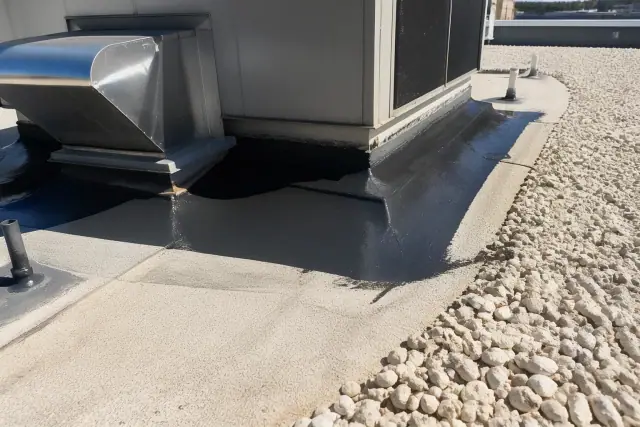
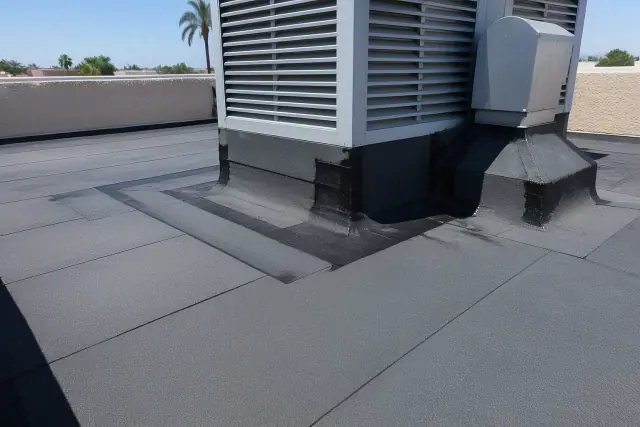
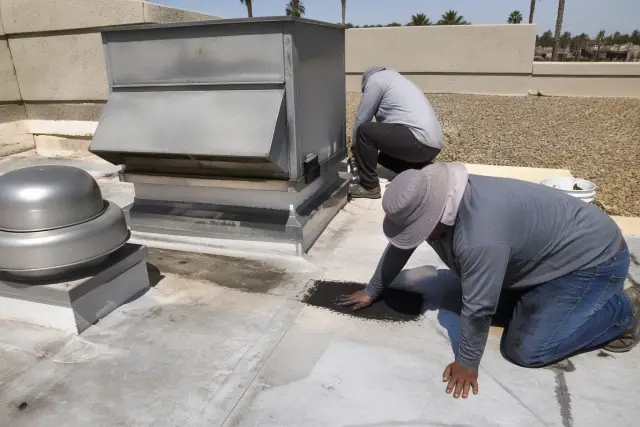
Freshly applied bitumen sealant on a commercial flat roof membrane near a ventilation unit in Tempe, AZ.

We trace ponding-related membrane damage, blistering, cracked flashing, and active leaks to their source before repairing them. The repair method is matched to the existing low-slope system instead of covered with a one-size patch.

Explore Service

Commercial Roof Replacement

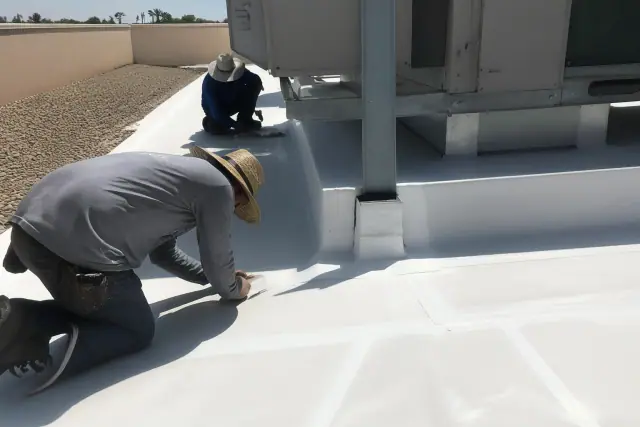
Technicians performing TPO membrane roof replacement around an HVAC unit in Tempe, AZ.

Replacement becomes the practical path when repaired area exceeds 25% of the roof surface or the system has passed 70% of its expected lifespan. Work can include tear-off, deck and insulation repair, energy-code upgrades, and a new matched system; Tempe projects typically take 5 to 15 business days depending on size and roof type.

Explore Service

TPO Roofing

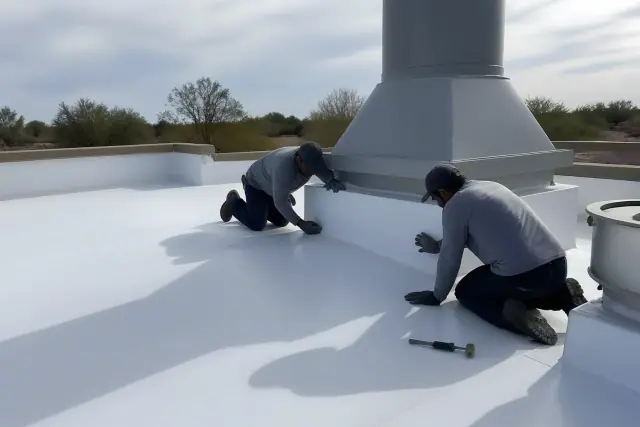
Technicians installing white TPO roofing with clean seam details on a commercial building in Tempe, AZ.

Reflective white TPO helps manage solar load during the region's 100-plus-day stretch of triple-digit temperatures. We install and repair heat-welded seams to the manufacturer's fastening pattern, replacing failed welds and cracked flashing rather than relying on short-lived caulk patches.

Explore Service

Spray Foam Roofing

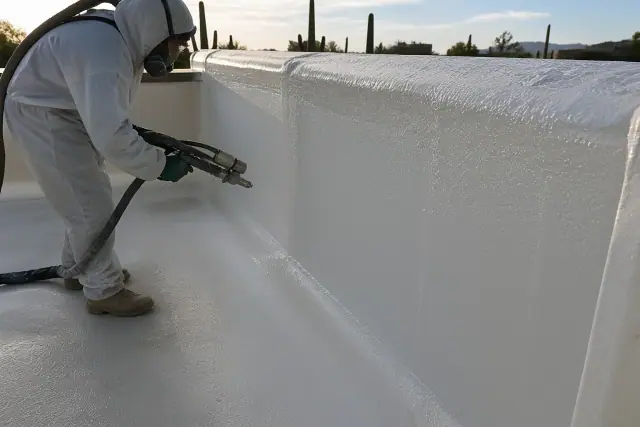
Contractors applying spray foam roofing to a parapet wall on a commercial building in Tempe, AZ.

Spray polyurethane foam forms a seamless, fully adhered membrane around irregular penetrations and HVAC curbs. Foam can be tapered to improve drainage, then protected with an elastomeric top coat that is reapplied every 5 to 10 years to extend service life.

Commercial Roof Coatings

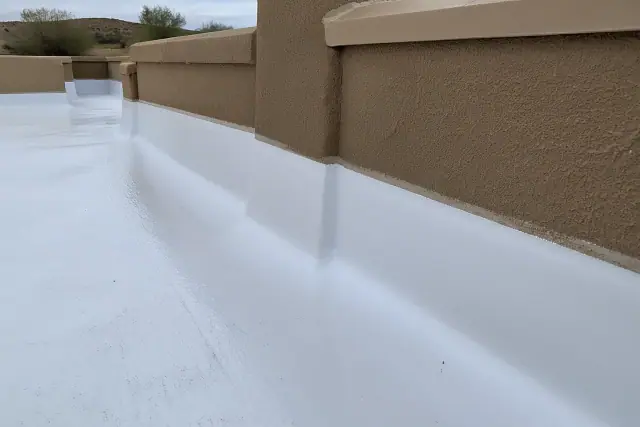
Elastomeric liquid membrane coating applied to a parapet wall flashing at a commercial roofing site in Tempe, AZ.

Elastomeric, acrylic, and silicone coatings are selected according to the existing substrate and ponding conditions, then applied after inspection and cleaning. A properly coated sound membrane can add 10 or more years of service life while reducing surface heat compared with an uncoated dark roof.

Commercial Metal Roofing

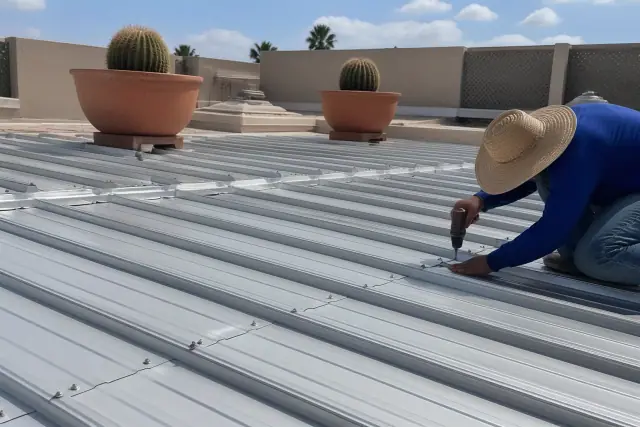
Close-up of overlapping metal roofing panels with industrial fasteners on a commercial building in Tempe, AZ.

Standing-seam and through-fastened metal systems are inspected for fastener backout, failed panel-lap sealant, and rust at cut edges or dissimilar-metal contact points. Correct fastening supports monsoon wind uplift resistance, while reflective coatings can reduce thermal cycling and extend paint-system life.

Modified Bitumen Roofing

Modified bitumen roofing membrane installation around a rooftop ventilation unit in Tempe, AZ.

For torch-applied and self-adhered modified bitumen, repairs remove damaged plies, dry the substrate, and re-weld cap sheet that matches the existing granule surface. Application temperature and overlap specifications matter because poor torch work is a recurring cause of early membrane failure.

Built-Up Roofing (BUR)

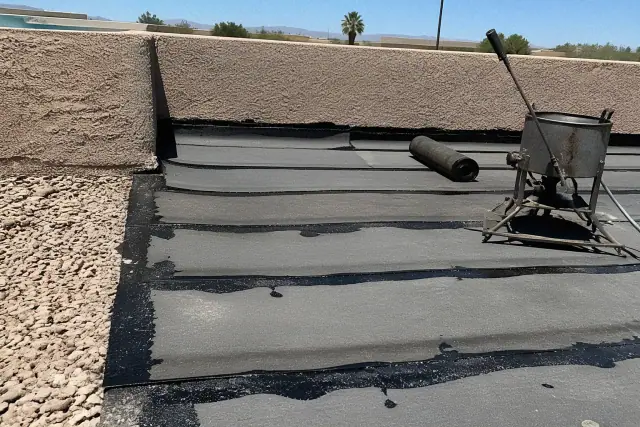
Built-up roofing installation with bitumen layers on a flat roof deck in Tempe, AZ.

Built-up roofs use alternating bitumen and reinforcing-fabric layers, so repairs must match both ply count and material type. We inspect older systems for blistering, alligatoring, and separation before comparing a localized patch with a cap-sheet recover.

Commercial Roof Inspections

Technicians performing a commercial roof inspection near a ventilation unit in Tempe, AZ.

A documented inspection covers membrane condition, flashing, drains, scuppers, penetrations, and interior moisture evidence, with infrared scanning where appropriate. Biannual inspections-once before monsoon season and once after-help Tempe owners find defects while they are still repairable.

Commercial Roof Maintenance

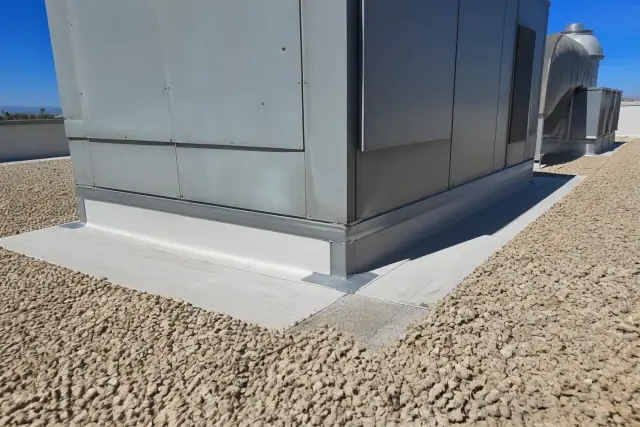
Roof membrane detailing and sealant around an HVAC unit on a commercial rooftop in Tempe, AZ.

Maintenance visits include debris removal, drain and scupper clearing, seam inspection, and minor repair of blisters or cracked sealant. A documented schedule helps prevent clogged drainage and small defects from becoming disruptive leaks.

Roofing Decisions

How We Match Roofing Options to Tempe Properties

Repair, coating, recover, and replacement decisions start with the existing assembly rather than a preferred product. We compare roof age, membrane condition, trapped moisture, drainage, penetrations, access, operating needs, expected service life, and project budget before defining the scope.

Roof Condition and Age

Construction, age, maintenance history, prior repairs, and the amount of sound material remaining determine whether another targeted repair is sensible. Moisture below the surface can change that decision even when visible damage looks limited.

Drainage and Ponding

We distinguish a clogged drain from inadequate slope, an undersized scupper, or deck deflection. The correction may involve clearing drainage, modifying outlets, adding tapered insulation, or rebuilding a low area rather than patching the wet membrane alone.

Building Operations and Access

Occupied offices, retail centers, industrial buildings, and tenant schedules affect access, staging, noise, and work hours. The project plan is arranged around building operations where possible so rooftop work does not create avoidable disruption.

Penetrations and Roof Layout

HVAC curbs, pipe boots, pitch pans, flashing transitions, and complex drainage create more detail work than an open roof field. Spray foam may fit irregular layouts, while sheet membranes require carefully welded or flashed transitions around each opening.

Heat and UV Exposure

Reflectivity, thermal cycling, and application temperature matter under Tempe's heat and UV load. Membrane installation and coating work are scheduled within temperature windows that support correct welding, adhesion, and curing.

Budget and Service Life

A written, itemized estimate makes material, labor, deck work, insulation, access, and drainage corrections visible before approval. Comparing those drivers with the roof's remaining service life helps an owner choose among repair, coating, recover, and replacement.

Tempe Roof Issues

Common Commercial Roof Problems in Tempe

Tempe roofs face prolonged heat and UV for eight-plus months a year, followed by short, intense monsoon events. Dust and rapid thermal cycling can turn a small drainage, seam, or flashing defect into interior water damage, so the visible stain is rarely the whole diagnosis.

Request Roof Inspection

Ponding Water

Low slope, clogged or undersized drains and scuppers, and aging-deck deflection can leave water standing after a storm. Persistent ponding accelerates membrane wear and may require tapered insulation, drainage changes, or targeted recover work.

UV-Brittle Membranes

Long UV exposure drives plasticizer loss and oxidation in older membranes. Brittle material then cracks at seams and flashing details as the roof expands by day and contracts after sunset.

Heat-Blistered Roofing

Trapped air or moisture can create raised blisters as the membrane heats, especially on south- and west-facing sections. Opening a blister without checking the substrate can leave wet insulation or separated plies beneath the repair.

Cracked Flashing and Pitch Pans

Repeated expansion and contraction stress pitch pans, pipe boots, curb flashing, and sealant at penetrations. These concentrated weak points often admit water before the open roof field shows obvious damage.

Clogged Drains and Scuppers

Valley dust storms and windblown debris collect at internal drains and scuppers. Routine clearing is especially important near the Salt River channel and low-lying areas of south Tempe where drainage problems recur after heavy monsoon rainfall.

Loose Fasteners and Rust

Through-fastened metal roofs can develop fastener backout, failed sealant at panel laps, and corrosion at cut edges or dissimilar-metal contacts. Those defects reduce weather resistance and become more consequential when monsoon winds act on an inadequately secured panel.

Why Choose Us

Why Choose Phoenix Commercial Roofing Company in Tempe?

Commercial roofing here combines system knowledge with Tempe-specific heat, drainage, wind, and permitting experience. Our licensed, bonded, and insured crew works exclusively on commercial and low-slope systems, coordinates local requirements, sources through familiar suppliers, and documents the condition and recommended scope for owners, property managers, carriers, and manufacturers.

Tempe Low-Slope Experience

Work around the ASU campus, Salt River basin, Mill Avenue corridor, and Tempe industrial properties informs how we evaluate heat exposure, wind, and recurring drainage trouble. Material and application choices are adjusted to the roof rather than borrowed from a milder climate.

Permit and Code Coordination

Our team pulls and manages required permits for replacement and significant repair work with the City of Tempe Building Safety Division. Project planning addresses adopted International Building Code wind-uplift and fire-classification provisions as well as IECC insulation R-value requirements.

Photo-Documented Recommendations

Inspection findings are delivered as a written report with photos and an itemized repair or replacement scope. Final documentation and separate workmanship and manufacturer material warranty paperwork give building owners a clear record of what was found and completed.

Documented Process

Our Commercial Roofing Process in Tempe

Each project moves from inspection to a defined scope, operating-hour plan, system-specific repair or installation, testing, and closeout documentation. That sequence keeps concealed moisture, deck conditions, drainage, code upgrades, and warranty requirements visible before the roof is closed.

01.

Inspect the Roof and Interior Evidence

We examine the membrane, flashing, drains, scuppers, penetrations, prior repairs, and any interior signs of leakage. Photos record the condition and connect visible symptoms with likely rooftop entry points.

02.

Scan for Trapped Moisture

Where interior evidence suggests water in the insulation layer, infrared scanning helps define the affected area. Wet insulation and unsound substrate are identified before new membrane or coating is installed over them.

03.

Build a Written Scope

The proposed scope itemizes material, labor, deck or insulation repair, drainage correction, and any code-related work. Owners can see why repair, recover, coating, or replacement is being recommended before authorizing the project.

04.

Schedule Around Building Operations

We coordinate access and work hours around commercial tenants where possible. Weather and temperature windows are also considered so membranes, adhesives, welds, foam, and coatings can be applied under suitable conditions.

05.

Repair to System Specifications

Damaged material is removed to sound substrate, the area is dried, saturated insulation is replaced, and compatible material is welded or adhered to manufacturer specifications. The method follows the existing TPO, foam, modified bitumen, BUR, coating, or metal assembly.

06.

Test and Document Completion

Repaired seams are tested, and drainage areas may be flood-tested when ponding caused the failure. A final walkthrough, work record, and applicable workmanship and material warranty paperwork complete the closeout.

Roofing Approaches

Practical Roofing Outcomes for Tempe Properties

Case Study 1: TPO Seam Repair: Failed welds and cracked flashing are removed and rebuilt to the membrane manufacturer's fastening and welding pattern, restoring continuity without relying on a seasonal caulk patch.

Case Study 2: Ponding Correction: The drainage cause is separated from the membrane symptom so tapered insulation, outlet changes, clearing, or targeted recover work can direct water toward drains and scuppers.

Case Study 3: Maintenance and Coating: Cleaning, minor repairs, and a substrate-compatible reflective coating can preserve a sound aging roof while improving UV protection and keeping drains clear for monsoon rainfall.

Plan Your Roof Work

Schedule a Commercial
Roof
Inspection

Request a free inspection for ponding, active leaks, membrane blisters, cracked flashing, loose metal panels, or a roof approaching replacement. Phoenix Commercial Roofing Company will document the condition and provide a written, itemized scope suited to the building, roof system, and operating schedule.

Tempe Roofing Answers

Commercial Roofing FAQs for Tempe, AZ

These answers cover repair thresholds, system life, project costs, scheduling, drainage, inspections, coatings, codes, and storm response for Tempe commercial roofs. A documented inspection is still the right starting point because roof assembly, moisture, access, and damage extent change the recommendation.

Call Our Roofing Team

The 25% rule generally describes the point where damaged or repaired area reaches roughly one-quarter of the total roof surface. Many manufacturers and building-code applications then treat the work as replacement rather than a limited repair, which can affect permitting and warranty treatment. We track repaired square footage against total roof area during inspection so owners can plan before crossing that threshold.

Most commercial flat roofs last 15 to 35 years, depending on installation, drainage, exposure, and maintenance. TPO and PVC single-ply roofs typically last 20 to 30 years, EPDM 25 to 35 years, modified bitumen 15 to 20 years, and built-up roofing 20 to 30 years. Properly maintained metal roofing often lasts 30 to 45 years.

Small to moderate flat-roof repairs generally run from $750 to $3,500. Membrane type, damaged square footage, access, saturated insulation, and deck repair move the total up or down. A written inspection scope shows which conditions are driving the price before work is approved.

Most Tempe commercial reroofing projects take 5 to 15 business days. Total square footage, roof system, tear-off, deck repairs, and insulation work affect the schedule. Monsoon weather can extend the timeline because adhesives and coatings need dry, stable curing conditions.

Commercial replacement generally runs $5.50 to $14.00 per square foot, depending on the selected assembly and project conditions. TPO commonly falls between $4 and $7 per square foot, PVC between $5 and $8, and installed metal roofing between $7 and $14. Labor accounts for roughly one-third to one-half of total cost and can range from about $0.66 to $4.00 per square foot depending on complexity and access.

Ponding usually traces to inadequate slope-to-drain design, clogged or undersized drains and scuppers, or structural deflection in an aging deck. Tempe dust and monsoon debris can worsen marginal drainage. The correction may require tapered insulation, drain modification, clearing, or targeted membrane work after the cause is confirmed.

TPO's reflective white surface helps reduce solar heat gain on broad low-slope roofs. Its seams are heat-welded, so correct welding temperature, flashing, and fastening patterns are essential under Tempe's thermal cycling. Broken welds should be rebuilt with compatible membrane rather than hidden under a short-lived mastic patch.

The protective elastomeric coat is typically reapplied every 5 to 10 years. That top coat shields the seamless foam layer from UV degradation. Inspection of thickness, surface wear, penetrations, and drainage determines when recoating is appropriate for a specific roof.

We recommend biannual inspections for flat commercial roofs in this region: once before monsoon season and once after. An additional inspection is appropriate after a storm or when ponding, interior moisture, loose flashing, or membrane damage appears. Regular documentation also helps owners compare changes over time.

The inspection covers membrane condition, flashing, penetrations, drains, scuppers, prior repairs, and interior moisture evidence. Infrared scanning is used where leak evidence suggests trapped water in the insulation layer. Findings are delivered in a written report with photos rather than only a verbal estimate.

A coating can extend a sound but aging membrane when the substrate is dry and remaining defects are repaired first. Elastomeric, acrylic, and silicone products suit different substrates and ponding conditions, so the system must be selected after inspection. Coating is not a substitute for replacing saturated insulation, failed decking, or a roof that has exceeded repairable condition.

Prolonged UV and heat accelerate oxidation, plasticizer loss, sealant failure, and cracking at seams and flashing. Short monsoon downpours expose clogged drainage and ponding, while wind tests panel fasteners and perimeter details. Dust adds debris at drains and scuppers, allowing several local stressors to compound at once.

Permits are required for roof replacement and most significant repairs under the City of Tempe Building Safety Division. The adopted International Building Code provisions address roof coverings, wind uplift, and fire classification. Replacement planning also accounts for applicable IECC insulation R-value requirements rather than simply copying the old assembly.

Yes. Emergency response covers active water intrusion, wind-damaged flashing, and storm-torn membrane, with same-day tarping and temporary dry-in used to protect interiors while permanent repair is scheduled. The 24/7 availability is especially important during July and August monsoon storms.

Coverage includes downtown and Mill Avenue, the ASU main-campus perimeter, north Tempe near the Salt River and Tempe Town Lake, south Tempe near Kyrene and Warner roads, east-side industrial parks near the 101, and corridors along Rural Road and Priest Drive. Crews also serve commercial properties in Scottsdale, Chandler, Mesa, Gilbert, and larger projects across Maricopa County.