Proudly serving Phoenix, Mesa, Scottsdale, Tempe, Chandler, Glendale & surrounding areasCall or Text 24/7: 480-319-7533
Aerial view of residential neighborhoods, desert foothills, and arterial roads in Phoenix, AZ during late afternoon.

Built-Up Roofing (BUR) Systems: Installation, Restoration, and Drainage Retrofits in Phoenix, AZ

Phoenix Commercial Roofing Company installs, repairs, restores, and replaces built-up roofing for commercial properties in Phoenix, Arizona. Our BUR services include multi-ply asphalt and felt construction, tapered-insulation drainage retrofits, flashing work, moisture-scan diagnostics, inspections, coatings, and maintenance. We work on flat and low-slope roofs serving warehouses, strip malls, industrial buildings, and other commercial facilities across the metro area. When a roof can be repaired instead of replaced, our evaluation is built to identify that option before a replacement recommendation.

Phoenix roof decks regularly climb past 160 degrees Fahrenheit, while more than 300 days of sunshine a year accelerate UV exposure on commercial membranes. Monsoon wind, rooftop HVAC traffic, and water that fails to drain can add further wear. A properly installed BUR assembly uses multiple asphalt-and-felt plies so one puncture or seam issue does not automatically reach the interior. Gravel, cap-sheet, or reflective-coating surfacing can then be selected to protect the finished system.

Our crews work under Arizona Registrar of Contractors licensing, follow ASTM D2178 felt standards and NRCA installation guidance, and coordinate City of Phoenix Development Services Department permits for reroofs and tear-offs.

Phoenix Commercial Roofing Company provides built-up roofing in Phoenix and nearby Scottsdale, Tempe, Mesa, Glendale, and Chandler.

★ ★ ★ ★ ★4.9/5 Customer Rating · 29 Years of Commercial Roofing Experience · Thousands of Roofs Serviced · Licensed, Bonded & Fully Insured · Serving Businesses & Property Managers

Built-Up Roofing Options & Benefits

What Is Built-Up Roofing?

Built-up roofing is a layered low-slope roof assembly built from a base sheet, alternating asphalt-saturated felt and hot bitumen, and a protective surface. Most commercial BUR systems use three or four plies, creating waterproofing redundancy and structural integrity across the finished roof.

Built-up roofing has protected flat commercial buildings since the 1800s. Across the 517.9 square miles of the City of Phoenix, it remains a practical system for warehouses, strip malls, industrial buildings, and roofs that receive regular HVAC-service traffic.

The finished surface may use embedded gravel, a mineral cap sheet, or a reflective coating. With proper maintenance, a BUR system installed by our crews can last 20 to 40 years, with inspection, repair, coating, and eventual replacement supporting the full lifecycle.

Benefits of Built-Up Roofing

BUR combines layered waterproofing with a durable surface suited to the heat, wind, and rooftop activity commercial buildings encounter in Phoenix.

  • Multi-ply waterproofing redundancy
  • Strong puncture and impact resistance
  • Very high durability under rooftop foot traffic
  • Gravel shielding against UV degradation
  • Ballast against monsoon gusts that can exceed 60 miles per hour
  • Class A fire rating when specified under UL testing
  • Gravel, mineral cap-sheet, or reflective-coating surface options
  • Repair, restoration, coating, and replacement pathways
BUR Services

Built-Up Roofing Services

From initial construction through inspection and restoration, our BUR work addresses the membrane, insulation, drainage, flashing, and protective surface as one connected low-slope roofing assembly.

Built-Up Roof Installation

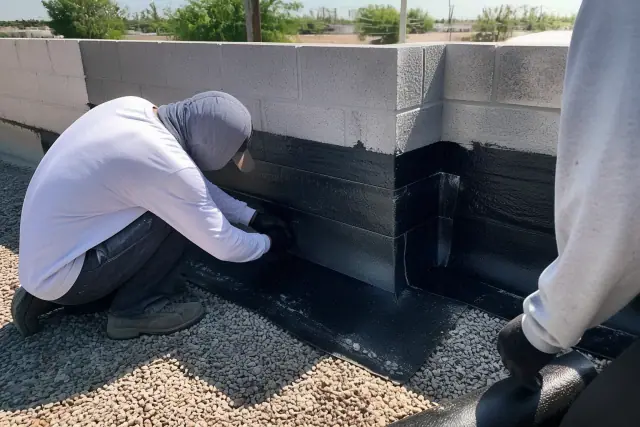
Contractors sealing a parapet wall with bitumen felt on a gravel flat roof in Phoenix, AZ.

We install three-ply or four-ply BUR assemblies with a secured base sheet, alternating felt and hot bitumen, and the surface selected for the building. Ply count is chosen around building use, insurance requirements, and budget.

Request Estimate

BUR Repair and Restoration

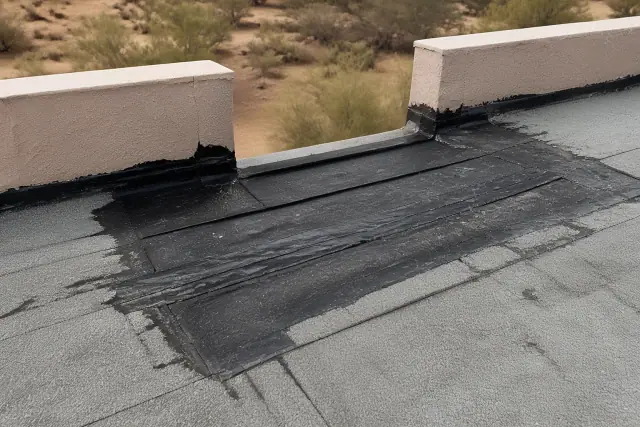
Repairing a roof expansion joint with bitumen-saturated felt on a building in Phoenix, AZ.

For damaged areas, we cut through failed material to a sound substrate and rebuild the ply structure in kind. Surface restoration or a reflective recoat may address weathered asphalt when the remaining assembly supports that approach.

Request Estimate

Tapered Insulation Retrofits

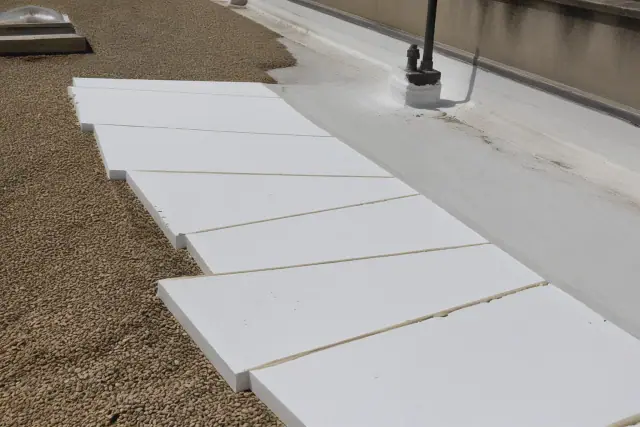
Tapered insulation boards installed on a flat roof with gravel ballast in Phoenix, AZ.

Tapered polyisocyanurate insulation creates drainage slope beneath a low-slope roof. We use retrofits, added drains, or scupper modifications to route water away instead of repeatedly patching a ponding symptom.

Request Estimate

Flashing and Penetration Work

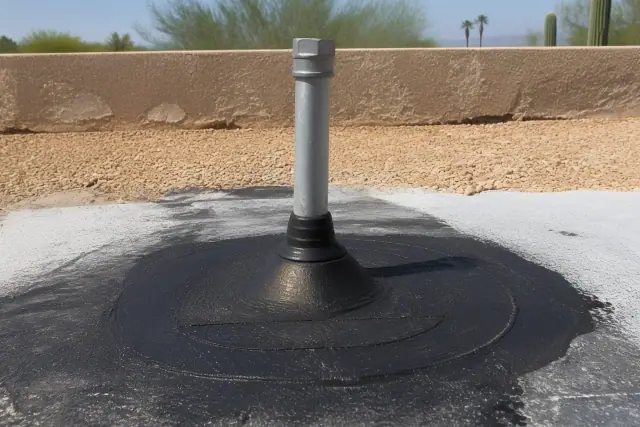
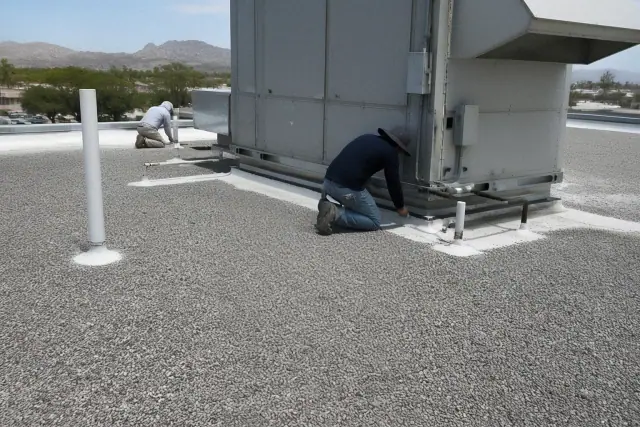
Rubber boot flashing installed around a plumbing vent pipe on a built-up roof in Phoenix, AZ.

We detail flashing at parapet walls, curbs, and rooftop penetrations so vulnerable transitions are integrated with the BUR membrane. Careful work at these locations helps prevent early leaks tied to skipped or incomplete details.

Request Estimate

Roof Inspections and Moisture Scans

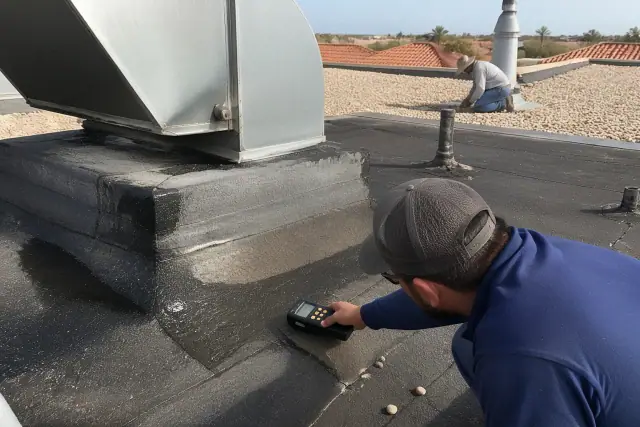
Technician using a moisture sensor on a built-up roof during an inspection in Phoenix, AZ.

Deck inspection and moisture-scan diagnostics help identify trapped water, unsound substrate, and the extent of damaged plies. Those findings guide whether focused repair, restoration, or replacement is the appropriate path.

Request Estimate

BUR Maintenance and Coatings

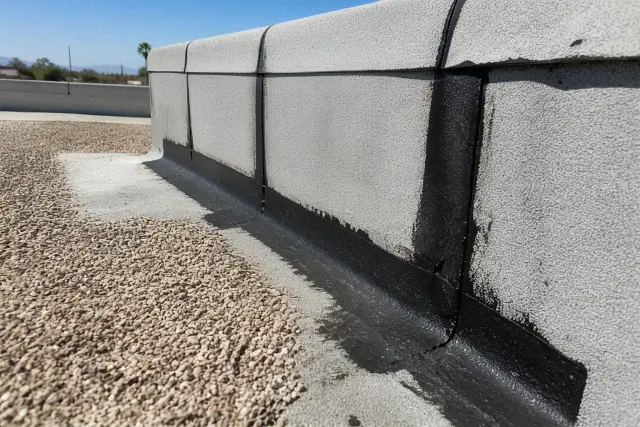
Freshly applied bituminous mastic sealing a parapet wall joint on a gravel ballast roof in Phoenix, AZ.

Commercial roof inspections and maintenance can catch surface oxidation, drainage trouble, and flashing defects before they spread. When conditions support it, a reflective maintenance coating can restore the surface and protect the underlying assembly.

Request Estimate
BUR System Options

Types of Built-Up Roofing Options

BUR can be configured by ply count and finished with gravel, a mineral cap sheet, or a reflective coating. The right combination depends on roof condition, drainage, exposure, foot traffic, insurance requirements, access, and budget.

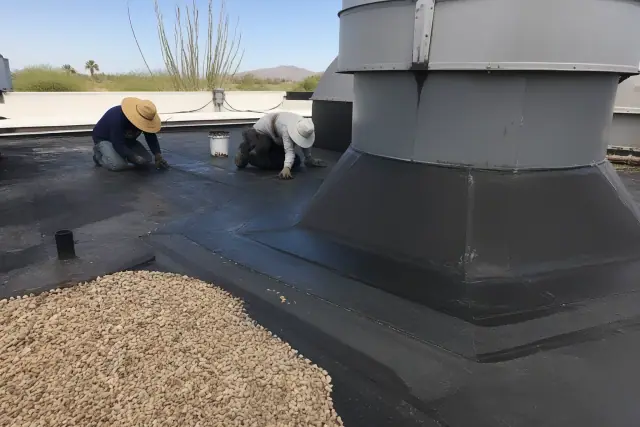
Gravel-surfaced built-up roofing on a commercial rooftop with a ventilation unit in Phoenix, AZ.

Gravel-Surfaced BUR

This traditional tar-and-gravel assembly finishes the asphalt-and-felt plies with a flood coat and embedded gravel. The surface shields the membrane while adding ballast for Phoenix commercial roofs.

  • Gravel embedded in the finishing flood coat
  • Roughly 400 pounds of gravel per roofing square
  • Protection for underlying felt plies from UV degradation
  • Ballast weight that helps resist monsoon wind uplift
  • Class A fire rating when the specified assembly meets UL testing
Request Estimate
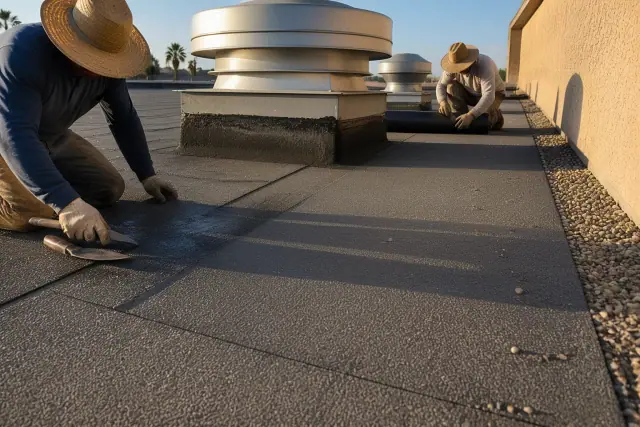
Technicians installing mineral cap-sheet built-up roofing near a stucco wall in Phoenix, AZ.

Mineral Cap-Sheet BUR

A mineral cap sheet can serve as the protective top surface over a multi-ply BUR assembly. It retains the base-sheet, felt, and hot-bitumen construction while finishing the roof without a gravel surface.

  • Alternating asphalt-saturated felt and hot bitumen
  • Exposed mineral cap sheet as the finishing surface
  • Base sheet mechanically fastened or mopped to insulation
  • Fiberglass felt selected to meet ASTM D2178 standards
  • Flashing integrated at parapets, curbs, and penetrations
Request Estimate
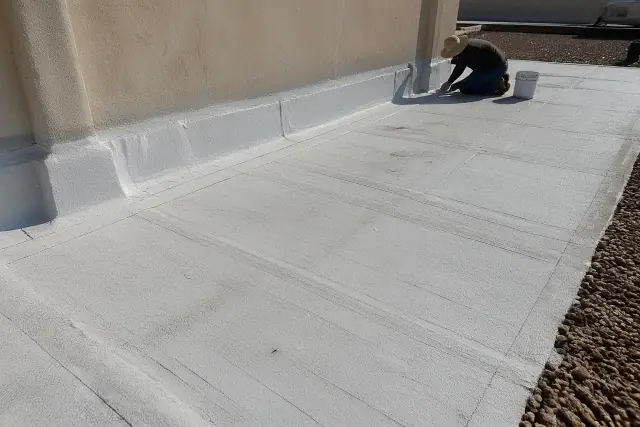
Reflective white-coated built-up roofing layers with bitumen seams near a gravel border on a rooftop in Phoenix, AZ.

Reflective-Coated BUR

A reflective coating may be used as the final surface on a BUR assembly or as a restoration treatment for suitable weathered roofing. We select surface restoration or a full recoat according to the severity of oxidation and cracking.

  • Reflective coating as a supported BUR surface option
  • Condition review before a restoration recommendation
  • Damaged material repaired back to sound substrate first
  • Full recoat considered when surface severity calls for it
  • Ongoing inspection and maintenance of the coated roof
Request Estimate
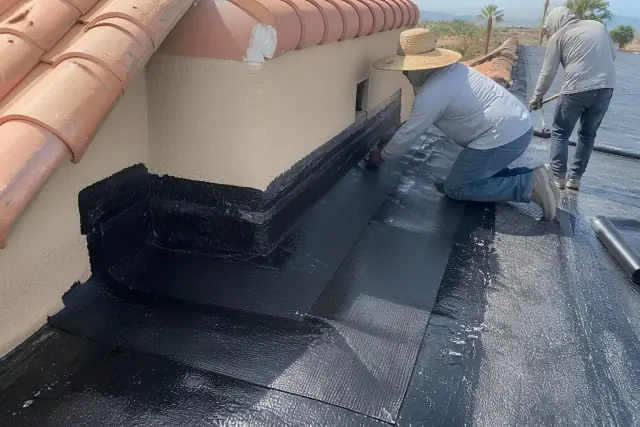
Three-ply bitumen roofing membrane detailing on a residential roof in Phoenix, AZ.

Three-Ply BUR Assemblies

A three-ply assembly uses three alternating felt-and-bitumen layers above the prepared base. It is one of the configurations we select according to building use, insurance requirements, and budget.

  • Secured base sheet over the insulation board
  • Three asphalt-saturated felt plies
  • Controlled hot-bitumen application between plies
  • Gravel, cap-sheet, or coating surface selection
  • Building use, insurance, and budget considered together
Request Estimate
Technicians installing four-ply built-up roofing layers with gravel ballast on a Phoenix, AZ jobsite.

Four-Ply BUR Assemblies

A four-ply assembly adds another felt-and-bitumen layer to the built-up roof. Each ply adds waterproofing redundancy and structural integrity, making exposure and expected rooftop traffic important selection factors.

  • Four alternating felt-and-bitumen plies
  • Additional redundancy within the finished assembly
  • Felt type matched to exposure and foot traffic
  • Drainage slope built into the insulation layout
  • Labor-intensive installation with detailed flashing work
Request Estimate
Finding the Right BUR Fit

Choosing the Right Built-Up Roofing Approach

The right BUR plan starts with the existing deck, insulation, moisture, drainage, access, and flashing conditions. Ply count and surface choice then depend on building use, expected foot traffic, insurance requirements, and budget, while a moisture scan helps separate repairable areas from conditions that justify replacement.

Licensed, Standards-Guided Work

Our crews work under Arizona Registrar of Contractors licensing, use fiberglass felt that meets ASTM D2178 standards, and follow NRCA installation guidance. Those references shape material selection, asphalt application, drainage, and repair details.

Phoenix Permit Coordination

We pull permits through the City of Phoenix Development Services Department for every reroof and tear-off. The installed low-slope assembly is inspected against International Building Code Chapter 15 provisions.

Moisture-Scan Diagnostics

We inspect the deck and use moisture-scan diagnostics before recommending replacement over repair. That evaluation helps locate trapped moisture, define sound substrate, and keep the proposed scope tied to the roof condition we find.

What Sets Our BUR Work Apart

Why Choose Us for Built-Up Roofing?

Phoenix Commercial Roofing Company combines climate-aware BUR construction with repair-first diagnostics and close attention to drainage and flashing. We control the details between plies, at roof transitions, and beneath the membrane so the recommendation addresses the whole assembly rather than only the visible symptom.

Request a Roof Assessment

Alligatoring and Surface Cracks

Alligatoring is the cracked pattern that develops as asphalt surfacing oxidizes. We commonly find it on Phoenix BUR roofs 15 to 20 years old without a maintenance coating, then determine whether surface restoration or a full reflective recoat fits the severity.

Ponding Water

NRCA guidance generally considers water remaining longer than 48 hours after rainfall to be ponding. Because it accelerates membrane breakdown and adds structural dead load, we look to tapered insulation, added drains, or scupper modifications instead of patching only the surface.

Blistering from Trapped Moisture

Blisters often trace back to trapped moisture or poor original installation. We open the affected area, remove failed material to sound substrate, and restore the layered construction rather than covering an unstable pocket.

Separated or Torn Felt Plies

Separated felt and torn plies interrupt the redundancy a BUR roof depends on. Repairs rebuild the damaged section in kind, matching the existing ply structure so the patch is integrated with sound surrounding material.

Failed Flashing Details

Incomplete flashing at parapet walls, curbs, and rooftop penetrations is a frequent source of early leaks. We trace these transitions and tie the repair back into the membrane instead of treating the interior water mark alone.

Uneven Asphalt Application

Starved or overloaded joints can develop when asphalt is not applied at a controlled rate between felt courses. These installation shortcuts can lead to premature blistering, so repair begins by identifying and rebuilding the unsound layers.

How It Works

Our Built-Up Roofing Process

A BUR project moves from diagnosis and scope selection through deck preparation, layered installation, drainage and flashing details, surfacing, and inspection. Each step is coordinated around the existing roof and the selected three-ply or four-ply assembly.

01.

Inspect the Roof and Deck

We inspect the membrane, deck, insulation, drains, and flashing, then use moisture-scan diagnostics where needed. The findings define repairable areas and any conditions that make replacement appropriate.

02.

Select the Scope and Permits

We choose the ply count, felt, insulation, drainage changes, and finished surface around the building and roof conditions. For reroofs and tear-offs, we coordinate the required City of Phoenix Development Services Department permit.

03.

Prepare Deck, Insulation, and Base

After unsound material is addressed, tapered polyisocyanurate insulation can be installed to establish drainage. The base sheet is then mechanically fastened or mopped to the insulation board for the layered assembly.

04.

Mop the Felt Plies

Hot asphalt is applied at 400 to 450 degrees Fahrenheit between courses of felt. Each course overlaps 2 to 4 inches, and the application rate is controlled to avoid starved or overloaded joints.

05.

Build Drainage and Flashing Details

We build a minimum quarter-inch-per-foot slope into tapered insulation to route water toward drains. Flashing is detailed at parapet walls, curbs, scuppers, and rooftop penetrations as the membrane work progresses.

06.

Finish and Inspect the Assembly

The completed plies receive the specified gravel, mineral cap sheet, or reflective coating. Permitted Phoenix work is then inspected against the applicable International Building Code Chapter 15 low-slope roofing provisions.

Plan Your BUR Project

Schedule a Built-Up
Roofing
Consultation

Request an evaluation for BUR installation, repair, drainage correction, restoration, or replacement. We will review the roof condition and explain the scope that fits the building, access, insulation, and surface requirements.

Built-Up Roofing Help

Built-Up Roofing FAQs

These answers cover BUR construction, pricing, drainage, repairs, alternatives, and service coverage for Phoenix commercial properties.

Call Our Roofing Team

Built-up roofing combines a base sheet with alternating plies of asphalt-saturated felt and hot bitumen. Gravel, a mineral cap sheet, or a reflective coating protects the finished multi-ply assembly.

Most commercial systems we install use three or four plies. The choice depends on building use, insurance requirements, exposure, expected foot traffic, and budget.

With proper maintenance, a BUR system installed by our crews can last 20 to 40 years. Inspection, timely repair, drainage performance, flashing condition, and surface maintenance all matter across that lifecycle.

Installed BUR pricing in the Phoenix market generally runs $2.50 to $6.00 per square foot. Ply count, insulation thickness, roof access, tear-off, structural repairs, and drainage retrofits can change the total.

A straightforward 4,000-square-foot BUR installation is roughly $10,000 to $24,000 at the market range described above. Tear-off, structural repairs, or drainage retrofits can increase that scope.

Broader commercial roofing projects in the Phoenix area typically run $4.00 to $12.00 per square foot. Most jobs fall between $5.50 and $8.00 per square foot, while the roof system and project conditions determine where a specific scope lands.

NRCA guidance generally treats water that remains longer than 48 hours after rainfall as ponding. Corrections may involve tapered insulation, added roof drains, or scupper modifications rather than another surface patch.

Alligatoring is the cracked pattern created as asphalt surfacing oxidizes under prolonged exposure. Depending on severity, the response may be surface restoration or a full reflective recoat.

Often, but the answer depends on trapped moisture, substrate condition, and the extent of failed plies. We cut damaged areas back to sound material and rebuild the ply structure in kind when the roof supports a focused repair.

Embedded gravel shields underlying felt from UV degradation and adds ballast against monsoon wind uplift. A specified assembly can also meet a Class A fire rating under UL testing.

The process covers deck inspection, insulation and base-sheet preparation, hot-asphalt and felt application, drainage slope, flashing, and final surfacing. Phoenix reroofs and tear-offs also go through City of Phoenix permitting and inspection.

BUR emphasizes layered asphalt-and-felt construction, puncture resistance, and durability under sustained foot traffic, but installation is labor-intensive. Modified bitumen uses an SBS- or APP-modified reinforced flexible cap sheet and may provide a faster torch-applied or self-adhered alternative.

Phoenix Commercial Roofing Company serves commercial properties throughout Phoenix and the surrounding Valley communities named for this service: Scottsdale, Tempe, Mesa, Glendale, and Chandler. Available work includes BUR installation, repair, inspection, maintenance, coating, drainage correction, and replacement.