Proudly serving Phoenix, Mesa, Scottsdale, Tempe, Chandler, Glendale & surrounding areasCall or Text 24/7: 480-319-7533
Aerial view of residential neighborhoods, desert foothills, and arterial roads in Phoenix, AZ during late afternoon.

Commercial Roof Maintenance Programs for Warehouses and Office Buildings in Phoenix, AZ

Phoenix Commercial Roofing Company provides commercial roof maintenance for warehouses, distribution centers, strip malls, restaurants, and office parks across Phoenix, Arizona. Our work includes scheduled inspections, flat-roof repair, TPO care, spray polyurethane foam maintenance, coatings, metal-roof maintenance, modified bitumen service, and built-up roofing care. We document roof condition before recommending work, helping owners see the difference between routine upkeep, targeted repair, restoration, and replacement. Crews also prepare drainage, flashing, seams, and rooftop access areas for the Valley of the Sun's demanding heat and monsoon weather.

Phoenix roof decks regularly exceed 160 degrees Fahrenheit, while more than 300 days of annual sunshine expose membranes to sustained UV stress. From July through September, monsoon wind, hail, and wind-driven rain test seams, flashing, drains, and scuppers. Maintenance matters because small defects can spread quickly through insulation and the roof deck in these conditions. Scheduled checks help property teams address wear before it becomes an interior leak or a larger capital project.

We are a licensed commercial roofing contractor registered with the Arizona Registrar of Contractors and carry full liability coverage. Inspections follow National Roofing Contractors Association best practices, while installation and maintenance follow manufacturer specifications, applicable Arizona contractor requirements, and City of Phoenix permitting standards. Photo documentation and moisture scans make each recommendation easier to evaluate.

Phoenix Commercial Roofing Company provides commercial roof maintenance throughout Phoenix, Scottsdale, Tempe, Mesa, Glendale, Chandler, and the greater Maricopa County metro area.

★ ★ ★ ★ ★4.9/5 Customer Rating · 29 Years of Commercial Roofing Experience · Thousands of Roofs Serviced · Licensed, Bonded & Fully Insured · Serving Businesses & Property Managers

Commercial Roof Maintenance Options & Benefits

What Does Commercial Roof Maintenance Include?

Commercial roof maintenance combines scheduled condition inspections with debris and drain clearing, membrane cleaning, seam and flashing checks, minor repairs, and an ongoing record of roof condition. The program is adapted to the membrane, coating, metal, foam, modified bitumen, or built-up system already on the building.

Most Phoenix commercial properties need two inspections annually: one in late spring before monsoon season and another in early fall after it. Roofs with HVAC units, restaurant exhaust systems, or heavy foot traffic may call for quarterly checks so recurring access and equipment-area wear can be handled sooner.

Facilities that skip scheduled maintenance can lose as much as 50% of a roof's expected service life, turning a 25-year membrane into a replacement need after 12 to 15 years. A TPO pinhole may cost a few hundred dollars to reseal, but one monsoon season can spread moisture far enough to create a $15,000 to $40,000 partial re-cover.

Benefits of Preventive Roof Maintenance

A disciplined program protects the parts of the roof most exposed to Phoenix heat, storms, standing water, and routine rooftop work. It also gives owners and facility teams a documented basis for deciding what needs attention now and what can be planned for a later budget cycle.

  • Pre- and post-monsoon condition checks
  • Clear drains, scuppers, gutters, and roof debris
  • Early seam, flashing, and penetration repairs
  • Infrared scans for moisture hidden in insulation
  • Periodic cleaning that supports TPO reflectivity
  • Walkway pads around access points and equipment
  • Planned coating and recoat timing
  • Photo records for budgeting and maintenance history
Commercial Roofing Services

Commercial Roof Maintenance Services

Maintenance is more than a quick visual pass. Our work connects detailed inspection findings to cleaning, repair, storm preparation, restoration planning, and system-specific care for the roof protecting your commercial property.

Commercial Roof Inspections

Technician inspecting heat-welded membrane repairs on a rooftop HVAC unit in Phoenix, AZ.

We assess membrane condition, seam integrity, flashing, penetrations, drainage slope, ponding areas, and rooftop equipment curbs. Infrared moisture scanning and photos help locate wet insulation and record deficiencies before they show up as interior ceiling stains.

Request Estimate

Scheduled Preventive Maintenance

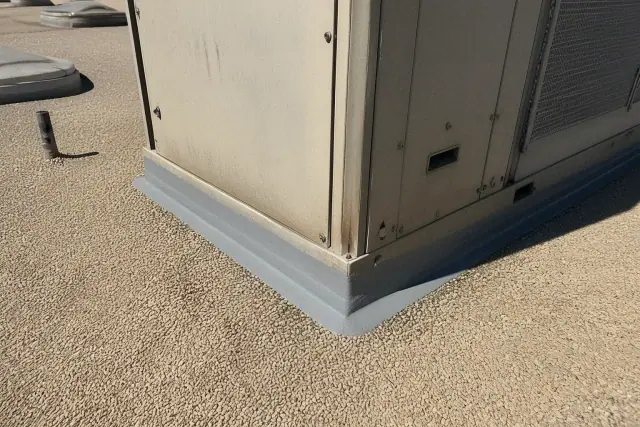
Technician applying grey sealant around a rooftop HVAC unit on a gravel roof in Phoenix, AZ.

A recurring plan keeps drain clearing, membrane cleaning, seam probing, flashing checks, and minor resealing on a predictable schedule. Each visit updates the roof's maintenance file so facility teams can track condition changes over time.

Request Estimate

Commercial Flat Roof Repair

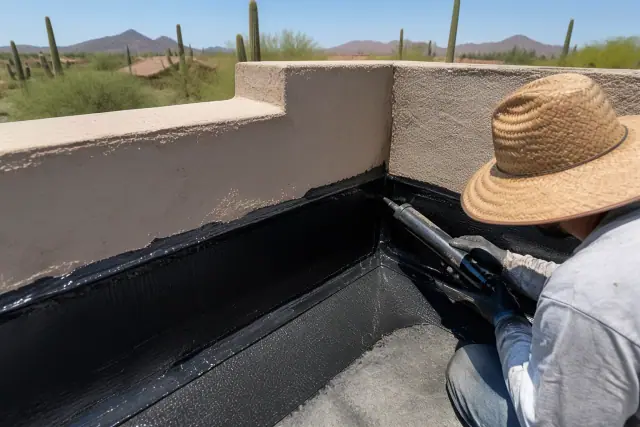
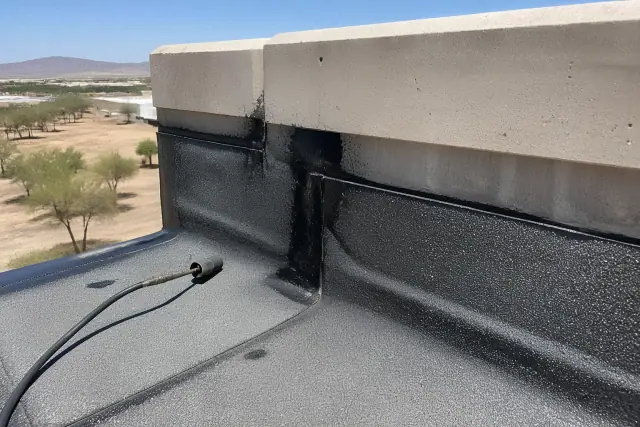
Contractor repairing a commercial flat roof parapet wall in Phoenix, AZ with reinforced bitumen and fresh sealant.

Leak tracing starts uphill from the interior stain because water can travel along the roof deck before entering the building. We check seams, flashing, and penetrations, control active leaks with 24/7 emergency roof repair when needed, and then schedule the permanent repair within the maintenance plan.

Request Estimate

Roof Coating Restoration

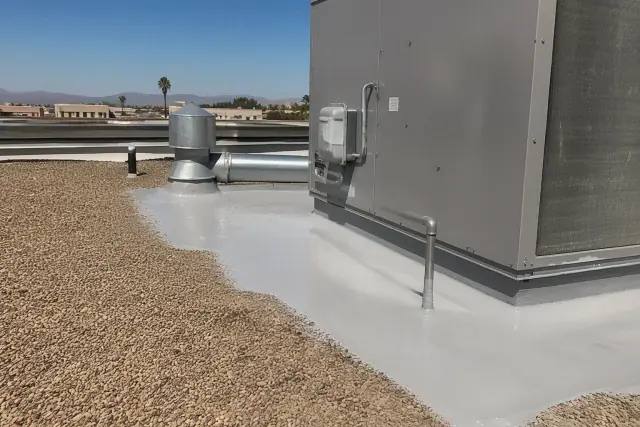
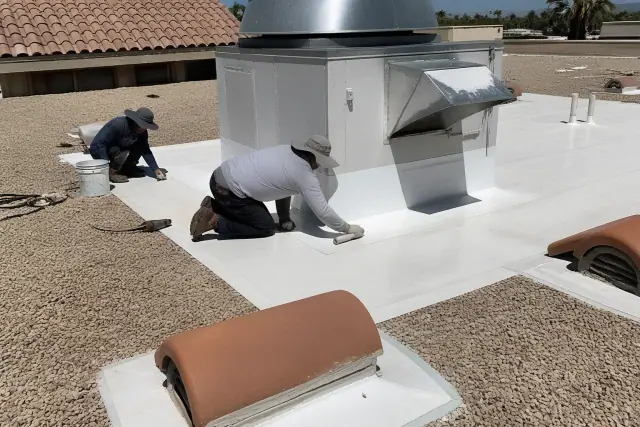
Fresh elastomeric coating applied to a rooftop HVAC unit during commercial roof maintenance in Phoenix, AZ.

Silicone and acrylic coatings can restore a roof that remains structurally sound without requiring a full tear-off. We evaluate the existing membrane, moisture condition, surface preparation, and coating suitability before recommending coating rather than repair or replacement.

Request Estimate

TPO Membrane Care

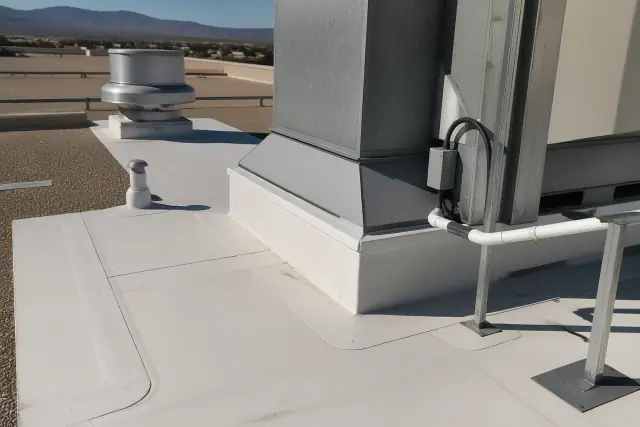
Technicians performing TPO membrane detailing on a commercial roof in Phoenix, AZ with heat-welded seams.

TPO care focuses on cleaning the light-colored surface, probing heat-welded seams, checking edges and penetrations, and watching for early chalking under sustained UV exposure. Separated seams can be rewelded before they become active leak paths.

Request Estimate

Drainage and Monsoon Preparation

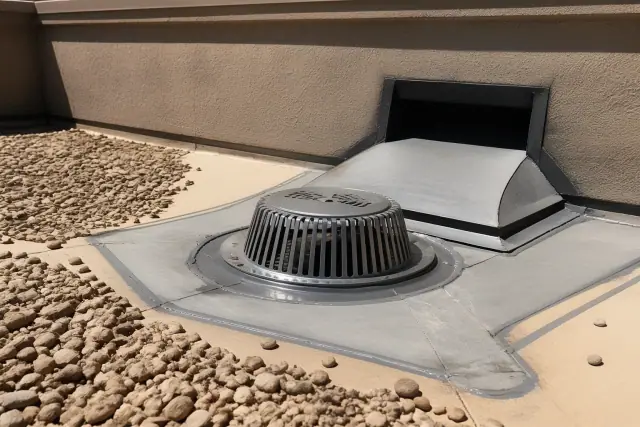
New metal debris grate installed over a roof drain on a gravel commercial roof in Phoenix, AZ.

Before monsoon storms arrive, we clear scuppers and drains, look for ponding areas, check loose base flashing and membrane edges, and review wind uplift resistance. This work targets the weak points that wind-driven rain and hail expose on flat commercial roofs.

Request Estimate
Roof System Care

Maintenance for Commercial Roof Systems

Every roof assembly responds differently to Phoenix sun, thermal movement, standing water, and rooftop traffic. Maintenance should match the system's seams, surface, fasteners, coatings, ballast, and manufacturer requirements rather than use one checklist for every building.

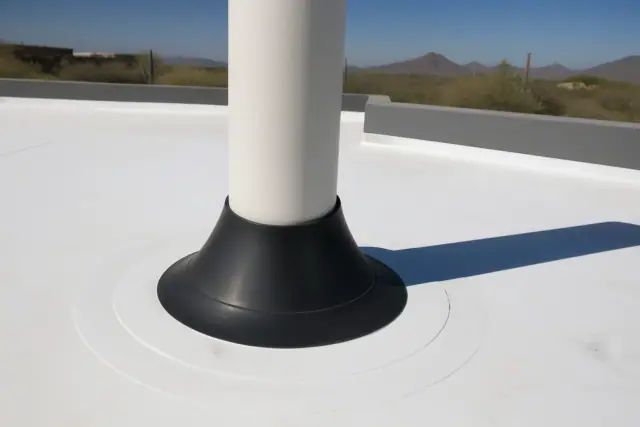
TPO roofing membrane with a heat-welded rubber pipe boot at a job site in Phoenix, AZ, with distant desert saguaros.

TPO Single-Ply Roofing

White TPO is common on Phoenix commercial buildings because its reflective surface manages solar heat gain better than a dark membrane. With proper maintenance, a TPO system typically carries a 20 to 30 year service life.

  • Clean the membrane at least once a year
  • Probe heat-welded seams for separation
  • Check edges, flashing, pipe boots, and curbs
  • Watch for early surface chalking
  • Evaluate maintenance coating before replacement
Request Estimate
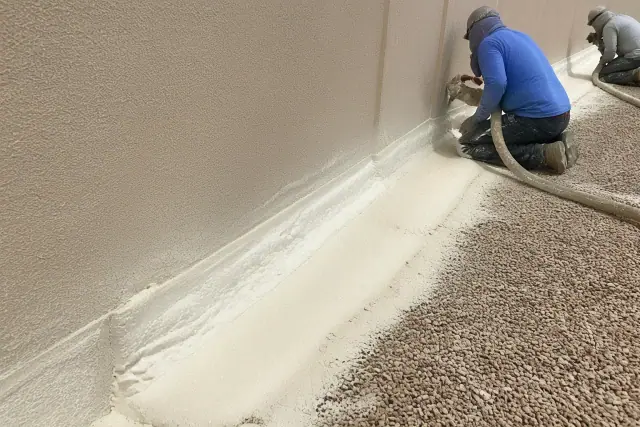
Spray foam roofing application along a parapet wall during a commercial roof maintenance project in Phoenix, AZ.

Spray Polyurethane Foam Roofing

Spray polyurethane foam combines seamless insulation with a fluid-applied membrane. A foam roof can last 20 years or more when its protective granule or elastomeric surface is maintained and recoated on its typical 10 to 15 year cycle.

  • Inspect the seamless foam surface for damage
  • Check the protective top coat for wear
  • Plan recoating before the surface loses protection
  • Check penetrations and rooftop equipment areas
  • Document punctures before moisture spreads
Request Estimate
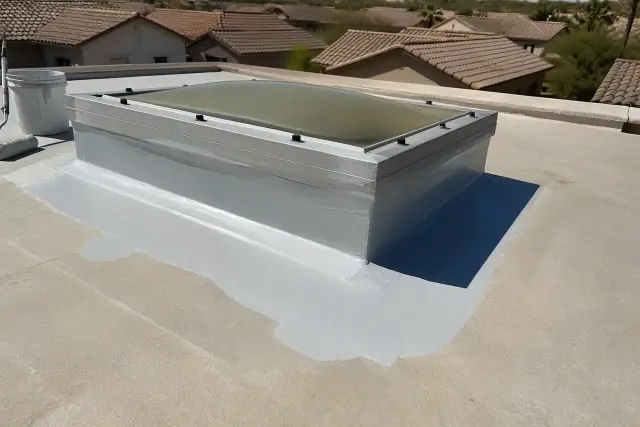
Contractor applying liquid roof coating to a skylight curb on a commercial building in Phoenix, AZ.

Silicone and Acrylic Roof Coatings

Silicone restoration coatings run roughly $2 to $7 per square foot installed and can add 10 or more years to a structurally sound membrane's usable life. Reflective coatings can lower rooftop surface temperatures by 50 to 70 degrees compared with dark roofing, reducing heat gain and HVAC run time below.

  • Confirm the existing roof is structurally sound
  • Identify wet insulation before coating
  • Prepare and clean the membrane surface
  • Restore reflective surface protection
  • Track coating condition during later inspections
Request Estimate
Modified bitumen roofing repairs on a parapet wall at a commercial job site in Phoenix, AZ.

Modified Bitumen and Built-Up Roofing

Modified bitumen and built-up roofing generally last 15 to 25 years, and disciplined patching or resealing can add useful time even when a system is already 15 or 20 years into service. Maintenance targets alligatoring, blisters, dried flashing cement, and exposed asphalt where protective gravel has shifted.

  • Redistribute gravel over bare asphalt areas
  • Patch alligatoring and surface cracks
  • Evaluate blisters before they spread
  • Reseal aged flashing cement
  • Compare affected area and repair cost with replacement
Request Estimate
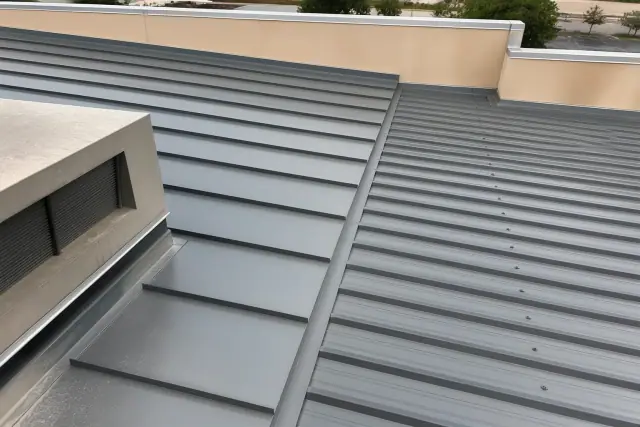
Completed standing-seam and R-panel metal roofing on a commercial building in Phoenix, AZ.

Standing-Seam and R-Panel Metal Roofing

Commercial metal roofing can reach a 30 to 45 year service life with appropriate care. We maintain standing-seam and R-panel roofs by including panel attachment, seams, flashing, penetrations, drainage, and rooftop equipment interfaces in scheduled inspections.

  • Inspect standing seams and R-panel laps
  • Review wind uplift resistance
  • Check flashing and penetrations
  • Keep drainage paths clear
  • Document changes at equipment curbs
Request Estimate
Finding the Right Fit

A Maintenance Plan for Your Roof's Needs

The right scope depends on roof type and age, current moisture, drainage, equipment, access frequency, coating condition, and documented defects. We use those findings to separate immediate leak risks from preventive work and longer-term restoration or replacement planning.

Photo-Documented Roof Findings

Every deficiency is photographed and recorded with its location and condition. Moisture-scan findings add context beneath the visible surface so property teams can evaluate recommendations from a clear maintenance history.

Phoenix-Specific Maintenance Scheduling

We time routine visits around the region's heat and monsoon cycle, with added frequency for roofs affected by equipment work, restaurant exhaust, dust, or regular foot traffic. That schedule keeps seasonal preparation and post-storm review connected instead of treating them as isolated calls.

Standards-Based Roofing Work

Crews follow manufacturer specifications and National Roofing Contractors Association inspection and repair practices. Wind-uplift work is evaluated against ASCE 7 requirements for the region, alongside applicable Arizona contractor and Phoenix permitting requirements.

What Sets Us Apart

Why Phoenix Property Teams Choose Our Maintenance Approach

Our recommendations start with measured roof condition rather than a predetermined repair or replacement. Licensed contractor registration, liability coverage, system-specific maintenance, and documented findings give owners a practical basis for prioritizing work across warehouses, retail centers, restaurants, and office properties.

Request Roof Assessment

Heat and UV Deterioration

At roughly 1,100 feet in the Salt River Valley, commercial roofs absorb intense solar loading and repeated 40-degree overnight-to-afternoon temperature swings. Membranes past the 15-year mark can show shrinkage at parapets, cracked pipe boots, dried asphaltic compounds, and lost plasticizers under this repeated movement and UV exposure.

Ponding Water and Drainage

Standing water left for more than 48 hours accelerates membrane breakdown and adds structural dead load. Older Phoenix industrial parks often have undersized or clogged drainage, making slope, scuppers, drains, and ponding areas central parts of each inspection.

Monsoon Wind and Hail Damage

Monsoon gusts over 60 mph can lift loose base flashing and membrane edges, while hail-related repair calls spike each August across the Valley. Inspection includes attachment patterns and wind-uplift resistance so loosened mechanically fastened areas can be identified before another storm.

Rooftop Foot-Traffic Punctures

HVAC technicians, satellite installers, and maintenance crews can puncture membranes when access routes lack walk pads. Concentrating traffic on protected paths around roof hatches and equipment helps prevent this recurring form of physical damage.

Loose Seams and Flashing

Thermal movement and wind concentrate stress at seams, parapet transitions, pipe boots, curbs, and membrane edges. Probing welds and checking flashing details reveals small separations that can be rewelded or resealed before they open a path for wind-driven rain.

Hidden Wet Insulation

Moisture can spread laterally beneath a flat roof long before a ceiling stain identifies the entry point. Infrared scanning helps define the wet area so the repair recommendation addresses affected insulation instead of relying only on the visible interior drip.

How It Works

Our Commercial Roof Maintenance Process

The process moves from roof history and measured condition to prioritized work and a documented schedule. Each step is designed to show what was found, why it matters, what was addressed, and what should be monitored next.

01.

Review the Roof and Maintenance History

We identify the roof system, age, prior repairs, coatings, leak history, rooftop equipment, and access patterns. Existing photos and reports help distinguish recurring trouble spots from a new condition.

02.

Inspect the Complete Roof Assembly

The field review covers membrane surfaces, seams, flashing, penetrations, slope, ponding areas, drains, scuppers, parapets, and equipment curbs. System-specific checks focus on TPO welds, foam and coating surfaces, metal attachment, or bitumen and gravel condition.

03.

Scan for Moisture and Record Findings

Infrared moisture scanning looks beneath the visible surface for wet insulation, and photos capture each deficiency in context. The resulting record supports a condition-based scope instead of guesswork.

04.

Prioritize Drainage and Active Defects

Active leaks, open seams, compromised flashing, punctures, wet insulation, and blocked drainage move to the front of the work list. Drains and scuppers are cleared so ponding does not keep stressing the repaired surface.

05.

Complete Preventive Roof Work

Approved work may include resealing penetrations, rewelding TPO seams, patching bitumen, redistributing gravel, cleaning membranes, or adding walk pads. Coating or recoat work is planned only when the existing roof condition supports it.

06.

Document Results and Set the Next Visit

The updated maintenance file records completed work, remaining observations, and the recommended inspection cadence. Most properties return before and after monsoon season, while higher-traffic or equipment-heavy roofs may move to quarterly checks.

Plan the Next Step

Schedule a Commercial Roof
Maintenance
Consultation

Request an inspection to document current roof condition, identify active and developing defects, and build a maintenance scope around your system, building use, and Phoenix weather exposure.

Commercial Roof Maintenance Help

Commercial Roof Maintenance FAQs

These answers cover inspection timing, preventive work, roof-system life, repair and replacement decisions, Phoenix pricing factors, lease responsibility, and monsoon preparation.

Call Our Roof Team

A proper program includes scheduled inspections, debris and drain clearing, seam and flashing checks, membrane cleaning, minor repairs such as resealing penetrations, and detailed photo documentation. In Phoenix, it also includes monsoon preparation, ponding-water assessment, and attention to walk paths around rooftop equipment.

Most commercial properties should be inspected at least twice a year, once in late spring before monsoon season and again in early fall. Buildings with rooftop HVAC units, restaurant exhaust, or heavy foot traffic may need quarterly checks.

The 25% rule is a common benchmark for comparing repair with replacement. When damage affects more than 25% of the roof area, code and insurance requirements may make a larger compliant scope necessary; when repair costs approach 25% of full replacement, replacement may also be the stronger long-term choice. The actual decision still depends on roof condition, system age, moisture, and applicable requirements.

Inspect before and after monsoon season, keep drains, scuppers, and gutters clear, and address seam separation or flashing gaps promptly. Clean reflective membranes on the recommended cycle, follow manufacturer coating schedules, and direct rooftop traffic onto walkway pads. Additional checks after major storms help find new wind, hail, or drainage damage.

Common conditions include heat-related membrane shrinkage, UV chalking or cracking, ponding water, clogged drainage, loose flashing, separated seams, hail and wind damage, rooftop punctures, and wet insulation hidden beneath the surface. The exact pattern depends on the roof system, age, access, and maintenance history.

TPO maintenance includes cleaning at least once a year, probing heat-welded seams, checking flashing and penetrations, clearing drainage, and watching for surface chalking. Buildings near construction or heavy dust may need more frequent cleaning. A separated seam should be rewelded before it becomes an active leak path.

Most commercial roof systems fall between 15 and 35 years with proper maintenance. TPO commonly lasts 20 to 30 years, modified bitumen and built-up roofing 15 to 25 years, and metal roofing 30 to 45 years. Spray foam can last 20 years or more when its protective surface is maintained, including recoating on the appropriate cycle.

Ongoing commercial roof maintenance in the Phoenix market generally runs $0.03 to $0.09 per square foot per year. For a 20,000 square foot roof, that is about $600 to $1,800 annually. System type, roof age, visit frequency, and rooftop equipment affect the final scope and price.

Commercial roof replacement in Phoenix typically runs $2.00 to $12.00 per square foot installed, depending on the system and project conditions. Warehouses and retail plazas using modified bitumen or BUR average $7 to $11 per square foot for a 15 to 25 year lifespan, while restaurants and heavier-duty systems often run $9 to $14 per square foot with a 20 to 30 year expected life. Foam roofing is roughly $5.00 to $9.00 per square foot for a standard one-inch build, with additional cost when tear-off is required.

Simple commercial roof repairs in Phoenix typically run $300 to $3,500 depending on scope. A neglected leak that saturates insulation can move into five figures, so the source, wet area, and surrounding assembly need to be assessed before pricing the permanent repair.

A silicone or acrylic coating may be appropriate when the existing membrane remains structurally sound and inspection does not show widespread wet insulation or damage. Surface preparation and system compatibility still matter, so coating should follow a condition assessment rather than serve as a cover for unresolved defects.

Responsibility depends on the lease. A triple-net lease typically assigns maintenance and repairs to the tenant, while a gross lease usually leaves that responsibility with the landlord; some leases divide minor repairs from structural work or replacement. Both parties should keep the roof's inspection reports and maintenance history because documentation often clarifies prior condition and scope.

Schedule a late-spring inspection to clear drains and scuppers, locate ponding areas, probe seams, check flashing and membrane edges, and document punctures or weak attachment. Repairing those defects before wind-driven rain arrives reduces the number of open paths into the assembly. If an active leak develops, Phoenix Commercial Roofing Company provides 24/7 emergency roof repair and follows the temporary control work with a permanent repair plan.