Proudly serving Phoenix, Mesa, Scottsdale, Tempe, Chandler, Glendale & surrounding areasCall or Text 24/7: 480-319-7533
Aerial view of residential neighborhoods, desert foothills, and arterial roads in Phoenix, AZ during late afternoon.

Commercial Spray Foam Roofing Installation and Restoration for Large-Scale Buildings in Phoenix, AZ

Phoenix Commercial Roofing Company installs, repairs, and maintains commercial spray foam roofing systems in Phoenix, Arizona. Our related work includes commercial flat roof repair, roof replacement, TPO roofing, roof coatings, commercial metal roofing, modified bitumen, built-up roofing, inspections, and maintenance. We handle scopes ranging from small repair patches to full spray foam installations on warehouse roofs covering tens of thousands of square feet. Each project is evaluated for the building, existing roof, and leak history before work begins.

Dark membrane roof surfaces in Phoenix can regularly climb past 160 degrees Fahrenheit in summer, while monsoon downpours arrive from July through September. That cycle can split seams, blister coatings, and push ponding water into low spots on aging built-up and modified bitumen roofs. We begin with a roof walk and a moisture scan where warranted because applying foam over trapped moisture can cause early failure. Our crews apply closed-cell SPF and protect it with an elastomeric or silicone topcoat suited to Arizona's year-round UV exposure.

We hold Arizona Registrar of Contractors licensing, carry general liability insurance, follow Spray Polyurethane Foam Alliance application guidance, and reference ASTM D6083 and ASTM E108 testing protocols. Request an inspection and written scope for your Phoenix commercial roof.

Phoenix Commercial Roofing Company provides commercial spray foam roofing in Phoenix and nearby Scottsdale, Tempe, Mesa, Glendale, and Chandler.

★ ★ ★ ★ ★4.9/5 Customer Rating · 29 Years of Commercial Roofing Experience · Thousands of Roofs Serviced · Licensed, Bonded & Fully Insured · Serving Businesses & Property Managers

Commercial Spray Foam Roofing Benefits

How Spray Foam Roofing Works

Spray polyurethane foam begins as two liquid components that react on contact. The material expands to roughly 20 to 30 times its liquid volume and cures within seconds, allowing it to fill low spots and bond directly to the roof substrate without fasteners.

The cured closed-cell SPF forms one continuous waterproof membrane with zero seams. It also self-flashes around HVAC curbs, pipe boots, and parapet walls, reducing the laps and mechanical attachment points where flat roofs commonly leak.

Our crews apply closed-cell foam at densities of roughly 2.5 to 3 pounds per cubic foot, then seal it beneath an elastomeric or silicone topcoat. Cured SPF provides an R-value near 6.0 to 6.5 per inch, combining insulation and waterproofing in one application.

Benefits for Phoenix Commercial Roofs

A properly evaluated spray foam application can address the energy-performance and recurring-leak concerns that drive many Phoenix roof decisions. Its monolithic, lightweight construction is especially useful where owners want to reduce seam exposure and avoid a full tear-off when existing conditions allow an overlay.

  • Continuous waterproof membrane with zero seams
  • R-value near 6.0 to 6.5 per inch
  • Direct bonding without mechanical fasteners
  • Self-flashing around curbs, boots, and parapets
  • Lightweight compared with gravel-ballasted BUR
  • Puncture- and impact-resistant surface
  • Can cover an existing roof in most suitable cases
  • Elastomeric or silicone protection from year-round UV
Commercial Foam Roofing

Spray Foam Roofing Services

We tailor spray foam and related flat roof work to the condition, scale, and goals of each Phoenix commercial property. Service begins with evaluation and a written scope, whether the roof needs a localized repair, a complete SPF application, or comparison with another commercial roofing approach.

Commercial Spray Foam Installation

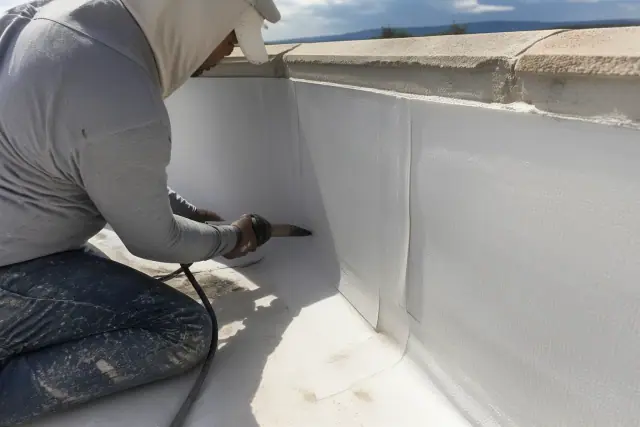
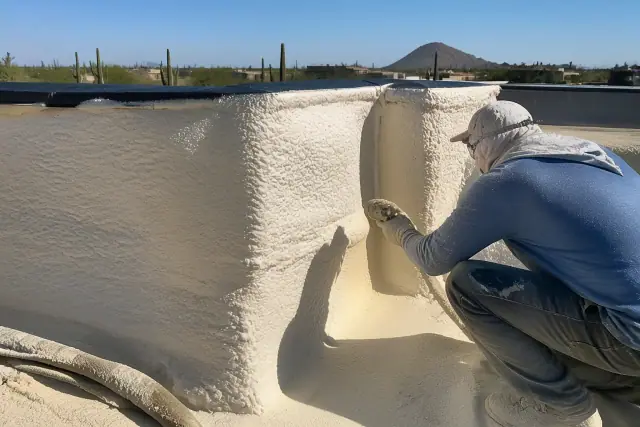
Crew members applying spray foam insulation to a roof parapet wall in Phoenix, AZ.

We install closed-cell SPF as a seamless membrane over suitable commercial roof substrates. The applied foam conforms around penetrations and roof transitions before an elastomeric or silicone topcoat seals the system against Phoenix UV exposure.

Request Estimate

Spray Foam Roof Repair

Technician repairing a wide expansion joint with polyurethane foam on a roof in Phoenix, AZ.

Localized foam roof repairs address damaged sections without treating every roof as a complete replacement. We evaluate moisture, leak history, penetrations, and coating condition before defining the repair area and protective finish.

Request Estimate

Commercial Flat Roof Repair

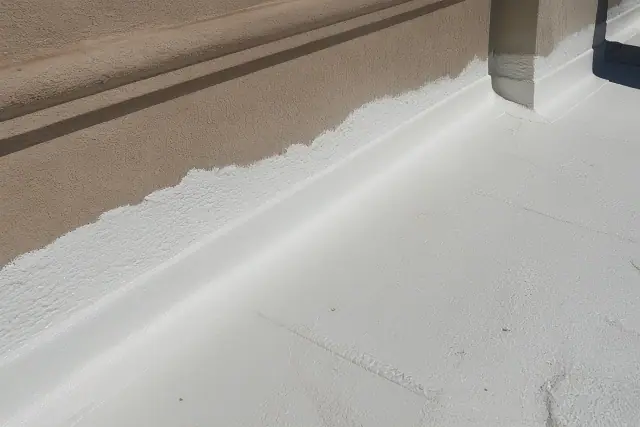
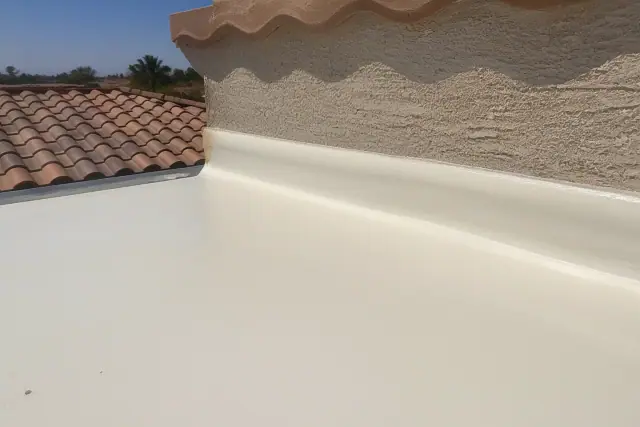
Spray foam roof coating applied to a parapet wall on a flat roof in Phoenix, AZ.

Our commercial flat roof repair work covers small patches and monsoon-opened areas on aging systems. The assessment focuses on likely entry points such as seams, laps, fasteners, low spots, HVAC curbs, pipe boots, and parapet transitions.

Request Estimate

Commercial Roof Replacement

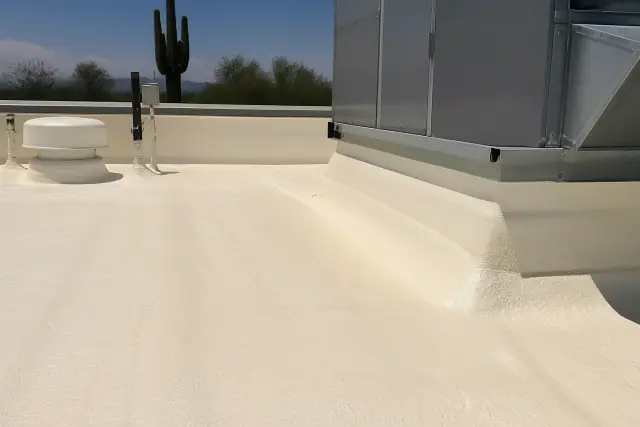
Spray foam roofing transition around a rooftop HVAC unit with a view of a saguaro cactus in Phoenix, AZ.

When existing conditions do not support repair or a direct foam overlay, we can scope commercial roof replacement. The written recommendation weighs roof condition, trapped moisture, energy goals, and leak history rather than defaulting every property to the same material.

Request Estimate

Commercial Roof Coatings

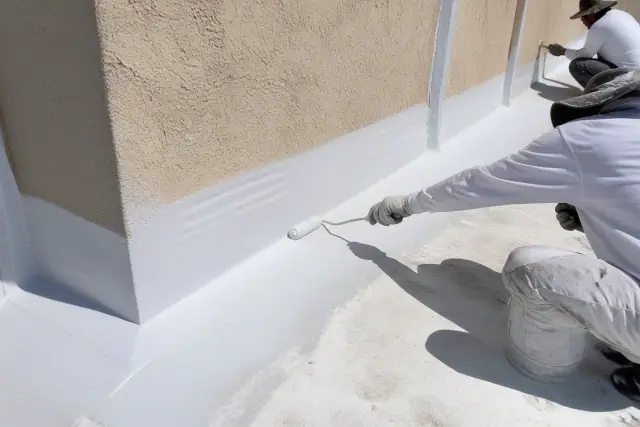
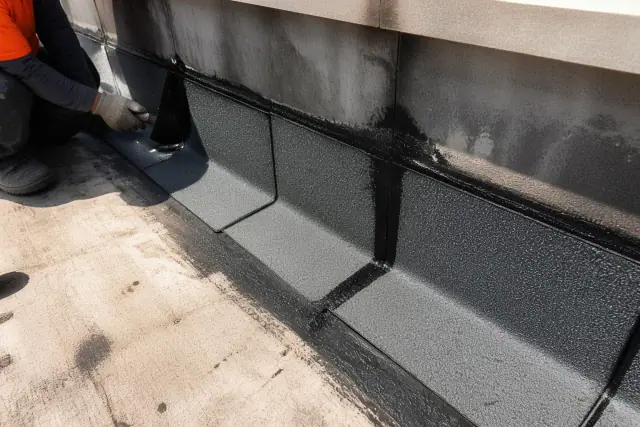
Worker applying a commercial roof coating to a parapet wall at a jobsite in Phoenix, AZ.

Elastomeric and silicone topcoats protect installed SPF from the UV exposure Arizona roofs receive year-round. We also evaluate coating blisters and damage that may allow water to reach low areas beneath an aging roof surface.

Request Estimate

Roof Inspections and Maintenance

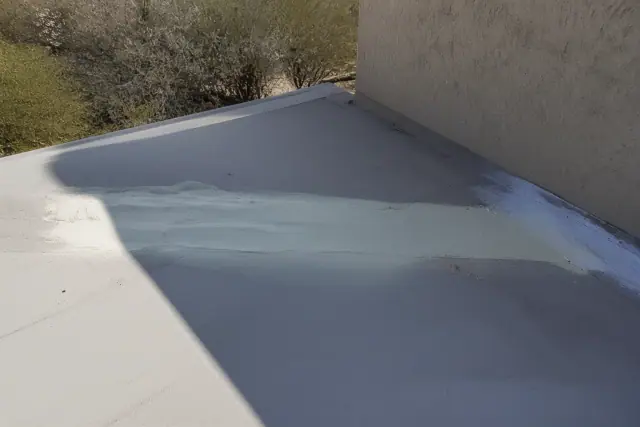
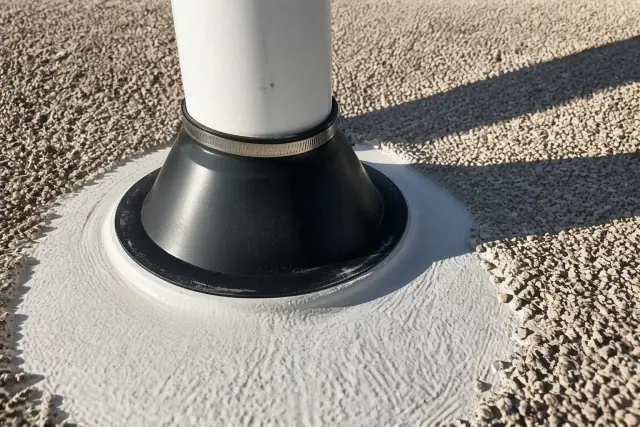
Spray foam roofing repair around a vent pipe on a gravel roof in Phoenix, AZ.

Commercial roof inspections and maintenance help owners track seam movement, coating condition, ponding, impact damage, and vulnerable details before they become larger leak paths. For SPF candidates, the inspection also determines where a moisture scan is warranted.

Request Estimate
Commercial Roof Materials

Commercial Roofing Options

Spray foam is one of several commercial roofing options we evaluate and install in Phoenix. Comparing its seamless insulation and waterproofing with seamed membranes and other roof assemblies helps match the recommendation to the property's existing roof and priorities.

Closed-cell spray foam insulation applied to a stucco parapet wall with gravel ballast in Phoenix, AZ.

Closed-Cell Spray Polyurethane Foam

Closed-cell SPF combines a waterproofing layer and insulation in one direct-bonded application. Its expansion helps form slope in low areas and creates continuous details around common commercial roof penetrations.

  • Roughly 2.5 to 3 pounds per cubic foot
  • Expands roughly 20 to 30 times in volume
  • Cures within seconds
  • Bonds to suitable substrates without fasteners
  • Protected by elastomeric or silicone topcoat
Request Estimate
Technician heat-welding white TPO roofing membrane along a parapet wall corner at a job site in Phoenix, AZ.

TPO Roofing

TPO is a commercial membrane option we install on Phoenix properties. Unlike monolithic foam, it relies on seams and attachment details, so the choice should reflect the roof's energy priorities, configuration, and leak history.

  • Commercial membrane roofing option
  • Installed on Phoenix commercial properties
  • Uses seams and attachment details
  • Compared against foam for leak history
  • Selected through a written roof scope
Request Estimate
Modified bitumen membrane seams with bitumen bleed-out along a rooftop parapet wall in Phoenix, AZ.

Modified Bitumen Roofing

Modified bitumen is another commercial roof material we install and encounter on aging Phoenix properties. Its seams and laps can become leak points under repeated thermal movement, so evaluations look closely at those transitions and any low areas holding water.

  • Commercial flat roof material
  • Uses seams and laps
  • Checked for thermal-cycle splitting
  • Evaluated for ponding low spots
  • Considered alongside foam and TPO
Request Estimate
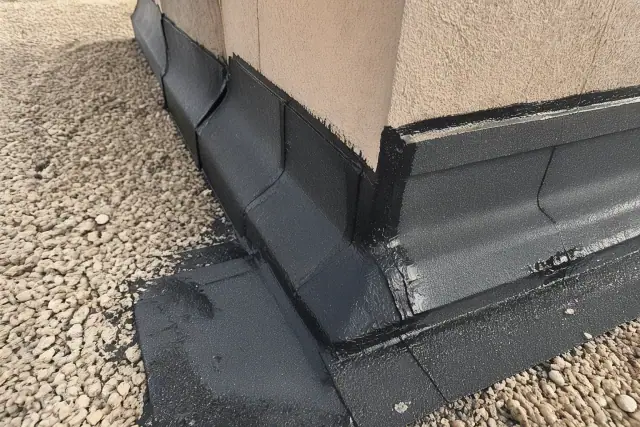
Built-up roofing with bitumen layers and mineral cap sheet on a parapet wall in Phoenix, AZ.

Built-Up Roofing (BUR)

Built-up roofing is common among the aging commercial systems we assess in Phoenix. Gravel-ballasted BUR is heavier than foam, while its laps and roof details remain potential water-entry points when heat cycling and monsoon rain expose weaknesses.

  • Established commercial roof assembly
  • Gravel-ballasted configurations are heavier than foam
  • Laps and details require leak inspection
  • Low spots are checked for ponding water
  • Existing conditions determine overlay suitability
Request Estimate
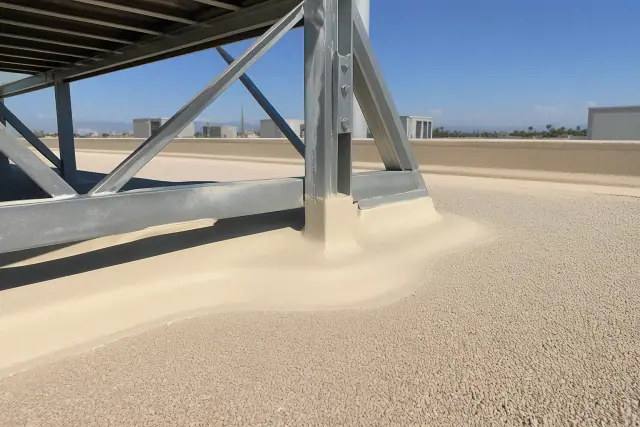
Spray foam roofing applied around a structural support stand on a gravel rooftop in Phoenix, AZ.

Related Commercial Roofing Support

A spray foam decision may be part of a wider commercial roof plan. We also provide the related inspection, repair, replacement, coating, metal roofing, and maintenance services needed to address the actual condition of the property.

  • Commercial metal roofing
  • Commercial flat roof repair
  • Commercial roof replacement
  • Commercial roof inspections
  • Commercial roof maintenance
Request Estimate
Finding the Right Fit

Choosing the Right Commercial Roof Approach

Foam is especially worth considering when energy performance and a history of leaks are the deciding factors. TPO, modified bitumen, BUR, metal roofing, repair, or replacement may suit other conditions, so we inspect the roof, check moisture where warranted, and document the recommended scope before work starts.

Moisture-First Evaluation

Every project begins with a review of the existing deck, including a moisture scan where warranted. Finding trapped moisture before spraying helps avoid the leading cause of early foam failure we see on Phoenix commercial roofs.

Licensed and Insured

Phoenix Commercial Roofing Company holds Arizona Registrar of Contractors licensing and carries general liability insurance. Our SPF work follows Spray Polyurethane Foam Alliance application guidance and testing protocols referenced in ASTM D6083 and ASTM E108.

Phoenix Climate Focus

Phoenix roofs can move between 115-degree afternoons and cool desert nights while also facing monsoon hail and wind-blown debris. We evaluate roof materials, seams, coatings, drainage, and penetrations against those local conditions before recommending foam or another approach.

What Sets Us Apart

Why Choose Us for Spray Foam Roofing?

Our recommendations begin with what is already on the roof, where moisture or leaks are present, and whether energy performance is a primary goal. That measured process supports projects ranging from focused patches to complete warehouse installations, with a written scope before spraying begins.

Request Roof Assessment

Trapped Deck Moisture

Foam applied over trapped moisture is the single biggest cause of early failure we see on Phoenix commercial roofs. A moisture scan where warranted identifies wet areas before the team defines the application or repair scope.

Split Seams and Fasteners

Seams, laps, and mechanical fasteners on TPO, modified bitumen, and built-up roofs are common starting points for leaks. A monolithic foam membrane removes seams and bonds directly to a suitable substrate without fasteners.

Blistered Roof Coatings

Repeated summer heat cycling can blister aging commercial roof coatings. Inspection of the coating and material beneath it helps determine whether the area calls for repair, a new protective topcoat, or a broader roofing scope.

Ponding Water in Low Spots

Monsoon downpours can drive water into low areas on aging flat roofs. Because expanding SPF can fill low spots and conform to the substrate, the written scope can address drainage-sensitive areas after existing moisture is evaluated.

Monsoon Hail and Debris

Hail and wind-blown debris can puncture or damage commercial roof surfaces during monsoon season. Spray foam's puncture- and impact-resistant surface is one reason Phoenix owners consider it for exposed flat roofs.

Extreme Thermal Cycling

Phoenix commercial roofs repeatedly expand and contract between intense afternoons and cooler desert nights. Seamless foam handles that thermal cycling differently from membranes that depend on seams, laps, or mechanical fasteners.

How It Works

Our Spray Foam Roofing Process

The process moves from roof evaluation to moisture review, written scope, SPF application, detail work, and protective coating. Clear steps help align the selected roof approach with existing conditions before material is applied.

01.

Roof Walk and Condition Review

We walk the roof to review the existing material, leak-prone details, low spots, coatings, and penetrations. The inspection establishes whether the property needs repair, overlay evaluation, or replacement planning.

02.

Moisture Scan Where Warranted

Where conditions call for it, we scan the existing deck for trapped moisture. That result helps keep new foam off wet substrate and defines any areas that require separate attention.

03.

Written Project Scope

We document the recommended work before spraying starts. The scope reflects the roof walk, moisture findings, project size, existing material, leak history, and the building owner's energy-performance priorities.

04.

Two-Component SPF Application

The two liquid SPF components react on contact, expand rapidly, and cure within seconds. Crews build a continuous closed-cell layer that bonds directly to the prepared, suitable substrate without mechanical fasteners.

05.

Seamless Detail Work

Expanding foam fills low areas and self-flashes around HVAC curbs, pipe boots, and parapet walls. These continuous transitions reduce reliance on the seams and laps where many flat-roof leaks begin.

06.

Elastomeric or Silicone Topcoat

An elastomeric or silicone topcoat seals the cured foam beneath protection intended for Arizona's year-round UV exposure. Because the foam sets in minutes, most Phoenix commercial SPF projects finish in days rather than weeks.

Plan Your Roof Work

Schedule a Spray Foam
Roofing
Consultation

Start with a roof walk, moisture evaluation where warranted, and a written scope for your Phoenix commercial property. We can compare spray foam installation or repair with TPO, modified bitumen, BUR, coatings, metal roofing, maintenance, and replacement needs supported by the roof's actual condition.

Commercial Roofing Help

Spray Foam Roofing FAQs

These answers cover how commercial SPF works, what Phoenix roof conditions matter, and how we evaluate installation or repair. A roof walk and moisture review are still necessary to define the right scope for a particular building.

Call About Spray Foam

Commercial spray foam roofing uses two liquid components that react, expand, and cure into closed-cell spray polyurethane foam. The result is a seamless layer that provides waterproofing and insulation in one application.

The two components react on contact, and the foam cures within seconds. It sets up in minutes, which is one reason most commercial SPF projects in Phoenix finish in days rather than weeks.

Cured closed-cell SPF carries an R-value near 6.0 to 6.5 per inch. That lets one application provide both insulation and waterproofing.

In most cases, foam can go directly over an existing roof without a full tear-off, but the existing conditions still control the decision. We walk the roof and use a moisture scan where warranted before writing the scope.

Applying foam over trapped moisture is the single biggest cause of early failure we see on Phoenix commercial roofs. A moisture scan where warranted helps identify wet deck areas before foam application begins.

SPF creates a monolithic membrane with zero seams and bonds without mechanical fasteners. It also self-flashes around HVAC curbs, pipe boots, and parapet walls, reducing the transitions where leaks often begin.

We seal the closed-cell foam beneath an elastomeric or silicone topcoat. That protective finish is selected for the year-round UV exposure Arizona commercial roofs receive.

Dark membrane surfaces can regularly climb past 160 degrees Fahrenheit during Phoenix summers. Cycling between intense heat and cooler desert nights can split seams and blister coatings on aging systems.

TPO, modified bitumen, and built-up roofing rely on seams, laps, or fasteners that may become leak points. Foam is monolithic, self-flashes around roof details, and adds insulation value that a membrane alone does not provide.

Our spray foam work ranges from small flat-roof repair patches to full installations on warehouse roofs covering tens of thousands of square feet. The project is still sized through a roof walk, moisture scan where warranted, and written scope.

Spray foam is puncture resistant and impact resistant, qualities that matter during monsoon hail and wind-blown debris season. Any roof damage should still be inspected so the affected area can be included in the repair or maintenance scope.

We begin with a walk of the roof, perform a moisture scan where warranted, and prepare a written scope. Those steps connect the proposed work to the existing roof condition before spraying begins.

Phoenix Commercial Roofing Company provides commercial spray foam roofing and related flat roof services throughout Phoenix, Scottsdale, Tempe, Mesa, Glendale, and Chandler. We also work on commercial properties around downtown Phoenix, the Camelback Corridor, and the industrial parks ringing Sky Harbor International Airport.