Proudly serving Phoenix, Mesa, Scottsdale, Tempe, Chandler, Glendale & surrounding areasCall or Text 24/7: 480-319-7533
Aerial view of residential neighborhoods, desert foothills, and arterial roads in Phoenix, AZ during late afternoon.

Commercial Roof Coatings: Silicone, Acrylic, and Elastomeric Systems for Phoenix, AZ Businesses

Phoenix Commercial Roofing Company provides commercial roof coatings, flat roof repair, spray foam roofing, and roof inspections for property owners and managers across metro Phoenix. We apply elastomeric, silicone, acrylic, and aliphatic polyurethane systems over foam, modified bitumen, built-up roofing, single-ply, and metal substrates. Our work also includes commercial roof replacement, TPO roofing, metal roofing, leak detection, and ongoing maintenance. Every recommendation starts with the roof's condition, drainage history, exposure, and budget.

Phoenix roof surfaces can climb past 160°F on a July afternoon, accelerating UV breakdown and thermal cycling. Monsoon downpours can drop an inch of rain in under an hour, exposing weak seams, flashing, and drainage. Roof membranes also move through daily temperature swings of about 60 degrees. We begin with moisture scanning and preparation so the selected coating is matched to the substrate and the conditions it must handle.

We are a licensed, insured commercial roofing contractor operating under the Arizona Registrar of Contractors. Our application methods follow ASTM International standards and Roof Coatings Manufacturers Association guidance for mil thickness and cure time.

Phoenix Commercial Roofing Company provides commercial roof coatings in Phoenix and across the surrounding metro area, including Scottsdale, Tempe, Mesa, Chandler, and Glendale.

★ ★ ★ ★ ★4.9/5 Customer Rating · 29 Years of Commercial Roofing Experience · Thousands of Roofs Serviced · Licensed, Bonded & Fully Insured · Serving Businesses & Property Managers

Commercial Roof Coating Options & Benefits

What Are Commercial Roof Coatings?

Commercial roof coatings are liquid-applied membranes used to protect and restore existing low-slope roofing. Elastomeric, silicone, acrylic, and aliphatic polyurethane chemistries respond differently to UV exposure, foot traffic, standing water, and thermal movement.

A compatible coating can be applied over foam, modified bitumen, built-up roofing, single-ply membranes, and metal after the roof is inspected and prepared. Application may use spray, roller, or squeegee methods, with a wet film gauge confirming the manufacturer-specified thickness.

Coating is a restoration option for a roof that is weathered but structurally sound; it cannot correct a deteriorated deck, saturated insulation, or severe slope problems. Moisture scans, seam repairs, flashing work, cleaning, and primer determine whether a coating can perform as intended.

Benefits of a Properly Matched Roof Coating

The right system can address Phoenix heat, UV exposure, roof movement, ponding history, and vulnerable details without forcing a structurally sound roof into premature replacement.

  • Elastomeric membranes flex through Phoenix's 60-degree daily temperature swings.
  • Silicone resists UV degradation and standing water without reemulsifying.
  • Acrylic provides an affordable, reflective option for properly drained roofs.
  • White and light-colored coatings can lower roof surface temperatures by as much as 50 to 60 degrees.
  • Cool Roof Rating Council listed products document reflectivity and thermal emittance for applicable programs.
  • Restoration can add 10 to 15 years of service life at roughly 20 to 30 percent of full replacement cost.
  • A continuous moisture barrier seals seams, penetrations, and flashing details.
  • Planned inspections can identify chalking, cracking, or thinning before active leaks develop.
Commercial Roofing Services

Commercial Roof Coating & Restoration Services

Our coating work is supported by inspection, preparation, repair, restoration, and maintenance services so the finished membrane addresses the roof beneath it rather than hiding existing damage.

Commercial Roof Coating Installation

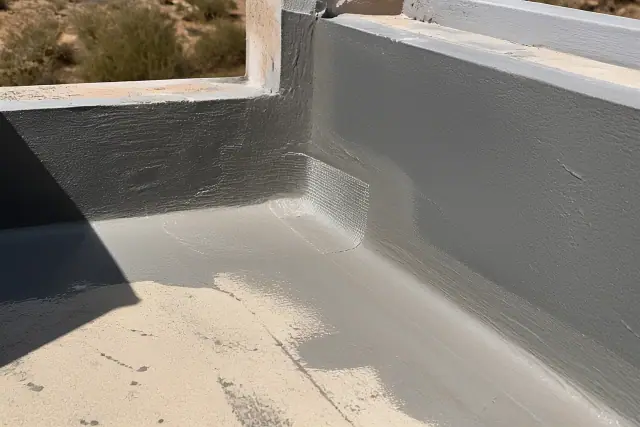
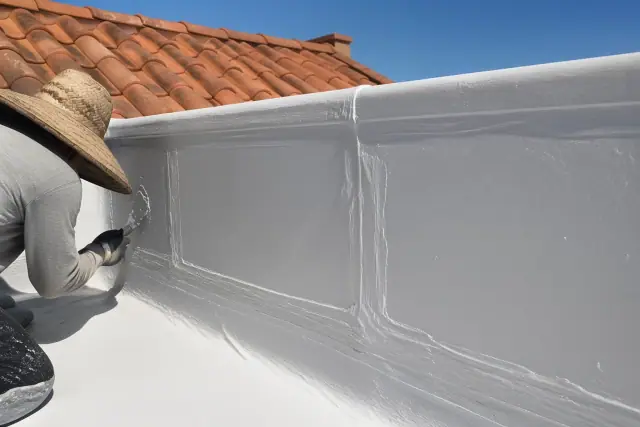
Close-up of liquid elastomeric coating on a parapet wall flashing at a commercial roof in Phoenix, AZ.

We apply liquid systems by spray, roller, or squeegee according to the substrate and detail work. Base and top coats are installed to the manufacturer's wet mil specification and checked with a wet film gauge.

Request Estimate

Commercial Flat Roof Repair

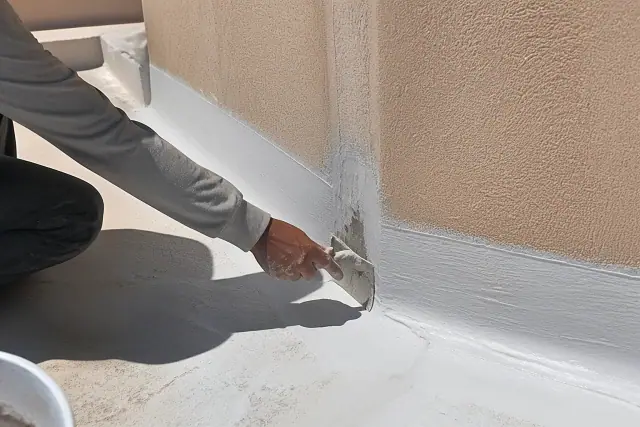
Elastomeric coating applied to a roof parapet wall during a commercial roof repair in Phoenix, AZ.

Leak detection, hail damage repair, and mechanical correction of seams and flashing prepare vulnerable areas before coating. Addressing these details helps prevent minor defects from becoming interior water damage and tenant complaints.

Request Estimate

Roof Restoration Coatings

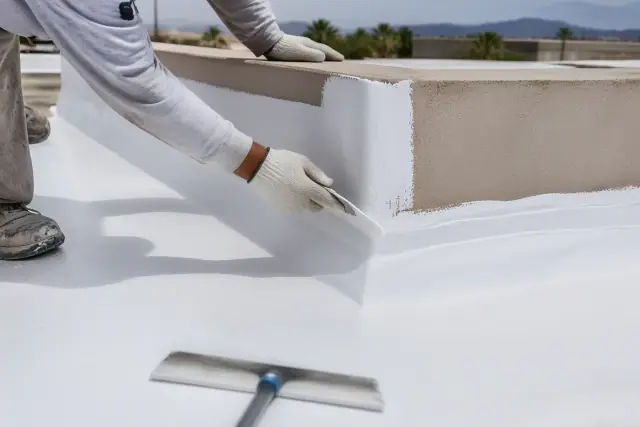
Contractors applying elastomeric coating to a parapet wall on a commercial roof in Phoenix, AZ.

A structurally sound roof that is weathered, chalky, or lightly cracked may be restored instead of replaced. A restoration coating can add 10 to 15 years of service life at roughly 20 to 30 percent of the cost of full replacement.

Request Estimate

Roof Inspections and Moisture Scanning

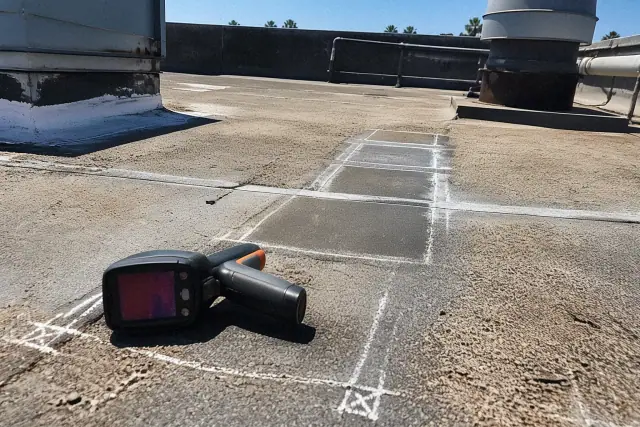
Infrared thermal imaging device and chalk-marked test patches on a gravel roof in Phoenix, AZ.

A full inspection with infrared or capacitance moisture scanning identifies wet areas and helps determine whether restoration is appropriate. We document the existing condition with photos and a moisture map before application begins.

Request Estimate

Spray Foam Roofing

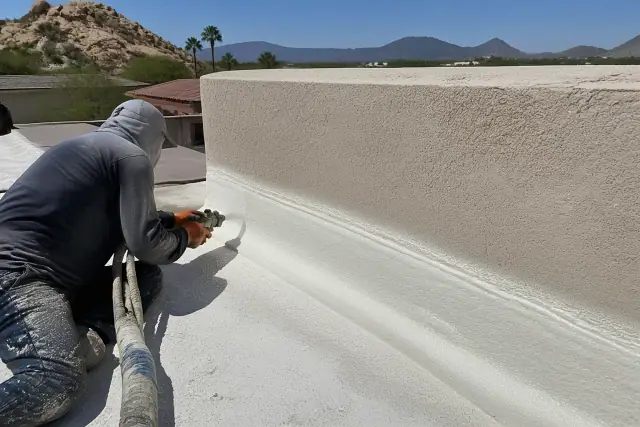
Crew members sealing a parapet wall with spray foam roofing on a commercial project in Phoenix, AZ.

Spray polyurethane foam paired with an elastomeric or silicone top coat can rebuild slope and insulation value where deterioration or drainage requires more than a simple recoat. The assembly offers some of the highest R-values available in roofing for buildings managing year-round cooling loads.

Request Estimate

Preventive Roof Maintenance

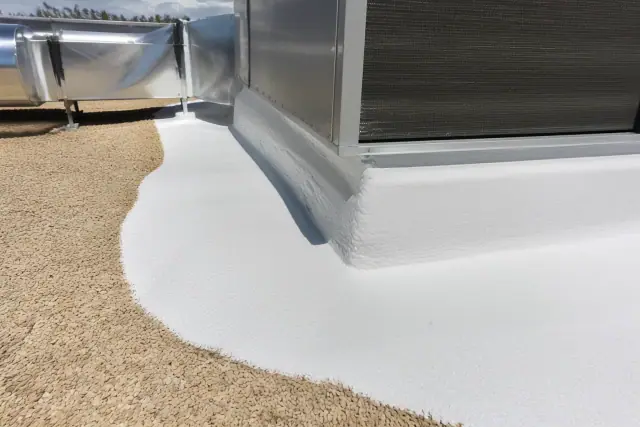
Fresh white reflective roof coating applied around metal equipment on a commercial rooftop in Phoenix, AZ.

Ongoing inspections track chalking, cracking, thinning, ponding, and recoat timing. Spring reviews can find weak details before monsoon season, while maintenance records keep the next coating decision tied to actual roof condition.

Request Estimate
Coating System Options

Types of Commercial Roof Coatings

Coating chemistry should follow the roof substrate, drainage, foot traffic, heat exposure, and restoration goals. These options cover the systems and protective finishes we use across Phoenix commercial properties.

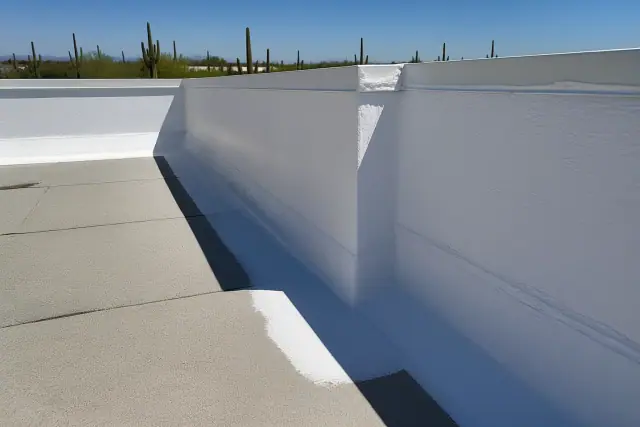
White elastomeric coating applied to parapet wall flashing on a commercial roof in Phoenix, AZ.

Elastomeric Roof Coatings

Elastomeric membranes stretch and rebound as a commercial roof expands and contracts. We commonly use them over built-up and modified bitumen roofs that need a flexible layer to bridge minor surface cracking.

  • Handles daily temperature swings of about 60 degrees.
  • Acrylic-based systems typically provide 5 to 10 years before recoating.
  • Suited to compatible BUR and modified bitumen substrates.
  • Bridges minor cracking without splitting when properly specified.
  • Maintenance and timely recoating support a longer service cycle.
Request Estimate
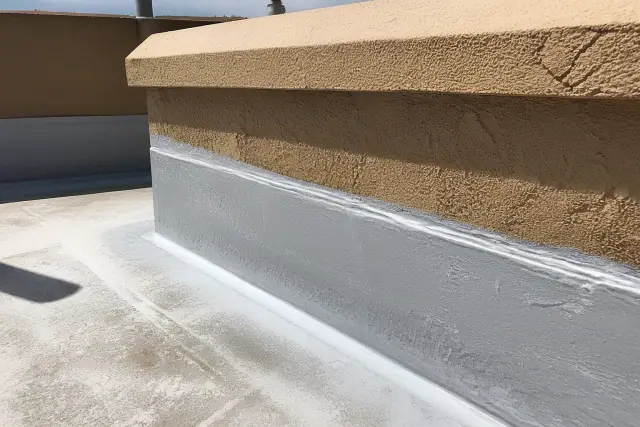
White silicone coating applied to a roof seam near a parapet wall on a concrete commercial building in Phoenix, AZ.

Silicone Roof Coatings

Silicone is a strong option for low-slope sections with documented ponding because it resists standing water and UV degradation better than acrylic. It does not reemulsify when stormwater remains on the roof for days.

  • Properly applied systems can provide 10 to 20 years of service.
  • Typical installed cost ranges from $2.00 to $7.00 per square foot.
  • Resists ponding on roofs with poor drainage or low-slope areas.
  • Withstands intense Phoenix UV exposure.
  • Pairs water resistance with reflective roof protection.
Request Estimate
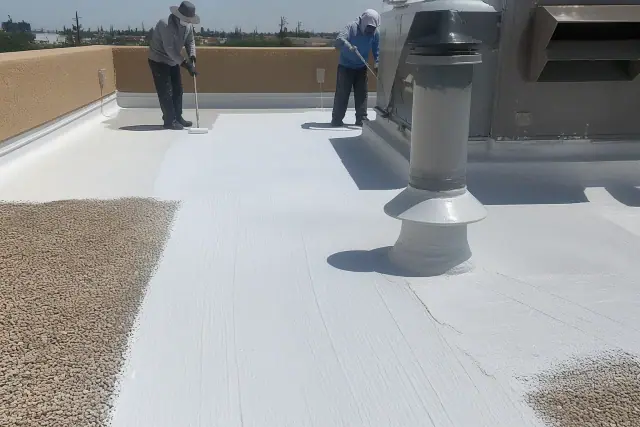
Freshly applied acrylic roof coating with roller texture around a rooftop HVAC unit at a job site in Phoenix, AZ.

Acrylic Roof Coatings

Acrylic is the most affordable coating option per square foot in the source scope and provides strong UV reflectivity on well-drained roofs. It is not appropriate where water remains standing after storms.

  • Typical cost ranges from $1.00 to $2.50 per square foot.
  • Expected service life is typically 5 to 10 years.
  • Works well on properly sloped TPO and metal roofs.
  • Provides strong solar reflectivity for Phoenix heat.
  • Requires drainage without persistent standing water.
Request Estimate
Seamless rubberized coating applied to a parapet wall flashing on a tile roof in Phoenix, AZ.

Aliphatic Polyurethane Coatings

Aliphatic polyurethane provides an abrasion-resistant finish for roofs that receive foot traffic. It can be paired with an acrylic top-coat approach when extra surface durability is needed.

  • Typical cost ranges from $2.50 to $5.00 per square foot.
  • Expected service life is typically 10 to 15 years.
  • Adds abrasion resistance on roofs with routine foot traffic.
  • Can finish a compatible acrylic coating assembly.
  • Selected when traffic resistance matters alongside weather protection.
Request Estimate
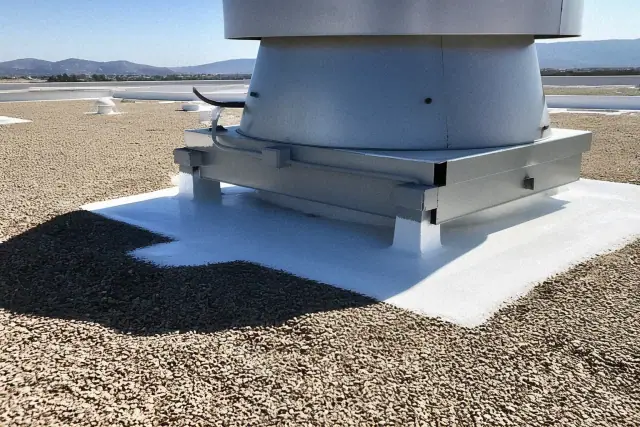
Spray foam roofing with a white protective top coat near an HVAC unit on a gravel roof in Phoenix, AZ.

Spray Foam With a Protective Top Coat

Spray polyurethane foam is an alternative restoration assembly for roofs with significant deterioration or drainage issues. A protective elastomeric or silicone top coat shields the foam while the assembly adds slope and insulation value.

  • Rebuilds slope where drainage needs correction.
  • Adds insulation value to the roofing assembly.
  • Offers some of the highest R-values available in roofing.
  • Uses an elastomeric or silicone protective finish.
  • Supports buildings managing year-round Phoenix cooling loads.
Request Estimate
Finding Your Right Fit

Choosing the Right Commercial Roof Coating Approach

Substrate, slope, ponding history, roof condition, access, penetrations, and budget determine the right approach. Phoenix commercial coating typically runs $1.50 to $5.00 per square foot installed, while silicone restoration can range from $2.00 to $7.00 per square foot; a 10,000-square-foot recoat generally falls between $15,000 and $50,000 depending on system choice and preparation needs. Saturated insulation, structural deck damage, or severe slope problems may make replacement more responsible than recoating.

Moisture-First Roof Evaluation

Infrared or capacitance scanning helps locate trapped moisture before a new membrane seals it in. The findings guide repair, remediation, restoration, or replacement recommendations based on actual roof condition.

Phoenix-Specific Application Planning

Low humidity, Sonoran sun, summer heat, and monsoon forecasts affect cure times and safe application windows. We schedule liquid-applied work around those conditions rather than treating Phoenix like a coastal market.

Documented Thickness and Scope

Every roof is measured, and wet film gauges verify coating thickness during application. Photos, a moisture map, and a written scope give owners and managers a clear record of the roof condition and planned work.

What Sets Us Apart

Why Choose Us for Commercial Roof Coatings?

Phoenix Commercial Roofing Company is a family-owned, locally operating contractor serving office parks, industrial buildings, multi-unit residential properties, retail centers, and warehouses across metro Phoenix. We are licensed and insured under the Arizona Registrar of Contractors, and our application methods follow ASTM International standards and RCMA guidance. Each recommendation is based on substrate compatibility, moisture findings, drainage, exposure, and the roof's structural condition.

Request Roof Inspection

Trapped Moisture and Blistering

Coating over damp roofing can trap moisture beneath the new membrane and lead to blistering within a season. Moisture scanning identifies wet areas so they can be addressed before coating.

Ponding Water After Monsoons

Low-slope sections may hold water for days after a Phoenix monsoon, especially where drainage or slope is poor. Silicone is generally better suited than acrylic to documented ponding conditions.

UV Exposure and Thermal Cycling

Phoenix records more than 100 days a year above 100°F, while dark membranes can exceed 160°F. Repeated expansion, contraction, and UV exposure can accelerate cracking and premature membrane failure.

Vulnerable Seams and Flashing

Seams, penetrations, and flashing details often become leak paths during heavy rain. Mechanical repairs and a compatible moisture barrier address these details before water reaches the deck.

Under-Applied Coating

Insufficient film thickness is a leading cause of early coating failure across the Valley. Measuring every square foot and verifying wet mil thickness helps prevent thin, uneven application.

Saturated Insulation or Deck Damage

A coating cannot correct saturated insulation, a deteriorated deck, extensive fastener backout, or structural failure. These findings may require targeted remediation or commercial roof replacement instead of recoating.

How it works

Our Commercial Roof Coating Process

Each project moves from inspection and moisture testing through repairs, priming, application, and documented thickness checks. This sequence keeps the coating recommendation tied to the roof's actual condition.

01.

Inspect the Roof

We walk the roof to review substrate, slope, ponding history, seams, flashing, penetrations, access, and visible damage. The inspection supports a written scope before pricing and work begin.

02.

Scan for Trapped Moisture

Infrared or capacitance scanning locates moisture that visual inspection may miss. Wet areas are mapped so coating is not installed over a damp or damaged substrate.

03.

Clean and Prepare the Surface

Pressure washing and roof preparation remove material that could interfere with adhesion. Preparation is adjusted to the substrate and the coating system selected for the roof.

04.

Repair and Spot-Prime Details

Crews mechanically repair seams and flashing, address compatible detail work, and spot-prime where required. These corrections create a sound surface before the field coats are applied.

05.

Apply Base and Top Coats

The selected liquid-applied system is installed by spray, roller, or squeegee. Base and top coats follow the manufacturer's required sequence, mil thickness, and cure time.

06.

Verify Thickness and Document the Work

Wet film gauges verify application thickness instead of relying on appearance alone. Photos and the moisture map document the starting condition and the completed roof-coating scope.

Get Better Service

Schedule a Commercial Roof Coating
Consultation

Request a roof walk, condition review, and written scope for your Phoenix commercial property. We will evaluate moisture, substrate, drainage, repairs, and coating options before recommending restoration or replacement.

Commercial Roof Coating Help

Commercial Roof Coating FAQs

These answers cover coating costs, service life, Phoenix weather, preparation, material selection, and the point at which replacement makes more sense than recoating.

Call Our Experts

Commercial roof coating generally costs $1.50 to $5.00 per square foot in the Phoenix market, with silicone restoration commonly ranging from $2.00 to $7.00 per square foot. A 10,000-square-foot restoration coating typically falls between $15,000 and $50,000 depending on roof condition, coating type, number of coats, and required repairs.

The 25% rule refers to a common building-code provision under which repairing or recovering more than 25 percent of a roof within a given period may require the entire roof section to meet current insulation and drainage requirements. We evaluate how that threshold may affect patching, recoating, or replacement decisions under Phoenix and Maricopa County code.

Coatings are a maintenance system rather than a permanent fix, and recoating may be needed every 5 to 20 years depending on the product and roof conditions. They can blister over trapped moisture and cannot correct severe ponding, saturated insulation, structural deck damage, or a failed underlying membrane.

Acrylic-based elastomeric coatings typically last 5 to 10 years before recoating in Phoenix, while silicone-based elastomeric systems can often reach 10 to 15 years with proper maintenance. UV exposure, thermal cycling, drainage, application thickness, and inspection frequency all affect the interval.

Five gallons typically covers about 80 to 160 square feet per coat when applied at the proper thickness, but the exact rate depends on the manufacturer and wet mil requirement. Material quantities should follow the published coverage rate and be verified during application with a wet film gauge.

Replacement becomes the more responsible option when inspection finds saturated insulation, structural deck damage, active leaks across a large area, extensive fastener backout, severe ponding caused by slope, or repeated coating failure. A roof that is weathered or chalky but structurally sound is more likely to qualify for restoration.

A properly applied waterproof coating seals compatible seams, flashing details, penetrations, and minor cracks that can become leak paths during heavy monsoon rain. Silicone and elastomeric systems also flex through the rapid temperature changes that accompany storms, but existing damage and drainage problems must be corrected first.

Silicone is generally the preferred coating for documented ponding areas because it resists standing water and does not reemulsify after water remains on the roof for days. Acrylic is better reserved for properly drained roofs, while severe ponding caused by poor slope may require correction before any coating is applied.

White and light-colored elastomeric or silicone coatings reflect solar radiation instead of absorbing it and can reduce roof surface temperature by as much as 50 to 60 degrees compared with an uncoated black membrane. A cooler membrane can reduce rooftop-unit runtime and also limits UV breakdown and thermal cycling.

Compatible coating systems can be applied over spray foam, modified bitumen, built-up roofing, single-ply membranes, and metal. The final choice depends on substrate condition, prior coatings, moisture findings, slope, ponding history, and the preparation required for adhesion.

Preparation begins with inspection and infrared or capacitance moisture scanning, followed by pressure washing, mechanical seam and flashing repair, moisture remediation where needed, and spot priming. The coating is then applied in base and top coats at the manufacturer's specified thickness.

Roof condition usually has the greatest effect because seam repair, trapped-moisture remediation, and ponding correction add preparation work. Roof size, access, penetrations, substrate, coating chemistry, and the number of coats also shape the written scope and final price.

Phoenix Commercial Roofing Company serves commercial properties in Phoenix, Scottsdale, Tempe, Mesa, Chandler, Glendale, and the surrounding metro area. The company works with warehouses, office parks, retail centers, industrial buildings, and multi-unit residential properties.