Proudly serving Phoenix, Mesa, Scottsdale, Tempe, Chandler, Glendale & surrounding areasCall or Text 24/7: 480-319-7533
Aerial view of residential neighborhoods, desert foothills, and arterial roads in Phoenix, AZ during late afternoon.

Commercial Roof Inspections and Moisture Diagnostics for Flat and Low-Slope Systems in Phoenix, AZ

Phoenix Commercial Roofing Company provides commercial roof inspections for property owners in Phoenix, Arizona. The team evaluates flat and low-slope assemblies, including TPO, spray foam, metal, modified bitumen, and built-up roofing. Its broader commercial roofing work also includes flat roof repair, replacement, coatings, and ongoing maintenance.

Phoenix roof surfaces can exceed 160°F, while cooler desert nights create membrane-stressing thermal cycles. Monsoon winds, hail, and sudden downpours can expose small seam, flashing, and drainage defects before a leak is visible from the ground. A structured inspection combines hands-on checks, infrared imaging, and aerial documentation where roof size calls for it.

Findings are organized in a written condition report with photos, moisture readings, and repair recommendations ranked by urgency. A free commercial roof inspection is available for property owners establishing a maintenance relationship or evaluating a roof before purchase.

Phoenix Commercial Roofing Company provides commercial roof inspections throughout Phoenix and the greater metro area, including Mesa, Gilbert, Scottsdale, Tempe, and Chandler.

★ ★ ★ ★ ★4.9/5 Customer Rating · 29 Years of Commercial Roofing Experience · Thousands of Roofs Serviced · Licensed, Bonded & Fully Insured · Serving Businesses & Property Managers

Commercial Roof Inspection Options & Benefits

What Is a Commercial Roof Inspection?

A commercial roof inspection is a structured evaluation of the roof surface and the assembly beneath it. The inspection looks for visible wear, physical weakness, drainage trouble, and concealed moisture that can affect a flat or low-slope roof.

Most Phoenix commercial properties should receive a minimum of two inspections per year: one in spring before monsoon season and one in fall after it. An additional inspection after significant hail or wind helps document damage that may not be visible from the ground.

The review extends beyond the membrane to seams, flashings, penetrations, parapet walls, curbs, the deck, and drainage components. That wider view helps connect surface symptoms with their actual source before repair priorities are set.

Benefits of Proactive Roof Inspections

Regular inspection gives owners a documented baseline and a clearer way to plan maintenance, repairs, or replacement. It also brings small defects into view before they spread into insulation, decking, and interior finishes.

  • Find punctures, open seams, and damaged flashing before active leaks spread
  • Map trapped moisture with meters and infrared imaging
  • Document roof conditions with photos and GPS-tagged locations
  • Rank repair recommendations by urgency for capital planning
  • Identify blocked drains, scuppers, gutters, and low spots
  • Create condition records after hail, wind, or monsoon rain
  • Support insurance review and permitted repair or replacement planning
  • Address small issues that can cut expected roof life by half or more
Inspection Services

Commercial Roof Inspection Services

Each inspection follows a visual, physical, and diagnostic sequence suited to the building and roof area. A retail roof may be walked end to end, while a multi-acre warehouse can benefit from drone coverage and targeted infrared review alongside hands-on testing.

Roof Surface Walkthrough

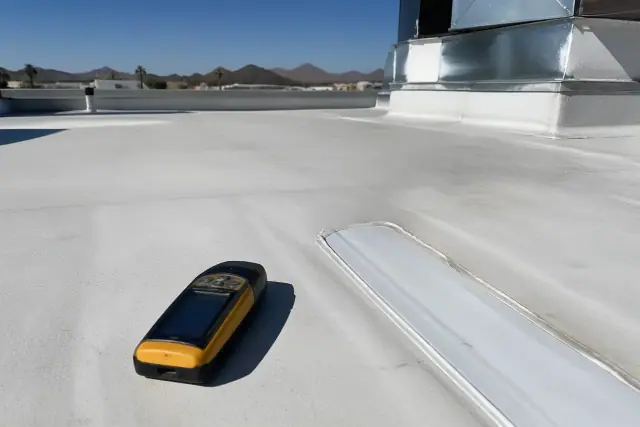
A moisture scan tool on a membrane roof during a commercial inspection in Phoenix, AZ.

The inspection begins with a complete walk of the accessible roof surface. Punctures, blisters, standing water, exposed fasteners, coating wear, and other anomalies are photographed and logged for follow-up.

Request Estimate

Membrane and Seam Testing

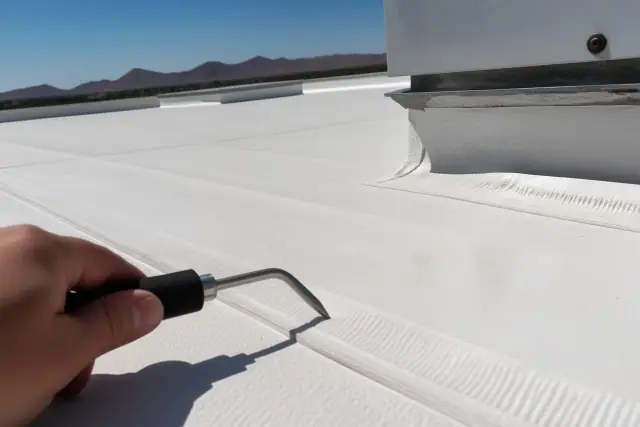
Technician testing a heat-welded TPO roof seam with a probe tool on a sunny day in Phoenix, AZ.

Inspectors physically probe field areas, seams, T-joints, and penetrations. This reveals soft spots, delamination, weak welds, shrinkage, and openings that can admit moisture beneath the surface.

Request Estimate

Infrared Moisture Diagnostics

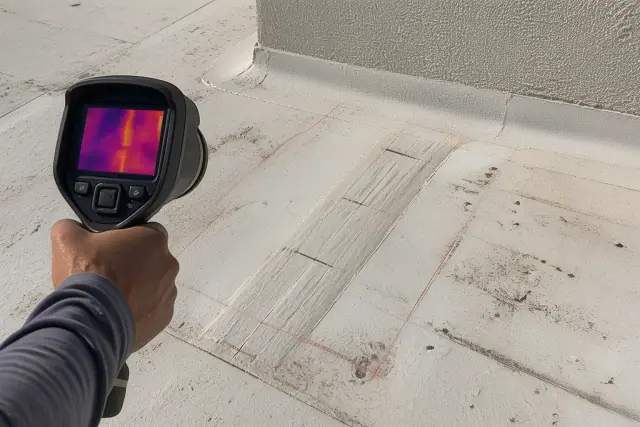
Thermal camera pointed at a patched roof seam on a white membrane surface during a commercial inspection in Phoenix, AZ.

Infrared thermal imaging and moisture meters help trace water through the roof assembly. This is especially useful when the exterior entry point sits several feet from an interior stain or when wet insulation has no obvious surface signal.

Request Estimate

Drone Roof Documentation

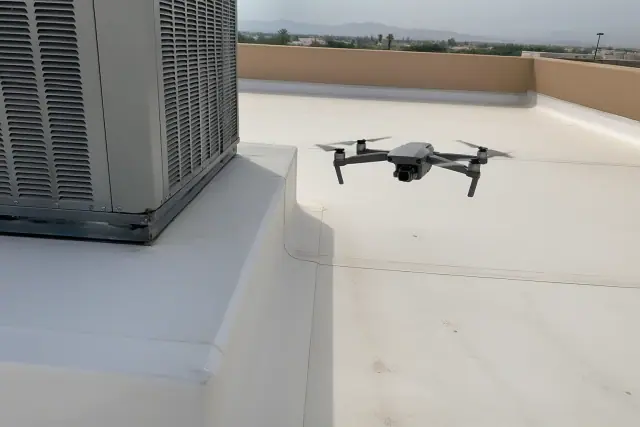
A drone inspects the seams of a commercial flat roof near an HVAC unit in Phoenix, AZ.

Drone footage supplements the physical inspection on larger industrial and warehouse roofs. Aerial views improve coverage and help document widespread drainage patterns, surface wear, and areas that warrant closer hands-on evaluation.

Request Estimate

Structural Component Review

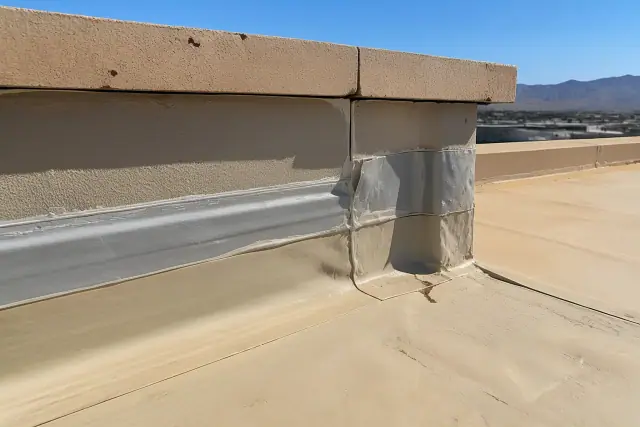
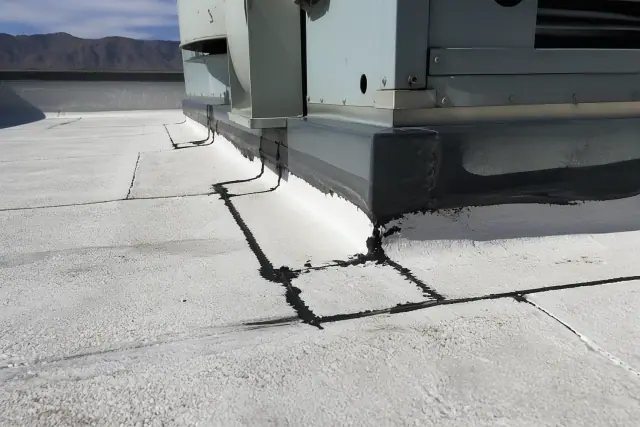
Close-up of a synthetic roofing membrane and sealant on a parapet wall during a commercial roof inspection in Phoenix, AZ.

Parapet walls, roof curbs, HVAC curbs, penetrations, and deck conditions are checked for movement, flashing failures, sagging, and signs of moisture-related compromise. These components often explain why a surface repair alone will not solve the problem.

Request Estimate

Drainage Performance Inspection

Wet drainage scupper and debris grate on a white commercial roof in Phoenix, AZ.

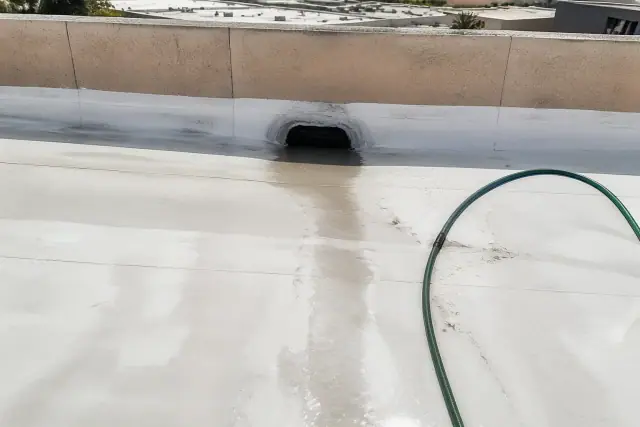
Every drain, scupper, and gutter is checked for blockage, and the roof slope is reviewed for low areas that retain water. That matters in Phoenix, where a monsoon storm can drop over an inch of rain in under an hour.

Request Estimate
Roof System Evaluations

Inspection Details by Roofing Material

TPO, spray foam, metal, modified bitumen, and built-up roofing respond differently to Phoenix heat and storms. The inspection criteria therefore change with the membrane, coating, panel, or multi-ply assembly on the building.

Technicians inspecting a TPO membrane seam around a rooftop HVAC unit on a commercial building in Phoenix, AZ.

TPO Membrane Inspection

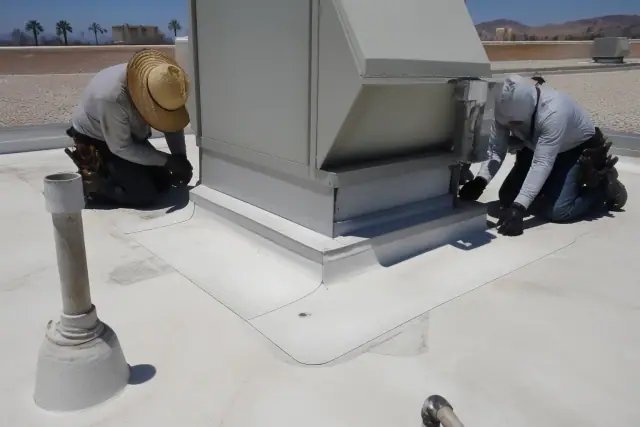
TPO is common across the Valley because of its reflectivity and heat-welded seams. With over 300 days of sunshine annually, older membranes can become brittle, shrink away from details, or lose reliable adhesion at the seams.

  • Check membrane thickness, shrinkage, and brittleness
  • Test heat-welded seam adhesion across the roof field
  • Inspect T-joints and field seams for early separation
  • Review pipe boots, curb flashing, and termination bars
  • Plan around a typical 15-20-year expected lifespan
Request Estimate
Spray foam roof insulation applied to a parapet wall during a commercial inspection in Phoenix, AZ.

Spray Foam Roof Assessment

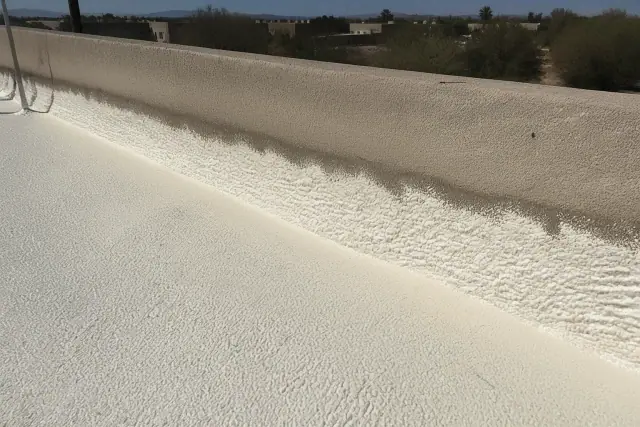
Spray polyurethane foam performs well in the desert when its protective elastomeric coating is maintained. Inspection focuses on coating thickness, impact openings, drainage, and any soft foam that indicates saturation below the surface.

  • Measure protective coating thickness across the roof
  • Look for chalking, fading, and thinning on sun-facing slopes
  • Document hail, foot-traffic, and equipment-impact cracks
  • Evaluate soft spots before any recoat is considered
  • Review annual inspection, 10-15-year recoat, and 25-30-year maintained-life benchmarks
Request Estimate
Industrial screws fastening metal roof panels on a commercial building in Phoenix, AZ, with a saguaro cactus in the distance.

Commercial Metal Roof Inspection

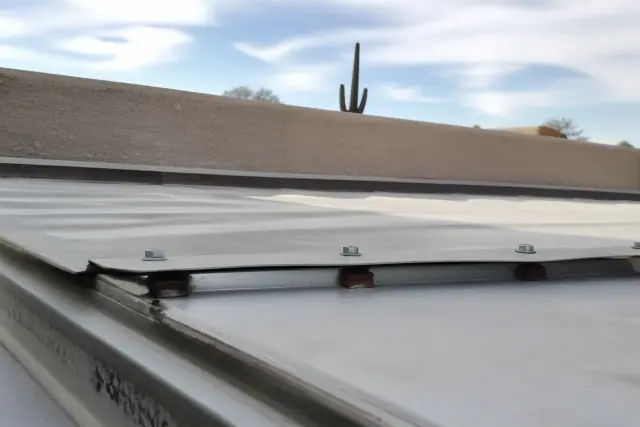
Metal panels are durable on Valley industrial and warehouse buildings, but daily expansion and contraction can loosen exposed fasteners and open panel laps. Scratches, cut edges, and penetrations also need close review for coating loss and rust.

  • Check fastener backing-out, corrosion, and gasket wear
  • Verify panel alignment and side-lap seals
  • Document coating wear and rust development
  • Test sealant flexibility at ridges, valleys, and walls
  • Use annual checks to plan around a 20-40-year expected lifespan
Request Estimate
Heat-welded seams on a modified bitumen roof near a ventilation unit with desert mountains in the background, Phoenix, AZ.

Modified Bitumen Inspection

Modified bitumen cap sheets protect asphalt with surface granules, but bare areas deteriorate rapidly under Phoenix UV. Inspection distinguishes ordinary aging from granule loss, alligatoring, lap separation, and soft areas caused by trapped moisture.

  • Measure granule-loss patterns across cap sheets
  • Identify exposed asphalt and accelerated UV wear
  • Check for alligatoring and loss of flexibility
  • Probe lap joints at parapets and penetrations
  • Use twice-yearly checks within the 15-25-year modified bitumen/BUR benchmark
Request Estimate
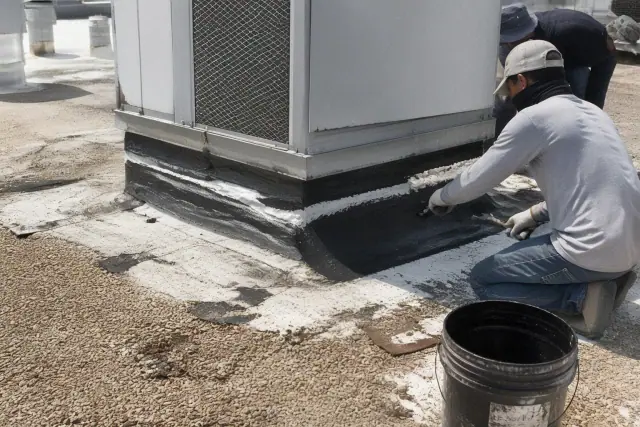
Technicians inspecting built-up roofing and membrane detailing around a rooftop HVAC unit in Phoenix, AZ.

Built-Up Roofing Inspection

Built-up roofing uses multiple felt and bitumen plies, so failure can develop below the cap sheet before it becomes obvious. The evaluation tracks moisture, layer adhesion, and joint condition across these older central Phoenix commercial roofs.

  • Inspect hot-mopped or cold-adhered lap joints
  • Check felt layers for trapped-moisture soft spots
  • Look for delamination between individual plies
  • Confirm base-sheet adhesion to the substrate
  • Review cap-sheet condition before subsurface failure spreads
Request Estimate
Inspection Decisions

Choosing the Right Commercial Roof Inspection Approach

The right scope depends on roof size, height, access difficulty, roofing material, known leak symptoms, and whether the report supports routine maintenance, a property transaction, capital planning, or an insurance claim. Those factors determine where hands-on probing, moisture diagnostics, and aerial documentation provide the most useful evidence.

Hands-On Diagnostic Method

The visual, physical, and diagnostic methodology follows the approach used across National Roofing Contractors Association guidelines. Membrane probing, moisture readings, infrared imaging, and aerial views are combined according to the roof's actual conditions.

Reports Built for Decisions

The final written condition report organizes photos, moisture readings, mapped findings, and repair recommendations by urgency. Owners can use it for maintenance decisions, capital planning, insurance discussions, and City of Phoenix Planning and Development Department review when permitted work is required.

Commercial Roofing License

Inspectors work under the company's commercial roofing license through the Arizona Registrar of Contractors. The same commercial roofing team can evaluate the condition and perform recommended repair or replacement work without handing the project to an unrelated contractor.

What Sets Us Apart

Why Choose Us for Commercial Roof Inspections?

Phoenix Commercial Roofing Company evaluates major commercial roof systems in the conditions they face across the Valley. Experience ranges from industrial parks near Sky Harbor to retail strips along Camelback Road, with inspection findings translated into clear repair and maintenance priorities.

Request Free Inspection

Membrane Punctures and Tears

HVAC service traffic, dropped tools, and windblown debris can puncture the roof surface and open a direct path into the insulation. Small tears are documented before water can spread laterally beneath the membrane.

Ponding Water and Blocked Drainage

Water that remains for more than 48 hours accelerates membrane breakdown and adds dead-load weight to the structure. Inspection maps ponding areas and checks whether debris, inadequate slope, or limited drainage is preventing water from leaving the roof.

Seam and Fastener Failure

Daily heat cycling makes membranes and metal panels expand and contract. Over time, adhesive or welded seams can separate, while exposed metal fasteners may back out or lose their gaskets at panel laps.

Blistering and UV Wear

Trapped vapor and intense solar exposure can form blisters that eventually crack, while UV gradually makes older membranes brittle. Roofs past the 15-year mark without a coating or recoat deserve priority evaluation for age-related wear.

Flashing and Penetration Gaps

Pipe boots, HVAC curbs, wall terminations, ridge caps, and other transitions concentrate movement and depend on reliable flashing or sealant. Gaps, cracks, loose termination bars, and hardened sealant can admit wind-driven monsoon rain.

Hidden Moisture Intrusion

Ceiling stains, musty odors, and bubbling paint can signal water traveling beneath the roof surface. Moisture meters and infrared imaging help trace the path to an entry point that may sit several feet from the visible interior damage.

How it works

Our Commercial Roof Inspection Process

The process moves from broad roof coverage to targeted diagnostics and a written set of priorities. Each stage adds context so isolated symptoms are not mistaken for the actual cause of a leak or material failure.

01.

Full Roof Walk

Inspectors walk the accessible roof surface and note visible anomalies across field areas, seams, edges, curbs, and penetrations. The building type and roof layout guide the sequence so important areas are not skipped.

02.

Photo and Aerial Documentation

Every anomaly is photographed and assigned a GPS-tagged location. On large industrial or warehouse roofs, drone footage supplements the ground-level record and helps focus the physical review.

03.

Membrane and Seam Probing

Field membrane, seams, and penetrations are physically tested for soft areas, delamination, weak adhesion, punctures, and concealed moisture. The method is adjusted for TPO, spray foam, modified bitumen, BUR, or metal details.

04.

Structural and Flashing Review

Parapets, HVAC curbs, wall transitions, roof penetrations, and the deck are checked for flashing defects, movement, and sagging. This step connects surface damage with supporting components that may also need attention.

05.

Drainage and Moisture Checks

Drains, scuppers, gutters, slopes, and ponding areas are evaluated, then moisture meters or infrared imaging are used where concealed water is suspected. Saturated spray foam or wet insulation is identified before recoating or surface patching is recommended.

06.

Written Condition Report

The completed report brings photos, moisture readings, mapped defects, and repair recommendations into one record ranked by urgency. It can support maintenance planning, an insurance claim, a property purchase review, or preparation for permitted repair and replacement work.

Protect Your Building

Schedule a Commercial Roof
Inspection

Request a Phoenix commercial roof inspection to document current conditions, locate concealed problems, and organize the next repair or maintenance decisions. A free inspection is available when establishing a maintenance relationship or evaluating a roof before purchase.

Inspection Help

Commercial Roof Inspection FAQs

These answers cover inspection pricing, timing, licensing, roof systems, weather triggers, reporting, and maintenance intervals for Phoenix commercial properties.

Call Our Inspectors

Paid inspections in the Phoenix market generally cost $250 to $800. Roof size, height, access difficulty, and the need for insurance or transaction documentation affect the price; a multi-acre roof using drone and thermal imaging falls toward the higher end. Phoenix Commercial Roofing Company offers a free commercial roof inspection for owners establishing ongoing maintenance service.

The 25% rule refers to a code provision adopted in some jurisdictions under which more than 25% of a roof surface requiring repair or replacement within a given period can trigger current-code requirements for the whole roof section. An inspection report can calculate damaged square footage as a percentage of total roof area so an owner can understand whether that threshold may affect the project.

City building inspections are separate from a contractor's roof condition inspection. The City of Phoenix Planning and Development Department schedules inspections for permitted work at 602-262-7811 between 8 a.m. and 5 p.m. on business days. The city inspector checks code compliance, while the roofing condition inspection evaluates wear, leaks, and remaining service life.

Arizona does not require a separate standalone license specifically for roof inspection. Any contractor performing repair or replacement work identified during the inspection must hold an active Arizona Registrar of Contractors license. Phoenix Commercial Roofing Company's inspectors work under its commercial roofing license.

Most commercial properties should receive a minimum of two roof inspections per year. One should occur in spring before monsoon season and another in fall after it, with additional checks after significant hail or wind. The system-specific schedule may differ: spray foam and metal are commonly reviewed annually, while TPO and modified bitumen/BUR are commonly reviewed twice yearly.

A full inspection typically takes one to three hours, depending on square footage, roof access, and the level of diagnostics required. A large warehouse needing drone coverage, thermal scanning, or detailed insurance documentation can take longer than a basic visual review of a smaller retail building.

Schedule an inspection within days after hail, sustained winds over 50 mph, or a heavy monsoon downpour. Wind uplift and hail impact can damage seams, flashing, fasteners, or coatings even when the problem cannot be seen from the ground.

The inspection scope covers TPO membranes, spray polyurethane foam, commercial metal panels, modified bitumen, and built-up roofing. Each system receives material-specific checks, such as seam adhesion on TPO, coating thickness on foam, fastener and corrosion review on metal, or ply adhesion on BUR.

The written report includes photos, mapped roof anomalies, moisture readings when used, and repair recommendations ranked by urgency. It can be used for capital planning, maintenance decisions, an insurance claim, or review connected with permitted repair or replacement work.

Infrared imaging helps locate temperature patterns associated with concealed moisture and trace leak paths that do not align with interior stains. Drone footage improves documentation and coverage on large industrial or warehouse roofs, while hands-on probing remains important for confirming membrane and seam conditions.

Ponding water that remains for more than 48 hours accelerates membrane deterioration and adds dead-load weight to the structure. Inspection maps the affected areas and evaluates drains, scuppers, gutters, and slope to identify why water is not leaving the roof.

The evaluation measures elastomeric coating thickness and checks for chalking, thinning, cracks, impact damage, drainage issues, and saturated soft spots. Spray foam is typically inspected annually, its protective coating is commonly recoated every 10-15 years, and a maintained system has an expected lifespan of 25-30 years.

Most commercial roofing systems in Phoenix are rated for 15 to 30 years depending on the material, though intense UV exposure can shorten that timeline. Typical benchmarks are 15-20 years for TPO, 25-30 years for maintained spray foam, 20-40 years for metal, and 15-25 years for modified bitumen/BUR. Condition and maintenance history matter more than age alone.