Proudly serving Phoenix, Mesa, Scottsdale, Tempe, Chandler, Glendale & surrounding areasCall or Text 24/7: 480-319-7533
Aerial view of residential neighborhoods, desert foothills, and arterial roads in Phoenix, AZ during late afternoon.

Commercial Roofing Services and Flat Roof Repair for Peoria, AZ Commercial Properties

Phoenix Commercial Roofing Company serves commercial properties in Peoria, Arizona, with flat roof repair, commercial roof replacement, and TPO roofing. Our crews also install and maintain spray foam, roof coatings, metal, modified bitumen, and built-up roofing systems. Commercial roof inspections and planned maintenance help owners understand whether a targeted repair, recoating, or replacement fits the roof. Each recommendation accounts for the building's structure, drainage, and operating priorities.

Peoria roofs face 115-degree summer afternoons, UV exposure, dust, and monsoon downpours that can drop an inch of rain in under an hour. Thermal cycling fatigues seams, flashings, and penetrations, while windblown debris can block drains. We inspect the full roof and use infrared or moisture-meter scanning when a leak source is not visible. That root-cause approach helps distinguish an isolated membrane failure from drainage or deck damage.

Peoria grew from 154,065 residents in 2010 to 190,985 by the 2020 census, adding medical offices, warehouses, retail centers, and other commercial roofs to maintain. We work near the Peoria Sports Complex, Lake Pleasant, the Agua Fria River corridor, Loop 101, and Grand Avenue, including the city's Maricopa County and Yavapai County portions.

★ ★ ★ ★ ★4.9/5 Customer Rating - 29 Years of Commercial Roofing Experience - Thousands of Roofs Serviced - Licensed, Bonded & Fully Insured - Serving Businesses & Property Managers
Roofing Services

Commercial Roofing Services in Peoria, AZ

We install, repair, inspect, and maintain the major flat and low-slope roof systems found on Peoria commercial buildings. Material choice depends on the existing assembly, deck condition, drainage, insulation, exposure, and budget. Owners planning multi-location work can also compare our city-specific commercial roofing guidance for Gilbert, AZ .

Commercial Flat Roof Repair

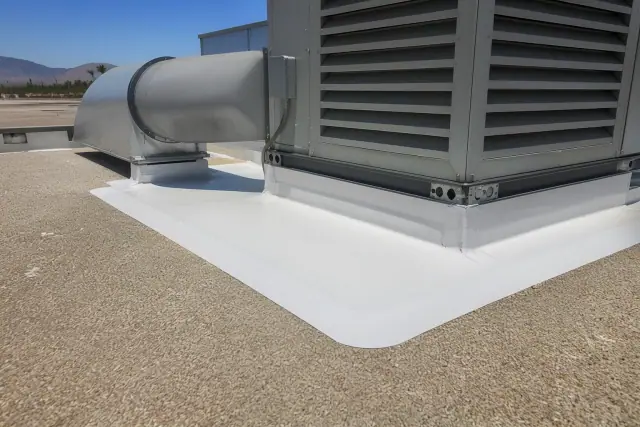
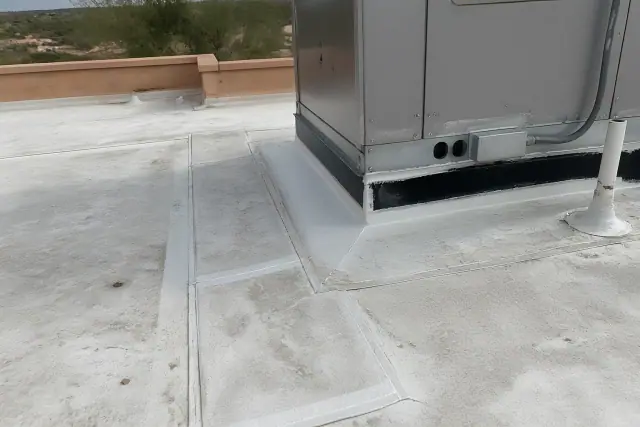
Heat-welded membrane patch on a flat roof around a ventilation unit in Peoria, AZ.

We diagnose blisters, open seams, punctures, and post-storm leaks on TPO, EPDM, modified bitumen, and BUR roofs. Most standalone Peoria flat roof repairs run between $750 and $3,500, while widespread membrane, insulation, or deck damage costs more. A moisture scan helps locate the failure before we cut into the assembly.

Explore Service

Commercial Roof Replacement

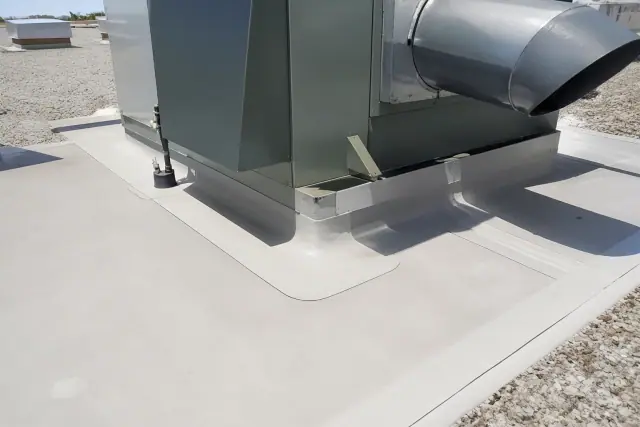
Heat-welded TPO membrane seams around an HVAC unit on a gravel rooftop in Peoria, AZ.

When repeated repair or recoating no longer makes financial sense, replacement can include tear-off, deck inspection and repair, insulation, membrane installation, and new flashing details. Phoenix metro commercial roof replacement generally runs $5.50 to $12.00 per square foot, with labor accounting for roughly one-third to one-half of the total. Required permits are pulled through the City of Peoria Building Safety Division before work starts.

Explore Service

TPO Roofing

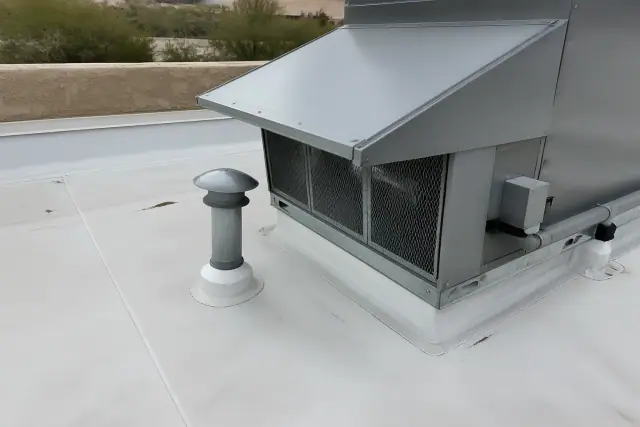
TPO membrane roofing with heat-welded seams around a commercial HVAC unit on a rooftop in Peoria, AZ.

Reflective white TPO is a practical single-ply choice for Peoria warehouses, retail centers, and offices facing intense summer heat. Installed cost typically runs $4 to $7 per square foot based on the insulation package and membrane thickness of 45, 60, or 80 mil. Heat-welded seams also help the assembly resist monsoon wind uplift.

Explore Service

Spray Foam Roofing

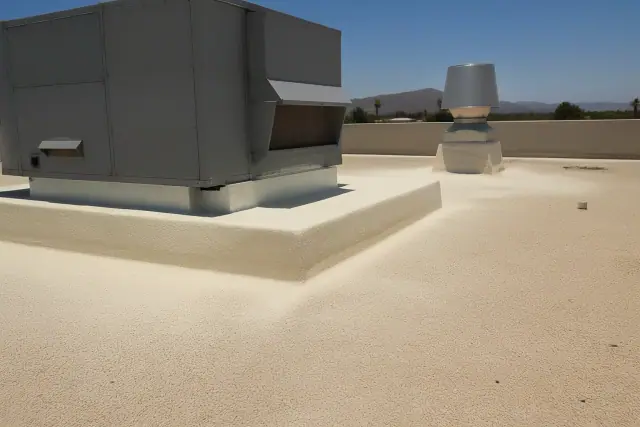
Spray foam roofing applied around a rooftop ventilation unit on a commercial building in Peoria, AZ.

Spray polyurethane foam creates a fully adhered, seamless layer that adds insulation directly over the roof deck. We protect SPF with an elastomeric or silicone topcoat for UV and foot-traffic resistance. Recoating on a five-to-ten-year cycle can extend the system's service life on Peoria flat roofs.

Commercial Roof Coatings

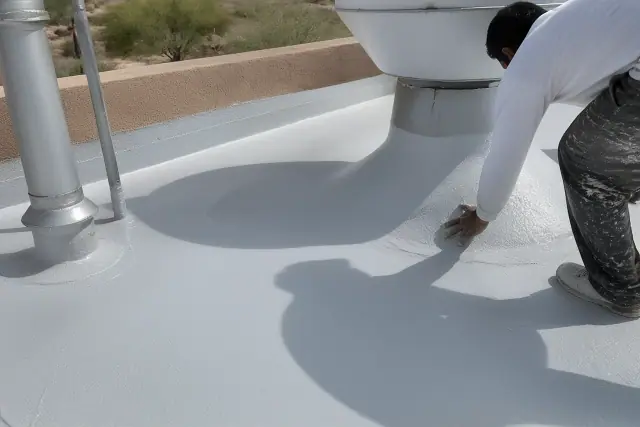
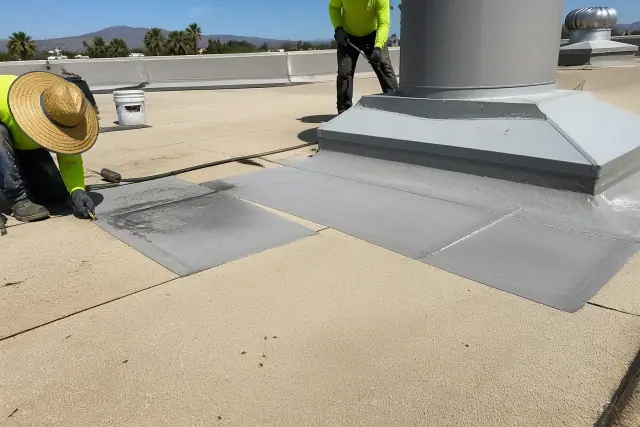
Technicians applying a seamless liquid membrane around a rooftop ventilation unit in Peoria, AZ.

Elastomeric, silicone, and acrylic coatings can renew a structurally sound but weathered TPO, modified bitumen, BUR, or metal roof without a full tear-off. A reflective coating lowers rooftop surface temperature and heat transfer into the building. With the right existing conditions, recoating can add 10 or more years of service life.

Commercial Metal Roofing

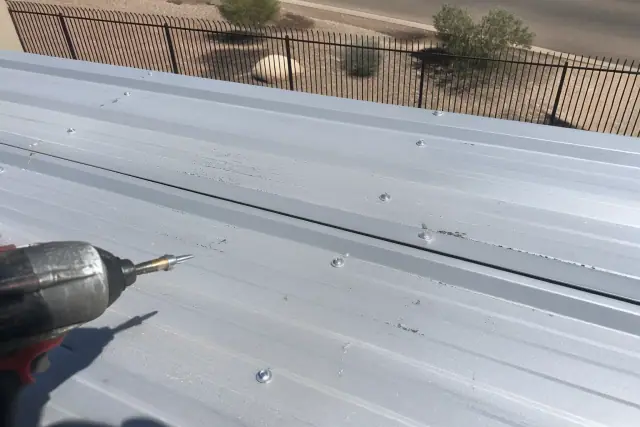
Industrial screws securing metal roofing panels on a commercial building in Peoria, AZ.

Standing-seam and structural metal panels suit larger industrial and distribution buildings where pitch or architectural profile matters. Installed metal roofing ranges from $7 to $14 per square foot. With minimal maintenance, these roofs commonly last 30 to 45 years, supporting long-term property ownership plans.

Modified Bitumen Roofing

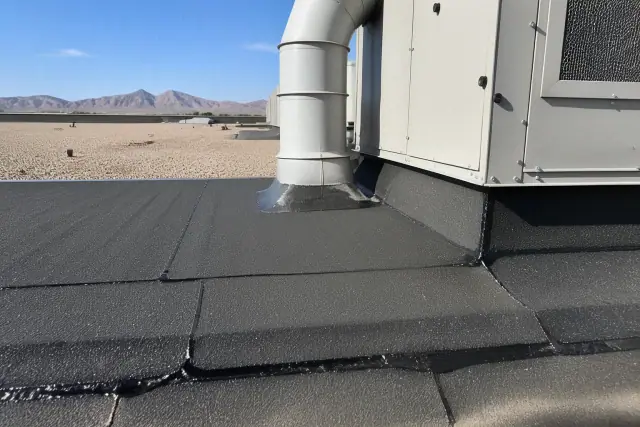
Technicians detail a modified bitumen roof around a ventilation unit in Peoria, AZ with gravel ballast and mountain views.

Modified bitumen remains common on older Peoria commercial buildings and multi-layer assemblies. We install and repair torch-applied and cold-adhesive self-adhered systems with granulated cap sheets suited to strong UV exposure. A properly maintained modified bitumen roof typically lasts 15 to 25 years, with reflective coating available as granules thin.

Built-Up Roofing (BUR)

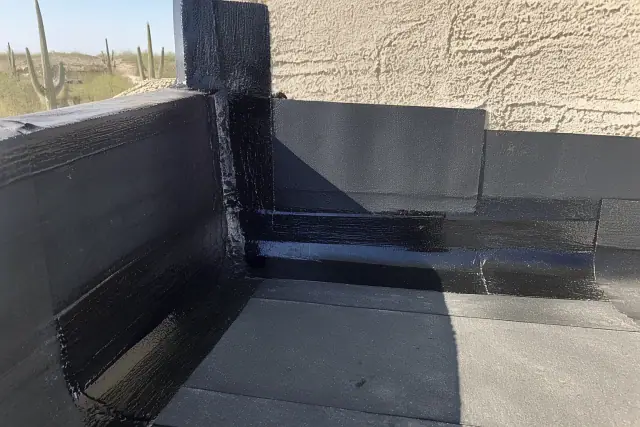
Close-up of bitumen-saturated roofing layers and sealed joints on a parapet wall in Peoria, AZ.

Built-up roofing uses alternating layers of bitumen and reinforcing fabric beneath gravel or a cap sheet. Its redundant plies are proven on older commercial and municipal buildings, though ballast and multiple layers make repair labor-intensive. BUR replacement typically runs $11 per square foot and up, so we assess blistering, ply separation, and drainage before recommending a tear-off.

Commercial Roof Inspections

A technician inspects a reinforced roof membrane seam near a ventilation unit on a commercial building in Peoria, AZ.

Our inspections check the membrane, seams, flashings, parapet walls, drains, scuppers, penetrations, and ponding areas. Infrared or moisture-meter scanning is used when surface clues do not reveal a leak path. Photos and a written report give owners a record for budgeting, insurance, lease discussions, and repair planning.

Commercial Roof Maintenance

Roof membrane maintenance on a commercial building rooftop in Peoria, AZ.

Twice-yearly maintenance, typically before monsoon season and again in late fall, can catch open seams, damaged flashing, and clogged drains before water reaches insulation or decking. We also flag ponding that remains more than 48 hours after a storm. Ongoing agreements can be timed around Peoria's seasonal roof stresses.

System Selection

How to Choose a Commercial Roofing Approach in Peoria

A useful recommendation begins with the roof already on the building and the conditions beneath it. We compare membrane compatibility, moisture, drainage, insulation, wind exposure, remaining service life, and cost before separating a repair candidate from a recoat or replacement project.

Existing Roof-System Compatibility

TPO seams require heat welding, while modified bitumen patches need compatible primers, ply counts, and bitumen types. Matching the repair material to the existing assembly helps the repaired area perform with the surrounding roof and protects applicable manufacturer warranty requirements.

Drainage and Tapered Insulation

Low-slope and dead-flat roofs depend on internal drains, scuppers, and tapered insulation to move water. When incorrect slope causes recurring ponding, a recover or replacement using tapered insulation can address the cause that repeated surface patches leave behind.

Moisture Mapping Before Cuts

A ceiling stain may be feet from the actual opening because water can travel along a flat roof deck. Infrared or moisture-meter scanning narrows the search and helps identify saturated insulation before any destructive opening is made.

Reflectivity and Insulation

Reflective TPO and roof coatings can reduce rooftop heat absorption, while spray foam adds insulation directly to the deck. The right combination depends on the current roof, insulation package, rooftop equipment, and whether the assembly is sound enough to recover.

Wind-Uplift and Code Fit

Peoria properties span older roofs installed before current International Building Code wind-uplift requirements and newer developments designed around more current ASCE 7 wind-load standards. That distinction affects attachment, edge details, repair scope, and whether a permitted reroof must be brought to current requirements.

Repair, Recoat, or Replace

Localized seam or flashing failures may support targeted repair, while a weathered but structurally sound membrane may qualify for coating. Widespread moisture, deck damage, or an assembly at the end of its service life can make replacement the more durable path. We present the documented condition and cost ranges without pressuring owners to upgrade.

Peoria Roof Risks

Common Commercial Roof Problems in Peoria

Flat and low-slope roofs do not shed water like pitched residential roofs, so membrane integrity and drainage are critical. Peoria's UV exposure, thermal cycling, monsoon wind, sudden rain, and airborne debris can turn small seam, flashing, or drainage defects into wet insulation and deck damage.

Request Roof Inspection

Open Seams and Membrane Shrinkage

Strong UV exposure can break down membrane plasticizers, causing TPO and PVC sheets to shrink and pull at seams. Once a weld or bonded edge opens, wind and water can work beneath the membrane and enlarge the failure.

Ponding Water

Undersized drains, blocked scuppers, or insufficient slope can leave water sitting against seams and parapet walls. Persistent ponding accelerates membrane wear and can point to a drainage problem that requires tapered insulation or another slope correction, not another surface patch.

Extreme Surface Heat

A dark or aged membrane can exceed 160 degrees Fahrenheit during a Peoria summer. Cooling after sunset then contracts the assembly, and that repeated movement fatigues seams, flashings, pitch pans, and penetrations over time.

Monsoon Debris and Clogged Drains

Monsoon season runs roughly July through September, bringing wind uplift and sudden heavy rainfall. Dust and debris ahead of a storm can clog drains within minutes, backing water against parapet walls and exposing weak membrane edges.

Failed Flashings and Penetrations

Flashing around curbs, rooftop equipment, parapets, and pitch pans moves differently from the roof field. A roof that looks sound in June can develop an interior leak after one August storm when a slowly failing detail finally opens under wind and rain.

Saturated Insulation and Deck Damage

Small punctures and separated seams allow water to spread through insulation before appearing indoors. If ignored, trapped moisture can reduce insulation performance and damage the structural deck, expanding what began as a localized repair.

Why Choose Us

Why Choose a Local Commercial Roofer in Peoria

Commercial roofing decisions involve more than covering a visible leak. Local climate knowledge, proper contractor credentials, compatible materials, permit handling, and useful documentation all affect whether the work solves the underlying problem and supports the building owner's records.

Peoria Commercial Roof Experience

Our crews work on flat roofs from Arrowhead and Bell Road to Vistancia, Lake Pleasant Parkway, and Peoria's industrial parks. Familiarity with older BUR assemblies, newer developments, West Valley monsoon patterns, and local permit offices helps focus the assessment on conditions that matter here.

Arizona Licensing and Insurance

Phoenix Commercial Roofing Company works under Arizona Registrar of Contractors licensing requirements and carries liability and workers' compensation insurance on every project. Qualifying replacements and reroofs are permitted through the City of Peoria Building Safety Division.

Photo Reports and Written Scopes

We document findings with photos and a written scope before repairs begin, then record testing and completed work. Installation follows National Roofing Contractors Association guidance and manufacturer specifications for the selected membrane, coating, or metal system, helping preserve applicable material warranties.

Assessment to Documentation

Our Commercial Roof Repair Process in Peoria

The process begins with the entire roof assembly rather than a guess based on a ceiling stain. Each step narrows the cause, sets a documented scope, uses system-compatible materials, and verifies the repaired area before the final report.

01.

Inspect the Full Roof

We walk the roof and examine the membrane, seams, drains, scuppers, flashings, parapet walls, and every penetration. This establishes whether the visible symptom is isolated or part of a broader drainage or assembly issue.

02.

Trace Moisture and Leak Paths

Where surface evidence is unclear, infrared or moisture-meter scanning helps trace water that has traveled along the deck. The findings identify wet insulation and narrow the area that needs to be opened.

03.

Document the Repair Scope

Once the failure is identified, we photograph the condition and prepare a written scope before work begins. Owners can see what will be repaired, why it failed, and how the proposed work addresses the cause.

04.

Complete Compatible Repairs

Repairs use materials suited to the existing system, such as heat-welded TPO, primed modified bitumen patches, matched BUR plies, or rebuilt flashing at a rooftop penetration. Compatibility helps the new detail perform with the surrounding roof.

05.

Test the Repaired Area

We test the completed area, including flood testing where standing water is a concern. Verification is performed before the repair is closed out so unresolved leak or drainage conditions can be addressed.

06.

Provide Records and Next Steps

Final documentation supports insurance files, warranty records, maintenance planning, and future budgets. If targeted repair is no longer practical, we explain the inspection findings and outline recoating or replacement options with the applicable cost ranges.

Practical Outcomes

Roofing Results for Commercial Properties

Case Study 1: Clear Diagnosis: Whole-roof inspection and moisture mapping connect an interior stain to the actual membrane, flashing, drainage, insulation, or deck failure.

Case Study 2: Appropriate Scope: Owners receive a documented basis for targeted repair, a protective coating, drainage correction, or full replacement instead of another disconnected patch.

Case Study 3: Useful Records: Photos, written findings, test results, and completed-work documentation support maintenance schedules, insurance records, lease discussions, and capital planning.

Plan the Next Step

Schedule a Commercial Roof
Assessment in
Peoria

If a Peoria commercial roof is leaking, holding water, showing open seams, or due for seasonal maintenance, request an assessment. Phoenix Commercial Roofing Company will inspect the conditions, document the findings, and explain the repair, coating, or replacement path that fits the roof.

Commercial Roofing Help

FAQs About Commercial Roofing in Peoria, AZ

These answers cover repair costs, service life, inspections, drainage, materials, permits, and service coverage for Peoria commercial roofs. A roof assessment is still the best way to connect general guidance to a building's actual membrane, deck, and moisture conditions.

Call Our Roofing Team

Most standalone commercial flat roof repairs in Peoria run between $750 and $3,500. A single seam or penetration is usually toward the lower end, while larger membrane areas, wet insulation, or deck damage can increase the scope. We provide a written scope after inspection so the work and cost are defined before repair begins.

Most commercial flat roofs last 20 to 30 years, depending on material, installation quality, climate, and maintenance. TPO and metal systems can reach 30 to 45 years with proper care, while modified bitumen and asphalt-based systems typically last 15 to 25 years. Peoria's UV exposure and thermal cycling can push service life toward the shorter end without inspections and timely upkeep.

The 25% rule refers to a common building-code and insurance provision under which repairing or replacing more than 25 percent of a roof area within a defined period may require that roof section to meet current code. It can change whether an older Peoria roof is patched or replaced. The City of Peoria Building Safety Division can confirm how the rule applies to a particular permitted project.

Commercial roof replacement in the Phoenix metro generally runs $5.50 to $12.00 per square foot for many single-ply and modified systems. TPO typically runs $4 to $7 per square foot, PVC $5 to $8, metal $7 to $14, and BUR $11 per square foot and up. Tear-off, insulation, deck repairs, material choice, and labor, which is roughly one-third to one-half of the total, all affect the final scope.

We repair TPO, EPDM, modified bitumen, and built-up roofing, including isolated seam, blister, flashing, and puncture failures. The repair method must match the assembly, such as heat welding for TPO or compatible primers and ply details for modified bitumen and BUR.

A membrane roof should generally be inspected twice a year, typically before monsoon season and again in late fall. These checks can catch open seams, damaged flashing, blocked drains, and new punctures before moisture reaches insulation or the deck.

Water that remains on a roof more than 48 hours after a storm is a drainage concern flagged by many manufacturers and the National Roofing Contractors Association. The cause may be a clogged drain or scupper, compressed insulation, or inadequate slope. Persistent ponding should be diagnosed before it accelerates membrane wear.

Water entering a flat roof can travel along the deck or through insulation before it appears inside. That means the visible stain may be feet from the failed seam, penetration, or flashing. Infrared or moisture-meter scanning helps narrow the path when surface evidence is not clear.

Reflective white TPO reduces rooftop heat absorption and is commonly used on Peoria warehouses, retail centers, and offices. Heat-welded seams help with monsoon wind exposure, while 45, 60, and 80 mil membrane options allow the assembly to be matched to insulation and performance needs.

Spray polyurethane foam roofs are commonly recoated on a five-to-ten-year cycle. The elastomeric or silicone topcoat protects the fully adhered foam from UV exposure and foot traffic, helping extend the roof's useful life.

A structurally sound but weathered TPO, modified bitumen, BUR, or metal roof may qualify for an elastomeric, silicone, or acrylic coating. A suitable coating can add 10 or more years of service life and improve reflectivity. Widespread moisture or deck damage may make repair or replacement more appropriate instead.

The first priority is limiting active water intrusion over inventory, equipment, or tenant space. That may involve a temporary patch, tarping an exposed area, or clearing a blocked drain, followed by full diagnosis and permanent repair. Storm conditions are photographed and logged when insurance documentation may be needed.

Qualifying replacement and reroof projects require permits through the City of Peoria Building Safety Division. Scope can also be affected by International Building Code wind-uplift requirements and ASCE 7 wind-load standards, particularly when older assemblies are brought to current requirements.

Coverage includes commercial properties near Arrowhead Towne Center, Old Town Peoria, Vistancia, the Peoria Sports Complex, 83rd Avenue, Bell Road, and Lake Pleasant Parkway. We serve both the Maricopa County and Yavapai County portions of Peoria, plus Glendale, Surprise, Sun City, Sun City West, Youngtown, and El Mirage.

The inspection reviews membrane condition, seams, flashings, penetrations, parapet walls, drains, scuppers, and signs of ponding. Findings are documented with photos and a written report that can support repair decisions, budgeting, insurance records, warranty files, and lease discussions.