Proudly serving Phoenix, Mesa, Scottsdale, Tempe, Chandler, Glendale & surrounding areasCall or Text 24/7: 480-319-7533
Aerial view of residential neighborhoods, desert foothills, and arterial roads in Phoenix, AZ during late afternoon.

Commercial Flat Roof Repair and Industrial Roofing Services in Buckeye, AZ

Phoenix Commercial Roofing Company provides commercial flat roof repair, commercial roof replacement, and TPO roofing for Buckeye businesses. Our commercial services also include spray foam roofing, roof coatings, metal roofing, modified bitumen, built-up roofing, inspections, and maintenance. We work on low-slope systems serving single-tenant retail buildings, industrial properties, and distribution facilities. Our coverage extends across Buckeye and the greater West Valley.

Buckeye roof surfaces regularly climb past 160 degrees Fahrenheit, and sustained thermal cycling can split flashing, degrade membranes, and expose weak seams. Sonoran Desert heat, blowing dust, and monsoon wind add stress to low-slope systems. We trace leaks to the actual entry point instead of treating only the interior drip. A roof walk and written inspection report guide whether localized repair, coating, or replacement makes sense.

Buckeye is Arizona's second-largest city by land area, and its population grew from 50,876 in 2010 to 91,502 in 2020. It was the country's fastest-growing city in 2017, 2018, and 2021, adding new commercial roofs along Watson Road, the I-10 corridor, Verrado, Sundance, Tartesso, and Westpark while older buildings near downtown still need maintenance. Call for a free roofing estimate, and we will walk the roof with you before recommending work.

★ ★ ★ ★ ★4.9/5 Customer Rating - 29 Years of Commercial Roofing Experience - Thousands of Roofs Serviced - Licensed, Bonded & Fully Insured - Serving Businesses & Property Managers
Commercial Roofing Services

Commercial Roofing Services in Buckeye, AZ

Commercial roofing in Buckeye requires materials and details suited to wide thermal swings, wind-driven rain, blowing dust, and intense UV exposure. We evaluate the current system, roof traffic, insulation, drainage, penetrations, and remaining service life before recommending repairs or replacement. Owners managing multiple Valley properties can also review our approach to commercial roofing in Mesa, AZ .

Commercial Flat Roof Repair

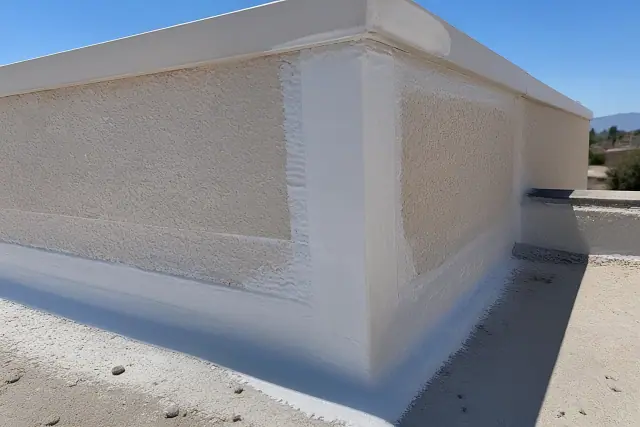
Close-up of elastomeric sealant applied to a building corner and parapet wall during a roof repair in Buckeye, AZ.

We isolate splits, failed seams, localized ponding, and damaged flashing, then patch, reseal, or heat-weld materials matched to the existing TPO, PVC, EPDM, modified bitumen, or BUR system. Most Buckeye repair calls are resolved in a single visit once the source is confirmed. Typical commercial flat roof repairs run between $750 and $3,500, with photos documenting the completed work.

Explore Service

Commercial Roof Replacement

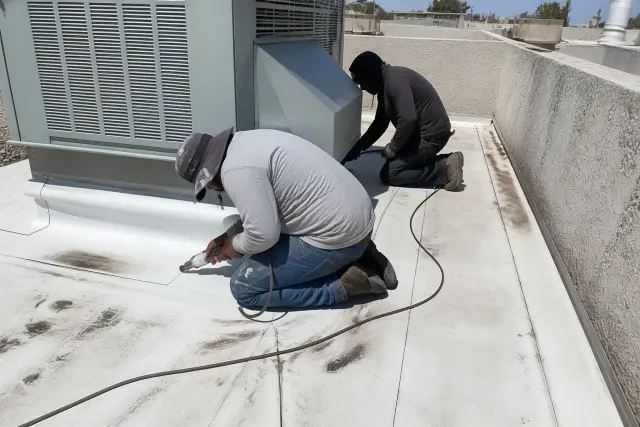
Contractors performing TPO membrane roof repairs around an HVAC unit in Buckeye, AZ.

When repair or coating no longer makes financial sense, replacement provides a new system matched to the building, insulation needs, and tear-off conditions. Commercial roof replacement generally runs from $5.50 to $12.00 per square foot. We coordinate deck inspection and repair, handle required City of Buckeye permits, and install to current International Building Code requirements.

Explore Service

TPO Roofing

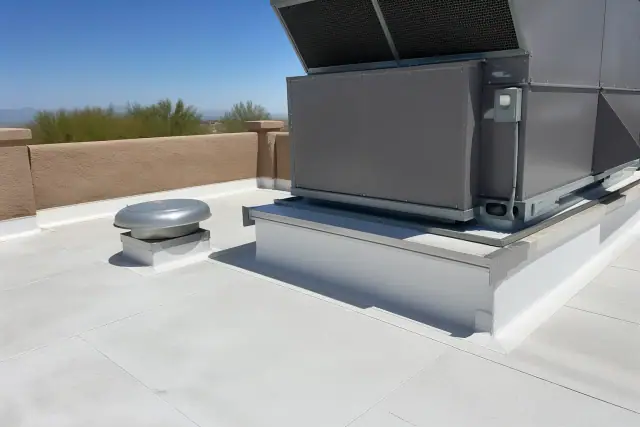
TPO roofing membrane detailing around a ventilation unit on a commercial rooftop in Buckeye, AZ.

TPO reflects heat rather than absorbing it, an important advantage on a Buckeye roof exposed to direct sun through much of the year. Installed costs typically run $4 to $7 per square foot, depending on membrane thickness and the insulation package. Heat-welded seams create a watertight connection designed for wide daily temperature swings.

Explore Service

Spray Foam Roofing

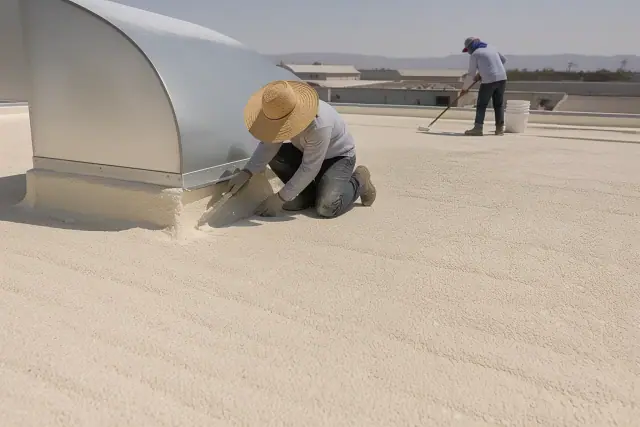
A uniform, textured spray foam roof coating on a commercial building in Buckeye, AZ.

Spray polyurethane foam is fully adhered, seamless, and self-flashing around rooftop penetrations. It provides the highest R-value per inch of any commercial roofing material, helping offset summer cooling demands. We apply it at a consistent thickness and add a protective coating for UV exposure and foot traffic.

Commercial Roof Coatings

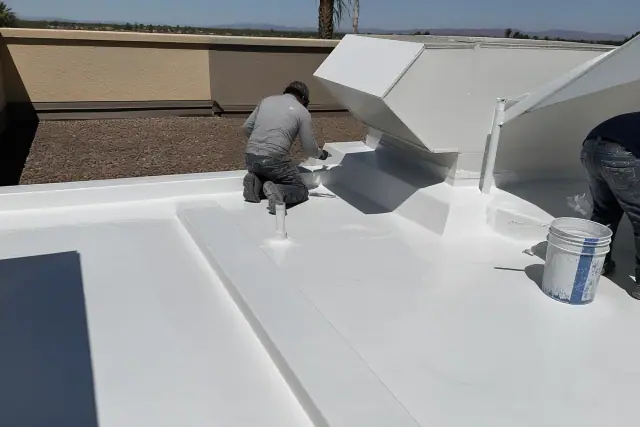
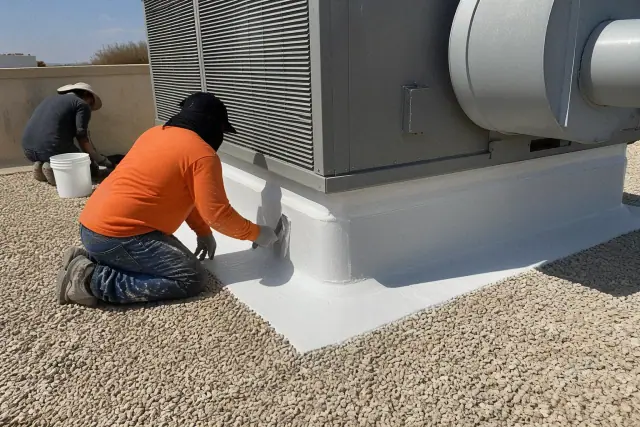
Contractor applying a smooth white liquid roof coating to membrane seams on a commercial rooftop in Buckeye, AZ.

A coating can extend a structurally sound membrane without the cost of full replacement. Silicone resists ponding water, while acrylic offers strong UV reflectivity at a lower cost, so the choice depends on roof condition and budget. A viable coated roof can gain 10 or more years of service life.

Commercial Metal Roofing

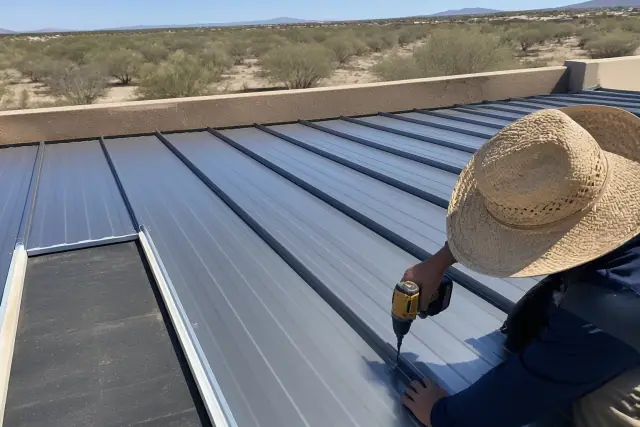
Contractor photo of overlapping metal roofing panels with industrial fasteners on a commercial building in Buckeye, AZ.

Standing-seam and metal-panel systems shed heat and monsoon rainfall efficiently for warehouses and industrial buildings. Installed costs commonly run $7 to $14 per square foot, and service life often reaches 40 to 70 years with basic upkeep. We use concealed fasteners and factory-finished coatings rated for high UV exposure.

Modified Bitumen Roofing

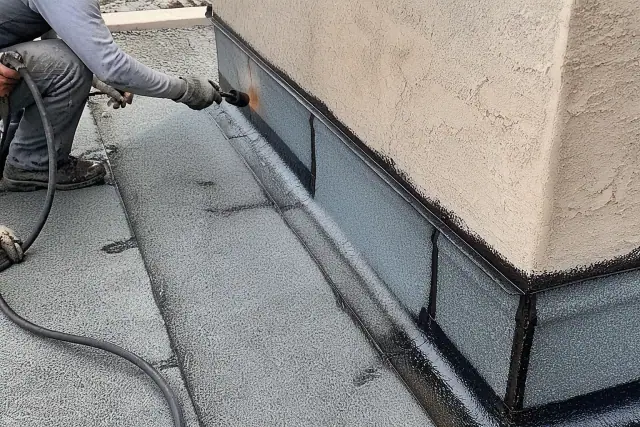
Modified bitumen roofing with torch-applied seams and parapet wall flashing on a commercial building in Buckeye, AZ.

Modified bitumen combines asphalt with rubber or plastic polymers so the membrane can flex through Buckeye's 40-plus-degree daily temperature swings. Torch-applied, hot-mopped, and cold-adhesive methods let us match the installation to the building and local fire-code requirements. The system also suits roofs with frequent foot traffic or rooftop equipment.

Built-Up Roofing (BUR)

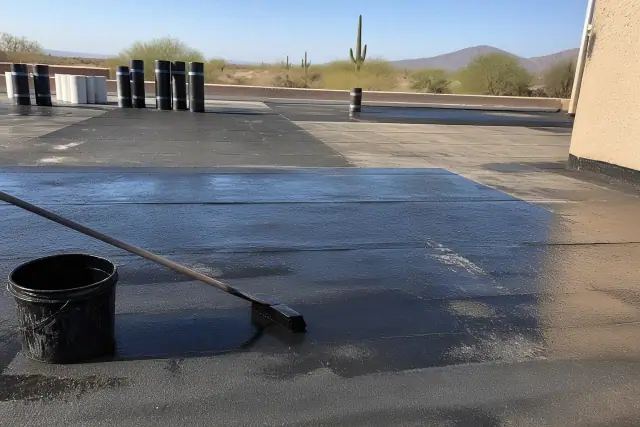
Built-up roofing installation showing bitumen-saturated felt layers on a commercial building roof in Buckeye, AZ.

BUR combines alternating layers of bitumen and reinforcing fabric with gravel or a cap sheet for durability against foot traffic and hail. Properly installed built-up roofing typically costs $11 or more per square foot and can last 20 to 30 years with routine maintenance. We size the number of plies for slope, drainage, and expected traffic.

Commercial Roof Inspections

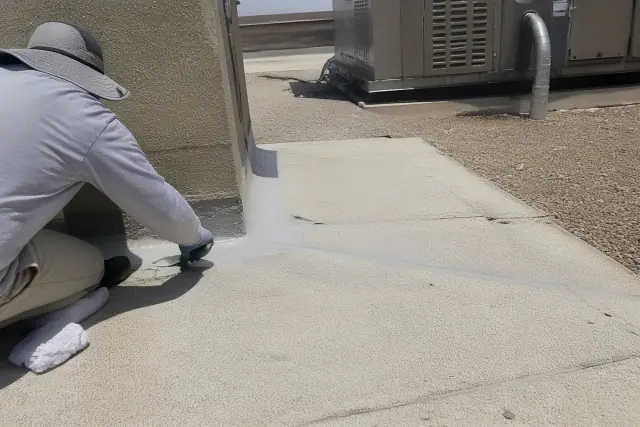
Liquid flashing applied around a rooftop ventilation unit during a commercial roof inspection in Buckeye, AZ.

A commercial inspection checks membrane condition, seam integrity, flashing, drains, scuppers, and moisture in the insulation. Buckeye dust and haboob activity make drainage review especially important. The written report includes photos and priority rankings for repairs and maintenance planning.

Commercial Roof Maintenance

Technicians applying roofing sealant to a membrane seam on a commercial rooftop in Buckeye, AZ.

Semi-annual maintenance visits timed before summer heat and before monsoon season can catch lifted seams, clogged drains, and cracked pitch pans before they cause interior leaks. Preventive work protects the roof over its service life and creates a useful maintenance record. We prioritize repairs by condition instead of waiting for small defects to spread.

Roofing Decisions

How to Choose Commercial Roofing for Buckeye Properties

The right approach depends on the existing membrane, moisture and deck conditions, drainage, rooftop traffic, heat exposure, and remaining service life. A roof walk separates isolated defects that can be repaired from broader failure that may justify coating or replacement. The written scope should connect each recommendation to what the inspection found.

Repair or Replacement Assessment

Localized splits, seam failures, and small ponding areas may be repairable when the surrounding membrane and deck remain sound. Widespread moisture, failing insulation, or extensive membrane damage can make coating or full replacement the more practical path.

Heat Reflectivity and Insulation

Reflective TPO can reduce rooftop heat absorption, while spray foam combines a seamless surface with strong insulation value. Membrane thickness, insulation package, current deck conditions, and summer cooling demands all affect the selection.

Drainage and Ponding Exposure

Low points, blocked scuppers, and slow drains need correction before a new surface is installed. Where ponding remains a concern on an otherwise viable roof, silicone coating offers stronger water resistance than acrylic.

Roof Traffic and Equipment

Frequent maintenance access, rooftop units, and heavy equipment loads change the demands on flashing and the roof surface. Modified bitumen and BUR provide durable options for traffic, while each penetration still requires system-specific detailing.

Installation Method and Code

The building and roof system determine whether heat welding, cold adhesive, hot mopping, torch application, or another method is appropriate. Permit requirements, fire-code limits, manufacturer specifications, and current building code belong in the installation plan.

Life-Cycle Cost and Service Life

Compare a localized repair, restorative coating, and replacement by expected remaining life as well as initial cost. Inspection findings, tear-off needs, insulation upgrades, membrane type, and maintenance requirements shape the long-term value of each option.

Buckeye Roofing Risks

Common Commercial Roof Problems for Buckeye Properties

Summer highs regularly exceed 110 degrees Fahrenheit for weeks, while dust and mountain-channeled monsoon outflows stress membranes, flashing, and drainage. Buildings near Buckeye Airport and the I-10 logistics corridor also carry substantial rooftop equipment loads. An inspection can identify how these conditions are affecting the specific roof before damage reaches the interior.

Request Roof Inspection

UV-Degraded Membranes

Roughly six months of triple-digit heat each year accelerates oxidation, adhesive breakdown, blistering, and surface wear. Early signs around seams and exposed edges deserve attention before the damaged area expands.

Ponding Water and Clogged Drains

Blowing desert dust can block drains and scuppers, leaving water at low points after a storm. Persistent ponding stresses seams, coatings, insulation, and the roof deck, so drainage is checked during every inspection.

Failed Seams and Flashing

Thermal expansion and contraction can open membrane seams and split flashing around rooftop units. Repair requires confirming the existing system and using compatible materials rather than covering the visible gap with a generic patch.

Monsoon Wind and Rain Damage

From July through September, wind-driven rain can find weak seams and open penetrations quickly. Outflow winds channeled between the White Tank and Estrella Mountains can also add uplift stress to flashing and loosely adhered membranes.

Hidden Leak Paths

Water can travel across the deck and through insulation before appearing at a ceiling tile, so the interior drip may not sit beneath the roof opening. Moisture scans and visual tracing help locate the actual entry point and any wet insulation.

Blistering, Oxidation, and Traffic Wear

Intense UV exposure can oxidize membranes and coatings, while trapped moisture may produce blisters. Repeated foot traffic around rooftop equipment adds wear, making walkway condition and penetration details part of the repair assessment.

Why Choose Us

Why Choose Phoenix Commercial Roofing Company in Buckeye?

We focus on flat and low-slope commercial roofs instead of treating commercial work as an extension of residential shingle service. Our system knowledge covers TPO, PVC, EPDM, modified bitumen, BUR, spray foam, coatings, and metal. That breadth supports repair and replacement recommendations based on the roof in front of us.

Buckeye Low-Slope Expertise

Our approach accounts for extreme heat, dust, monsoon outflows, and the mix of newer low-slope construction and older BUR or modified bitumen roofs. We understand commercial conditions along Watson Road, Sun Valley Parkway, Verrado, Tartesso, Westpark, and the I-10 corridor.

Written Scopes and Photo Documentation

Before work begins, you receive a written scope and free estimate with material and labor line items. Photos and a final report create a record for insurance claims, lender requirements, maintenance history, or future capital planning, while NRCA-recommended practices and manufacturer specifications guide the work.

Licensed, Insured, and Safety-Focused

We hold active licensing through the Arizona Registrar of Contractors and carry general liability and workers' compensation insurance for Buckeye commercial projects. Crews follow OSHA fall-protection requirements, and proof of licensing and insurance is available before signing.

Clear Project Steps

Our Commercial Roofing Process in Buckeye

Every project begins with inspection findings rather than a predetermined sales recommendation. The scope then moves through planning, permitting when required, system-specific work, and documented closeout. Scheduling is coordinated around business operations to keep the process clear from the first roof walk to the final invoice.

01.

Walk the Roof

We identify the installed roofing system, review visible conditions, discuss leak history, and assess the roof's remaining service life.

02.

Inspect Critical Details

We check the membrane, seams, flashing, drains, scuppers, penetrations, deck concerns, and moisture in the insulation.

03.

Document the Scope

You receive inspection findings, photos, priority rankings, and a written free estimate with material and labor line items.

04.

Plan Permits and Scheduling

Where required, we pull permits through the City of Buckeye and schedule the work around building access and business operations.

05.

Complete the Roofing Work

Crews perform the specified repair, tear-off, coating, or installation using methods matched to the system, manufacturer specifications, and current code.

06.

Review and Close Out

We conduct a final walkthrough, photograph the completed work, and provide documentation for maintenance, insurance, lenders, or future property records.

Roofing Outcomes

Practical Roofing Outcomes for Buckeye Businesses

Case Study 1: Localized repair: Confirming the leak path first allows damaged membrane, seams, or flashing to be repaired with materials compatible with the existing system, with photos retained for future planning.

Case Study 2: Coating renewal: When the membrane and structure remain viable, the selected silicone or acrylic coating can restore weather protection while avoiding an unnecessary tear-off.

Case Study 3: Replacement planning: A defined tear-off, deck-repair, insulation, and installation scope gives property owners a documented path to a new code-compliant roof system.

Plan Your Roof Work

Schedule a Buckeye
Commercial Roofing
Consultation

Request a free estimate for a Buckeye commercial flat roof repair, inspection, maintenance plan, coating, or replacement. We will walk the roof, explain the condition, and provide a written scope before work begins.

Commercial Roofing Help

FAQs About Commercial Roofing in Buckeye, AZ

These answers cover repair pricing, roof life, inspections, maintenance, materials, storm response, and service coverage for Buckeye commercial properties. An on-site roof walk is still needed to confirm the right scope for a specific building.

Call Our Roofing Team

Most commercial flat roof repairs in Buckeye cost between $750 and $3,500, depending on the damaged area, membrane type, access, and whether the work involves a seam, flashing, drainage, or structural issue. Labor commonly represents one-third to one-half of the cost and runs roughly $0.66 to $4.00 per square foot depending on complexity. We provide a written estimate after an on-site inspection.

Most commercial flat roofs last 20 to 30 years with proper installation and routine maintenance. TPO and PVC systems commonly last 20 to 25 years, while modified bitumen and BUR often reach 20 to 30 years; metal can reach 40 to 70 years. A neglected roof with clogged drains, failed seams, or persistent ponding can fail in as little as 10 years.

The 25% rule generally means that when more than 25% of a roof surface requires repair or replacement within a defined period, the roof system may need to be brought to current code instead of being patched in separate areas. It comes from International Building Code re-roofing provisions and is often considered by building departments and insurance adjusters. A roof inspection helps define the damaged area before the scope is set.

Localized seams, splits, flashing defects, or small ponding areas may be repairable when the membrane, insulation, and deck remain sound. A coating may fit an intact roof that needs renewed UV or ponding-water protection, while widespread moisture or exhausted materials may justify replacement. The decision should follow a roof walk and documented inspection.

We work on TPO, PVC, EPDM, modified bitumen, and built-up roofing systems. The crew first identifies the membrane and the true source of the leak, then uses compatible patching, resealing, welding, or flashing methods. Most flat roof repair calls are resolved in a single visit once the source is confirmed.

We recommend semi-annual visits for most Buckeye commercial properties, timed before peak summer heat and before monsoon season. The visit should check seams, flashing, drains, scuppers, pitch pans, penetrations, and signs of trapped moisture. Catching a lifted seam or clogged drain early can prevent an interior leak.

TPO reflects heat instead of absorbing it, which helps on roofs exposed to direct sun for ten-plus hours a day through much of the year. Its seams are heat-welded to form a watertight connection that tolerates wide daily temperature swings. Membrane thickness and insulation needs should be selected for the specific building.

Silicone is generally better suited to roofs where ponding-water resistance is the priority. Acrylic provides strong UV reflectivity at a lower cost, but the roof still needs adequate drainage and structural integrity. A suitable coating can add 10 or more years of service life.

Spray polyurethane foam creates a fully adhered, seamless surface that self-flashes around many penetrations. It also has the highest R-value per inch among commercial roofing materials, which can help offset cooling demands. A protective top coating guards the foam from UV exposure and foot traffic.

Modified bitumen blends asphalt with rubber or plastic polymers for flexibility and can be installed with torch-applied, hot-mopped, or cold-adhesive methods. BUR uses alternating layers of bitumen and reinforcing fabric, finished with gravel or a cap sheet for durability. Both can suit trafficked commercial roofs, but slope, drainage, fire-code requirements, and the existing assembly influence the choice.

Commercial roof replacement generally falls between $5.50 and $12.00 per square foot. System type, insulation upgrades, tear-off requirements, deck repairs, access, and the building footprint affect the final scope. A written inspection and estimate should identify those items before work begins.

The inspection covers membrane condition, seam integrity, flashing, drains, scuppers, penetrations, and moisture in the insulation. Buckeye dust and haboob activity make drainage checks especially important. The resulting report includes photos and priority rankings.

Yes. We prioritize active leak and storm-damage calls, placing tarps or temporary protection as quickly as conditions allow. A permanent repair follows once the roof can be accessed safely.

Before work, we provide a written scope and free estimate with material and labor line items. Repair and installation work is documented with photos, and the final walkthrough closes out the record. Those materials can support maintenance planning, insurance claims, lender requests, or a future property sale.

We serve downtown Buckeye, the Watson Road corridor, Verrado, Sundance, Tartesso, Westpark, and the I-10 industrial corridor. Coverage also includes Goodyear and the Goodyear Airport area, Avondale, Litchfield Park, Sun City West, and the northern Southwest Valley. Call if your commercial property is elsewhere in Maricopa County's Southwest Valley and you want to confirm coverage.