Proudly serving Phoenix, Mesa, Scottsdale, Tempe, Chandler, Glendale & surrounding areasCall or Text 24/7: 480-319-7533
Aerial view of residential neighborhoods, desert foothills, and arterial roads in Phoenix, AZ during late afternoon.

Modified Bitumen Roofing Installation and Multi-Ply Membrane Repair in Phoenix, AZ

Phoenix Commercial Roofing Company installs and services modified bitumen roofing for commercial buildings in Phoenix, Arizona. Our commercial flat roof work includes repair and replacement as well as TPO roofing, spray foam roofing, and protective roof coatings. We also provide commercial metal roofing, built-up roofing, roof inspections, and roof maintenance.

Phoenix roof surfaces regularly reach 150 to 180 degrees Fahrenheit when summer air temperatures climb past 110, putting sustained stress on low-slope assemblies. Modified bitumen's polymer-reinforced asphalt flexes through the desert's thermal cycles while granulated cap sheets or reflective coatings help limit UV degradation. We assess exposure, drainage, rooftop equipment, occupancy, and substrate conditions before recommending SBS or APP membranes and an appropriate installation method.

Installations follow ASTM D6164 and D6222 material standards and City of Phoenix low-slope roofing requirements. Our crews hold Arizona Registrar of Contractors licensing and provide the bonding, insurance, final quality checks, and project closeout records commercial owners and general contractors expect.

Phoenix Commercial Roofing Company provides modified bitumen roofing in Phoenix and across the surrounding metro, including Scottsdale, Tempe, Mesa, Glendale, Chandler, and Peoria.

★ ★ ★ ★ ★4.9/5 Customer Rating · 29 Years of Commercial Roofing Experience · Thousands of Roofs Serviced · Licensed, Bonded & Fully Insured · Serving Businesses & Property Managers

Modified Bitumen Roofing Options & Benefits

What Is Modified Bitumen Roofing?

Modified bitumen is an asphalt-based roofing membrane manufactured in rolls and reinforced with fiberglass or polyester mat. SBS rubber or APP plastic polymers improve the membrane's flexibility and tensile strength.

The membrane is installed in multiple plies over a base sheet, creating a built-up waterproofing assembly instead of relying on one thin layer. Courses overlap and are torch-welded, self-adhered, or set in cold-applied adhesive according to the selected system.

That polymer modification helps the roof flex through temperature swings of 60-plus degrees between a June afternoon and a December night. A quality modified bitumen roof can last 15 to 20 years in Arizona heat when the system and maintenance fit the building.

Benefits of Modified Bitumen Roofing

A modified bitumen assembly combines reinforced asphalt plies with application and finish choices that can be matched to a Phoenix commercial roof's use, exposure, and fire-code considerations.

  • Polymer-modified asphalt flexes through repeated thermal expansion and contraction.
  • Multiple plies form a built-up waterproofing assembly over the base sheet.
  • Fiberglass or polyester reinforcement improves tensile strength.
  • Torch-applied, self-adhering, and cold-applied methods suit different occupancy conditions.
  • Granulated cap sheets protect the asphalt surface from direct exposure.
  • Reflective coatings can meet Cool Roof Rating Council criteria for a cooling-dominated climate.
  • A reflective cap sheet or coating can add another 5 to 10 years of service life by slowing UV degradation.
  • Manufacturer warranties typically run 10 to 20 years, depending on ply count and coating package.
Commercial Roofing Services

Modified Bitumen Roofing Services

From a first roof assessment through installation, repair, replacement, coating, and ongoing maintenance, each service is matched to the existing deck, drainage, penetrations, and rooftop equipment.

Modified Bitumen Installation

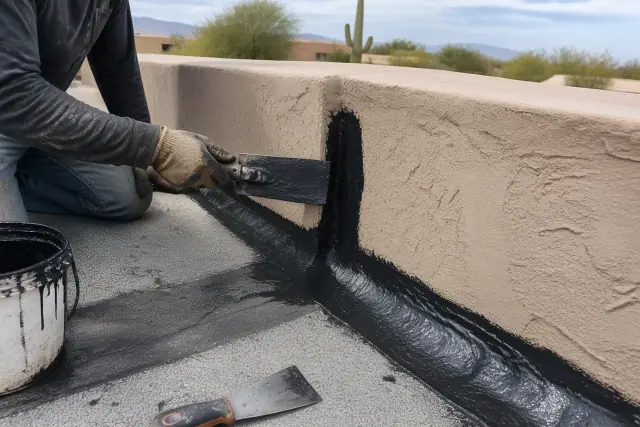
Contractor installing modified bitumen roofing on a parapet wall in Phoenix, AZ.

We install SBS and APP membranes in overlapping courses over a prepared base sheet. Torch-welded, self-adhering, or cold-applied assemblies are selected for the substrate, occupancy, and fire-rating requirements.

Request Estimate

Flat Roof Repair and Patching

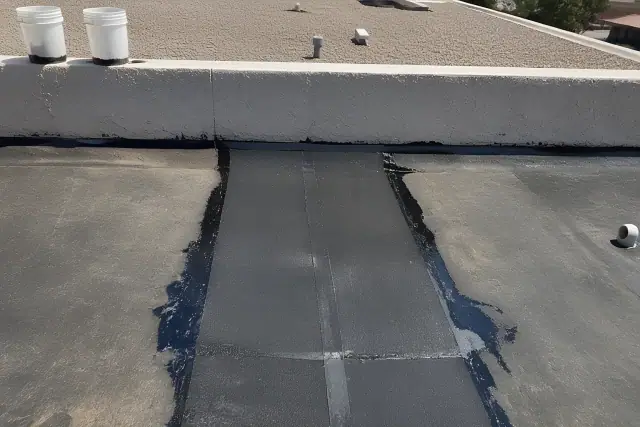
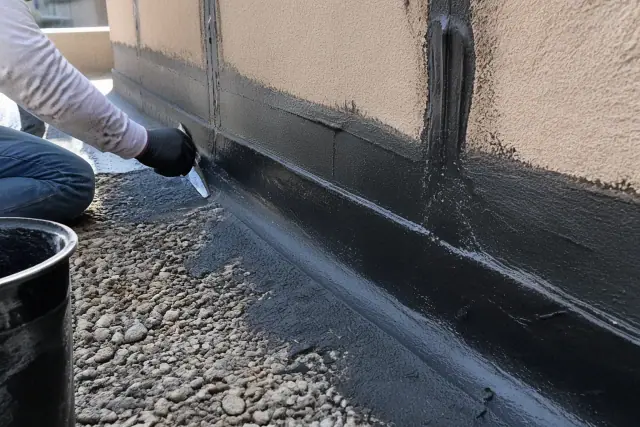
Fresh bitumen sealant applied to a parapet wall corner during a flat roof repair in Phoenix, AZ.

Commercial flat roof repair targets separated seams, membrane cracks, failed laps, and existing blisters before they spread into active leaks. Damaged areas are resealed or cut out and patched according to their condition.

Request Estimate

Commercial Roof Replacement

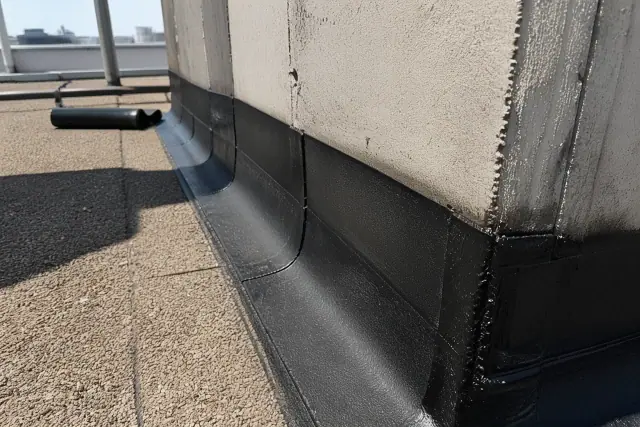
Close-up of a modified bitumen roof replacement with heat-welded seams on a parapet wall in Phoenix, AZ.

When failed roofing cannot support a sound new assembly, we remove it down to a stable substrate. Deck condition, insulation, drainage slope, and penetrations are addressed before the replacement membrane is installed.

Request Estimate

Reflective Roof Coatings

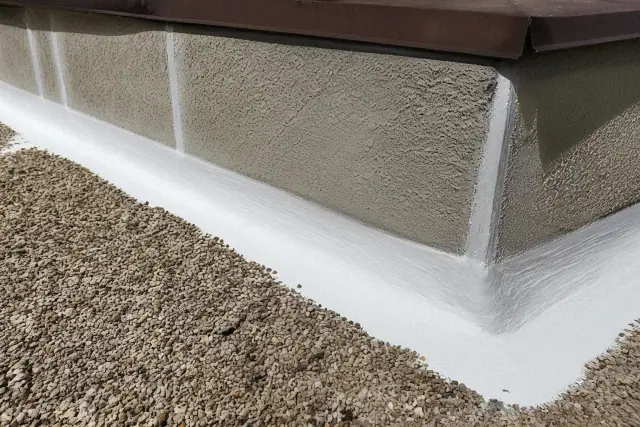
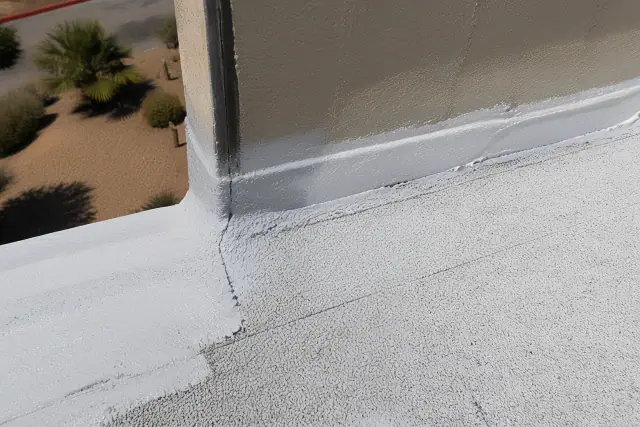
White reflective roof coating applied to a parapet wall flashing on a modified bitumen roof in Phoenix, AZ.

A heat-reflective roof coating can restore protection to an aging asphalt surface, lower rooftop temperatures, and slow further UV damage. Coating suitability depends on the membrane's condition and the package selected.

Request Estimate

Commercial Roof Inspections

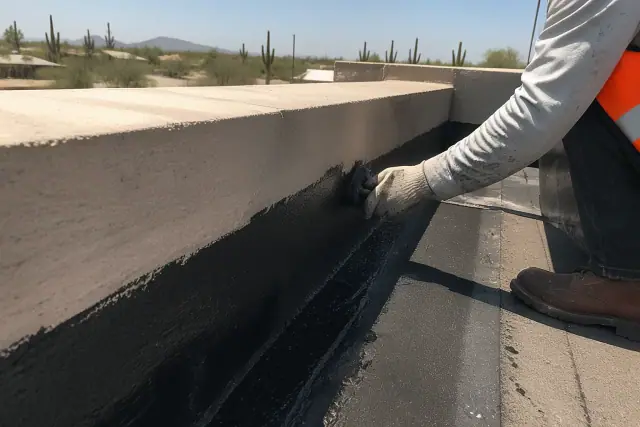
Technician sealing a modified bitumen roof joint at a parapet wall in Phoenix, AZ.

A professional roof assessment checks the deck, existing insulation, drainage slope, rooftop penetrations, seams, and flashing transitions. Those findings guide whether focused repairs, a coating, or replacement is appropriate.

Request Estimate

Modified Bitumen Maintenance

Modified bitumen roof expansion joint repair with torch-down membrane seams on a jobsite in Phoenix, AZ.

Maintenance focuses on seam adhesion, flashing details, drainage, and surface condition. Finding UV-brittled membrane, weak laps, or blistering early allows localized resealing and patching before damage progresses.

Request Estimate
Membrane and Application Options

Types of Modified Bitumen Systems

Membrane chemistry, attachment method, ply count, and surface finish all shape a modified bitumen roof. We compare the building's use, substrate, exposure, drainage, rooftop equipment load, and fire-code considerations before selecting an assembly.

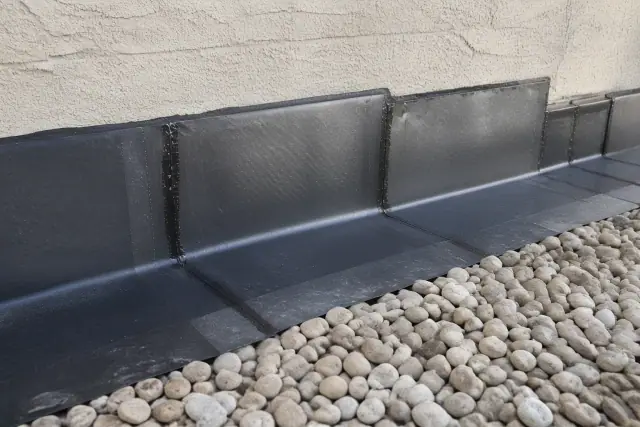
SBS modified bitumen roofing with heat-welded seams at a stucco parapet wall in Phoenix, AZ, with river rock ballast.

SBS Modified Bitumen Membranes

Styrene-butadiene-styrene modifies the asphalt with rubber-like flexibility. SBS membranes are commonly paired with self-adhering sheets or cold-applied adhesives on occupied commercial buildings.

  • Rubber-modified asphalt composition
  • Fiberglass or polyester reinforcement
  • Flexible response to thermal movement
  • Compatible with self-adhering application
  • Compatible with cold-applied adhesive
Request Estimate
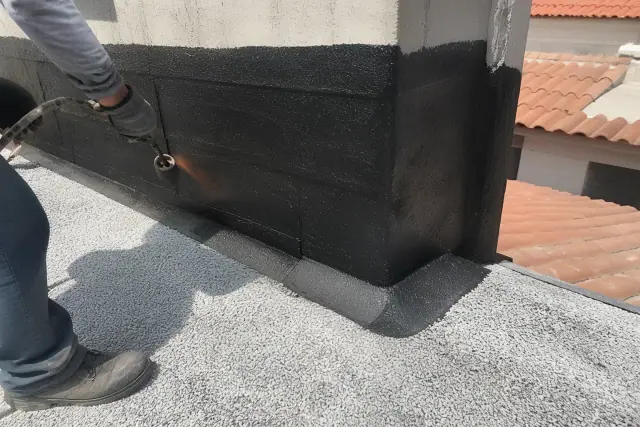
APP torch-applied membrane seam on a parapet wall in Phoenix, AZ, showing a fused bitumen edge with desert brush nearby.

APP Torch-Applied Membranes

Atactic polypropylene modifies the asphalt with plastic polymers. APP membranes are typically installed with controlled torch heat that melts the backing and fuses each course to the prepared substrate.

  • Plastic-polymer-modified asphalt
  • Controlled torch-applied installation
  • Heat-fused membrane backing
  • Overlapping waterproof courses
  • Selected around occupancy and fire-code needs
Request Estimate
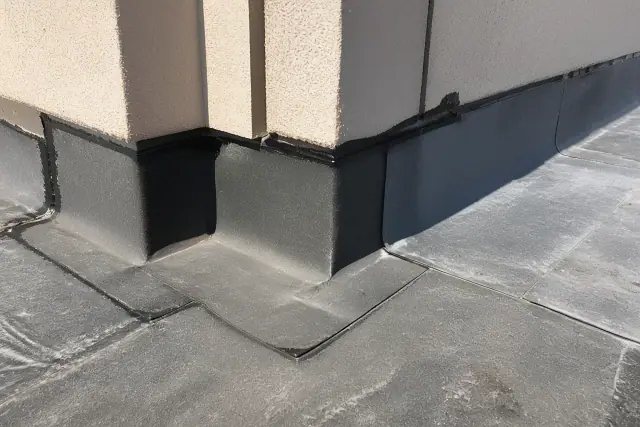
Self-adhering membrane installed on a stucco parapet wall under bright sunlight in Phoenix, AZ.

Self-Adhering Membrane Assemblies

Self-adhering membranes bond without an open flame, reducing torch risk on occupied buildings and multi-tenant retail properties. Substrate preparation and firm, continuous adhesion remain essential to dependable seams.

  • Open-flame-free application
  • Suitable consideration for occupied buildings
  • Practical option for multi-tenant retail
  • Requires a sound, prepared substrate
  • Installed in carefully overlapped courses
Request Estimate
Cold-applied membrane flashing on a parapet wall at a roofing jobsite in Phoenix, AZ.

Cold-Applied Membrane Assemblies

Cold-applied adhesives set modified bitumen plies without torch heat. This method is considered in relation to building use, occupancy, substrate, and local fire-code requirements.

  • No torch heat during application
  • Adhesive-set membrane plies
  • Careful adhesive coverage
  • Application matched to the substrate
  • Selection accounts for building occupancy
Request Estimate
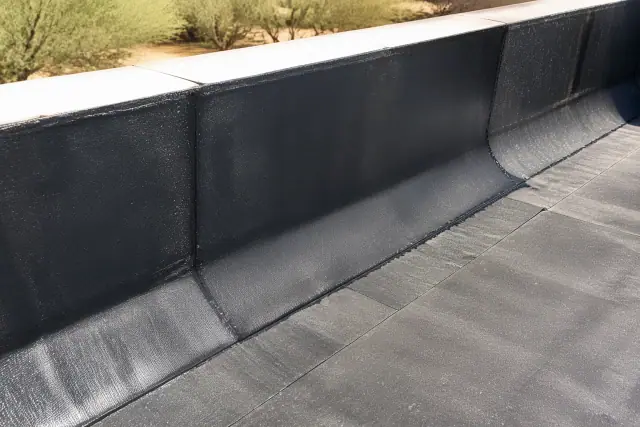
Close-up of a modified bitumen roof parapet with reflective coating and granulated finish in Phoenix, AZ.

Granulated and Reflective Finishes

The top ply can use a granulated cap sheet or a reflective coating package. Both protect the asphalt surface, while a qualifying reflective finish addresses Phoenix's cooling-dominated climate and sustained UV exposure.

  • Granulated cap-sheet protection
  • Heat-reflective coating option
  • Reduced direct UV exposure
  • Lower roof-surface temperatures
  • Finish matched to the selected ply package
Request Estimate
Finding Your Right Fit

Choosing the Right Modified Bitumen Approach

Installed modified bitumen roofing ranges from $4 to $8 per square foot, while the broader choice also depends on budget, building use, and how long the owner plans to hold the property. We then account for occupancy, fire-code considerations, roof exposure, drainage, substrate condition, and rooftop equipment before recommending membrane chemistry, application method, ply count, and finish.

Code-Conscious System Selection

Material selection follows ASTM D6164 and D6222, while installation planning accounts for City of Phoenix low-slope roofing requirements and International Building Code fire considerations. The application method is matched to the building's use, occupancy, substrate, and fire rating.

Phoenix Climate Fit

Phoenix spans 517.9 square miles and has more than 1.6 million residents, with commercial stock ranging from mid-century warehouses to new distribution centers. We size recommendations for Salt River Valley heat, Sun Corridor exposure, low-slope layouts, rooftop HVAC loads, and monsoon weather rather than applying one material to every building.

Documented Roof Closeout

Completed roofs receive a final walk checking seam adhesion, flashing details, and drainage. The closeout documentation is then placed in the manufacturer warranty file for future protection and reference.

What Sets Us Apart

Why Choose Us for Modified Bitumen Roofing?

Our crews hold Arizona Registrar of Contractors licensing and the bonding and insurance expected on commercial projects. Recommendations begin with a professional roof assessment and lead to a written estimate based on the building's actual membrane, deck, drainage, penetrations, and exposure.

Request Roof Assessment

Thermal Expansion Stress

Phoenix's repeated expansion and contraction stresses flashing and transition areas first. Extra ply reinforcement and flexible sealants rated for high-heat exposure help those details move without opening.

Seam Separation

Poor lap welds and UV-brittled membrane are frequent causes of seam separation, and improperly sealed laps are the single most common cause of early low-slope roof leaks. Inspection followed by resealing or patching can address weak seams before water enters.

Blistering and Bubbling

Moisture or air trapped between plies can form blisters that worsen under direct sun. Correct ventilation and adhesive application prevent many blisters, while existing bubbles are cut out and patched rather than left to spread.

UV Surface Degradation

Unprotected asphalt degrades under sustained UV exposure and can become brittle. A granulated cap sheet protects the membrane, while a suitable heat-reflective coating can restore surface protection and reduce rooftop temperature.

Drainage and Penetration Stress

Low-slope roofs must work around drainage paths and rooftop penetrations, where details and transitions can be vulnerable. Assessment of drainage slope, flashing, equipment loads, and penetrations helps define the correct repair or replacement scope.

Monsoon Wind, Rain, and Hail

Phoenix roofs face monsoon wind-driven rain and occasional hail after months of intense heat. Flexible polymer-modified plies, carefully sealed laps, protected surfaces, and sound flashing details work together to resist that weather cycle.

How it works

Our Modified Bitumen Roofing Process

The process moves from assessment and substrate preparation through base-sheet placement, membrane installation, detail work, and final verification. Each stage is adapted to the selected SBS or APP assembly and the building's operating conditions.

01.

Professional Roof Assessment

We inspect deck condition, existing insulation, drainage slope, rooftop penetrations, seams, flashings, exposure, and equipment loads. The building's use and occupancy also inform the application method.

02.

Tear-Off and Substrate Preparation

For tear-off projects, failed roofing is removed down to a sound substrate. The deck is prepared so movement or damage below does not compromise the new membrane above.

03.

Base Sheet and Insulation

A base sheet is mechanically fastened or adhered to the deck. Insulation board follows where energy-efficiency upgrades are included, creating a stable foundation for the membrane plies.

04.

Membrane Application

Modified bitumen plies are laid in overlapping courses and torch-welded, self-adhered, or set in cold-applied adhesive. The chosen method follows the membrane, substrate, occupancy, and fire-code considerations.

05.

Seam and Flashing Detailing

Lap adhesion receives close attention, along with flashing, transitions, and penetrations. High-movement areas can receive extra ply reinforcement and flexible high-heat sealants.

06.

Final Quality and Warranty Documentation

We walk the completed roof to verify seam adhesion, flashing details, and drainage before closeout. Project documentation is organized for the manufacturer warranty file.

Plan Your Phoenix Roof

Schedule a Modified Bitumen
Roofing
Assessment

Request a professional roof assessment and written estimate before the next monsoon season. We will evaluate the existing assembly, explain the applicable repair or replacement options, and match the installation method and finish to your commercial building.

Service Help

Modified Bitumen Roofing FAQs

These answers cover membrane types, Phoenix performance, installation, inspection, cost, warranties, maintenance, and service coverage for commercial modified bitumen roofs.

Call Our Roofers

Modified bitumen is a roll-manufactured asphalt membrane reinforced with fiberglass or polyester mat. SBS rubber or APP plastic polymers improve flexibility and tensile strength, and multiple plies over a base sheet create the waterproofing assembly.

SBS uses styrene-butadiene-styrene rubber to modify the asphalt and is often installed with self-adhering sheets or cold-applied adhesives. APP uses atactic polypropylene plastic and is typically torch-applied with controlled heat that fuses the backing to the substrate.

Modified bitumen plies can be torch-welded, self-adhered, or installed in cold-applied adhesive. The right method depends on the membrane, substrate, building use, occupancy, fire rating, and local code considerations.

A quality modified bitumen roof can last 15 to 20 years in Arizona heat, while the broader industry average is 12 to 20 years. Exposure, drainage, rooftop equipment, surface protection, and maintenance all matter when selecting the assembly.

Manufacturer warranties typically run 10 to 20 years, depending on ply count and the coating package selected. Final seam, flashing, and drainage checks are documented for the manufacturer warranty file.

A reflective cap sheet or roof coating can extend service life another 5 to 10 years by lowering surface temperatures and slowing UV degradation. The existing membrane must be evaluated to determine whether a coating is appropriate.

Installed modified bitumen roofing ranges from $4 to $8 per square foot. A professional assessment and written estimate are needed to relate that range to the building's roof condition and selected assembly.

Modified bitumen uses reinforced asphalt plies and gains reflectivity from a cap sheet or coating, while TPO is inherently highly reflective. Modified bitumen typically lasts 15 to 20 years, while TPO can last 20 to 30 years with proper maintenance; budget, building use, and ownership plans help determine the better fit.

Phoenix roof surfaces regularly reach 150 to 180 degrees Fahrenheit when ambient temperatures climb past 110, and rooftops can swing 60-plus degrees between seasonal extremes. Polymer modification helps the membrane flex, while granulated or coated cap sheets protect against heat, UV exposure, monsoon wind-driven rain, and occasional hail.

Our installations follow ASTM D6164 and D6222 material standards and City of Phoenix building-code requirements for low-slope roofing. Application planning also considers International Building Code fire requirements for the building and chosen method.

The assessment checks deck condition, existing insulation, drainage slope, rooftop penetrations, seams, flashing details, exposure, and equipment loads. It also considers building use and occupancy before repair, coating, replacement, or installation options are recommended.

Blisters form when moisture or air becomes trapped between membrane plies and then worsens under direct sun. Correct ventilation and adhesive application prevent many problems, while existing blisters can be cut out and patched.

Phoenix Commercial Roofing Company serves Phoenix and the surrounding metro, including Scottsdale, Tempe, Mesa, Glendale, Chandler, and Peoria. Contact us to discuss the commercial roof and request an assessment.