Proudly serving Phoenix, Mesa, Scottsdale, Tempe, Chandler, Glendale & surrounding areasCall or Text 24/7: 480-319-7533
Aerial view of residential neighborhoods, desert foothills, and arterial roads in Phoenix, AZ during late afternoon.

Phoenix Commercial Roofing Company - Commercial Flat Roof Repair, Commercial Roof Replacement, TPO Roofing in Phoenix, AZ

Phoenix Commercial Roofing Company is a commercial roofing contractor serving property owners and facility managers throughout Phoenix and the Valley. Our work includes commercial flat roof repair, commercial roof replacement, TPO roofing, spray foam roofing, and commercial roof coatings. We also install and service commercial metal, modified bitumen, and built-up roofs while providing commercial roof inspections and maintenance.

Phoenix roof surfaces regularly climb past 160 degrees Fahrenheit, while monsoon wind, sudden rain, and intense UV exposure stress membranes, flashing, drains, and seams. We are a licensed and insured commercial roofing contractor with an active Arizona Registrar of Contractors license. Our crews follow manufacturer specifications for TPO, PVC, modified bitumen, spray polyurethane foam, and metal assemblies, with project documentation suited to insurance, financing, and code-compliance needs.

From warehouses near Sky Harbor and Arcadia retail strips to downtown office buildings, every inspection considers the membrane, flashing, drainage, equipment penetrations, and parapet walls. Request an inspection for a written scope and a straight answer about what your commercial roof needs.

★ ★ ★ ★ ★4.9/5 Customer Rating · 29 Years of Commercial Roofing Experience · Thousands of Roofs Serviced · Licensed, Bonded & Fully Insured · Serving Businesses & Property Managers

Commercial Roofing Credentials

Commercial Roof Inspection
Licensed & Insured
Manufacturer-Spec Crews
Phoenix Climate Experience
Commercial Roofing Services

Roofing Options for Phoenix Commercial Properties

We work on low-slope and steep-slope roofs across retail centers, industrial warehouses, medical offices, and multi-tenant buildings. Each service is matched to roof condition, substrate, occupancy, drainage, and Phoenix exposure rather than treated as a one-material solution.

Commercial Flat Roof Repair

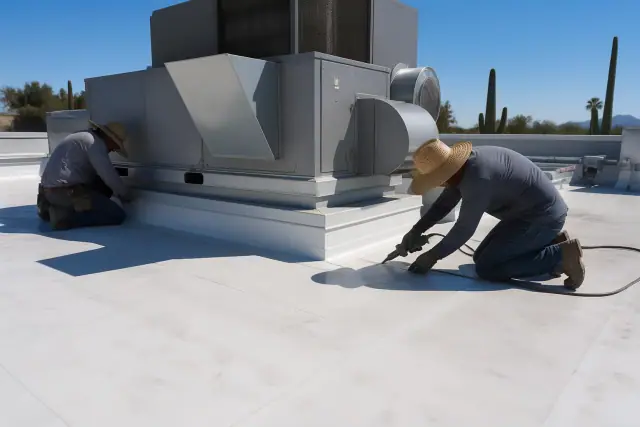
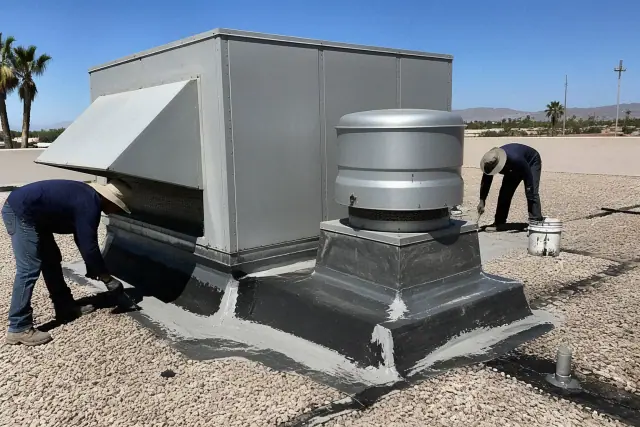
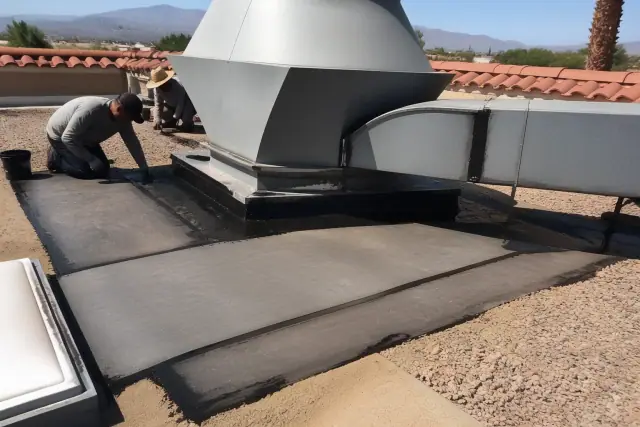
Technicians performing membrane roof repairs around a ventilation unit in Phoenix, AZ.

Emergency and same-day flat roof repair addresses active leaks, torn membrane laps, damaged flashing, and punctures before water reaches inventory, equipment, or tenants. We can document storm damage and add walk pads or protection mats around rooftop equipment to reduce repeat damage.

Explore Service

Commercial Roof Replacement

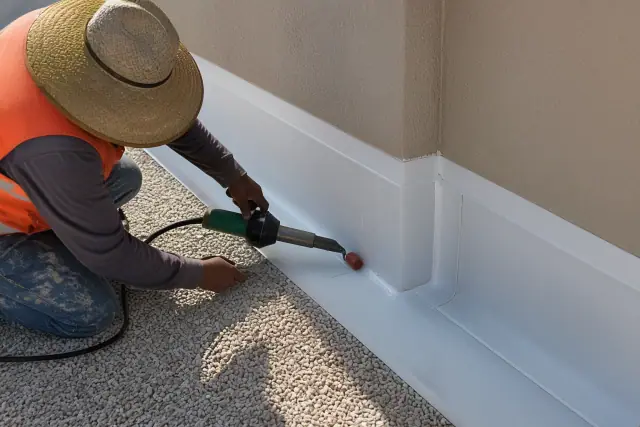
Technicians heat-welding a new TPO roof membrane around a ventilation unit in Phoenix, AZ.

A roof that reaches 20 to 25 years of age or develops deck-level moisture may be better suited to replacement than repeated patching. We tear off to the deck, inspect the substrate, and install a system engineered to current International Building Code wind and fire requirements; a recover may remain an option when one existing layer is dry and passes moisture inspection.

Explore Service

TPO Roofing

Roofing crew sealing TPO membrane seams on a parapet wall at a job site in Phoenix, AZ.

Heat-welded TPO seams and a reflective white or light-gray surface help a roof contend with well over 300 sunny days a year. A properly installed and maintained TPO system typically lasts 20 to 30 years, with biannual inspections recommended to catch seam issues early.

Explore Service

Spray Foam Roofing

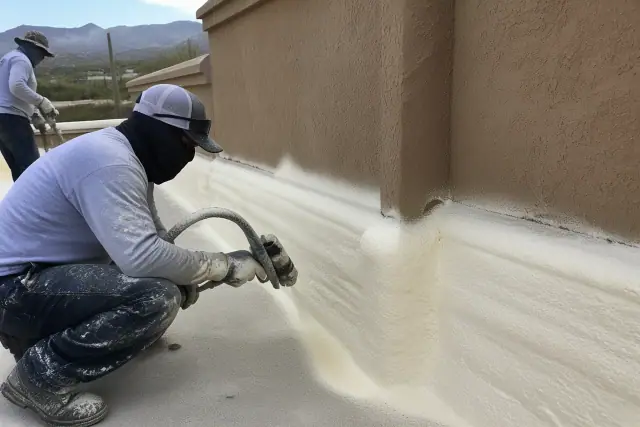
Spray foam roof insulation applied to a parapet wall on a building in Phoenix, AZ.

Spray polyurethane foam expands from a liquid into a rigid, fully adhered roof with no seams, laps, or fasteners and adds insulation value at the deck. Protected by an elastomeric coating after cure, an SPF roof can exceed 30 years of service when recoated on its typical 10- to 15-year schedule.

Commercial Roof Coatings

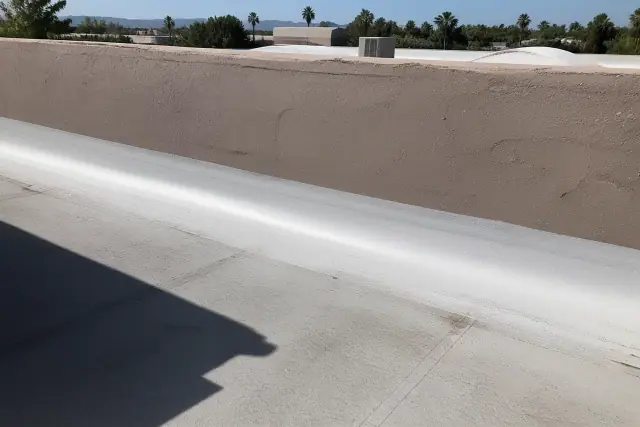
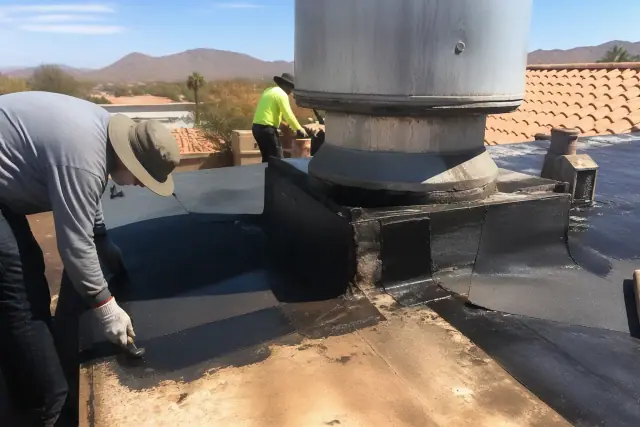
Liquid membrane coating applied to a parapet wall seam on a gravel commercial roof in Phoenix, AZ.

Silicone, acrylic, and elastomeric coatings can restore waterproofing and reflectivity on aging TPO, modified bitumen, metal, and BUR roofs that still have sound substrate. A coating application can add 10 or more years of service while reducing the expansion and contraction that cracks older membranes.

Commercial Metal Roofing

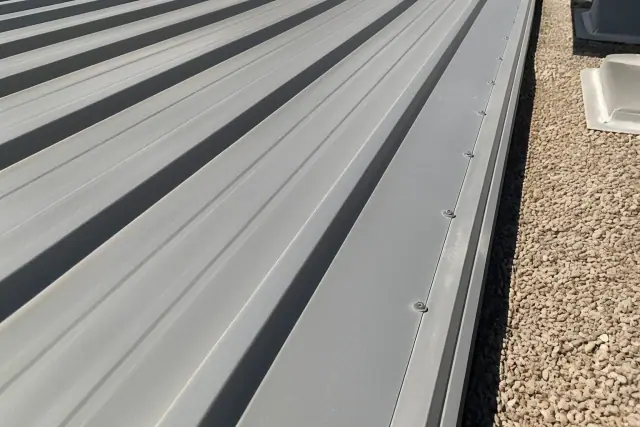
Industrial screws securing overlapping metal roof panels on a commercial building in Phoenix, AZ.

Standing-seam and corrugated galvalume or painted-steel panels offer wind-uplift, hail-impact, and fire resistance for warehouses and manufacturing facilities. Factory-finished panels are rated for 25 to 40 years, while a properly maintained metal roof can exceed 50 years.

Modified Bitumen Roofing

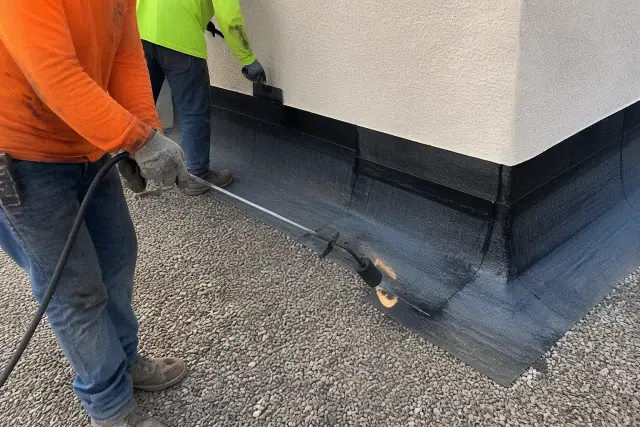
Roofing contractors sealing bitumen membrane joints along a parapet wall on a building in Phoenix, AZ.

SBS- and APP-modified bitumen combine asphalt with polymers for greater flexibility during Phoenix temperature swings that can exceed 40 degrees between winter days and nights. SBS systems generally deliver 15 to 20 years of service, with torch-applied, self-adhered, or hot-mopped installation selected around occupancy and fire-code restrictions.

Built-Up Roofing (BUR)

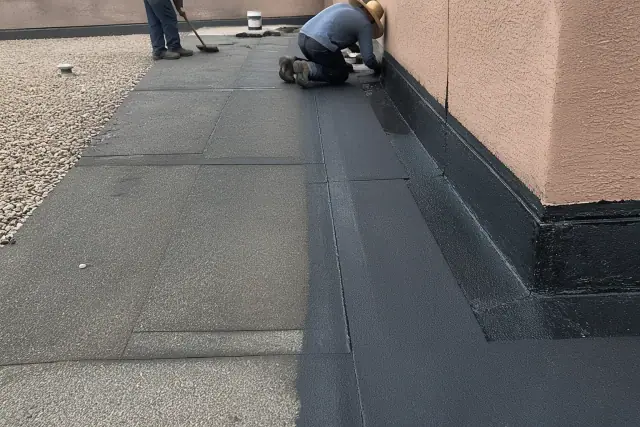
Built-up roofing with overlapping bitumen layers and a fresh asphalt lap seam on a gravel roof in Phoenix, AZ.

A typical built-up roof uses three to four alternating plies of bitumen and reinforcing fabric, topped with gravel or a mineral cap for redundant waterproofing and surface protection. Well-maintained BUR systems commonly last 20 to 30 years and remain a practical repair or installation choice on older central Phoenix buildings.

Commercial Roof Inspections

Technician inspecting a multi-layered roof membrane seam on a ventilation unit in Phoenix, AZ.

Our checklist-based inspections cover membrane condition, flashing, drainage, rooftop equipment penetrations, and parapet walls. After wind or hail, photos and moisture scans can document displaced ballast, torn laps, and compromised flashing for owners, property managers, and insurance adjusters.

Commercial Roof Maintenance

Technicians applying sealant to a roof ventilation unit on a commercial building in Phoenix, AZ.

Preventive maintenance targets ponding water, cracked pitch pans, deteriorated sealant, and debris in drains, scuppers, and gutters before small defects reach the roof deck. Pre- and post-monsoon visits include dated photo reports that support building records and manufacturer maintenance requirements.

Project Planning & Protection

Commercial Roofing Support Beyond the Core System

Commercial roofs require more than material selection. We combine leak response, condition documentation, recover analysis, occupied-building planning, reflective protection, and maintenance records so owners can act on the roof's actual condition.

Technicians repairing a torn roof membrane on a sun-bleached terracotta roof in Phoenix, AZ after storm damage.

Emergency Leak & Storm Damage Response

Monsoon downpours can expose weak seams and blocked drainage within minutes. Emergency and same-day commercial roof repair focuses first on controlling active water entry, then defining the permanent repair.

  • Immediate temporary and permanent leak fixes
  • Photo documentation for insurance claims
  • Moisture scans after wind or hail
  • Review of ballast, laps, and parapet flashing
  • Protection for inventory, equipment, and tenants
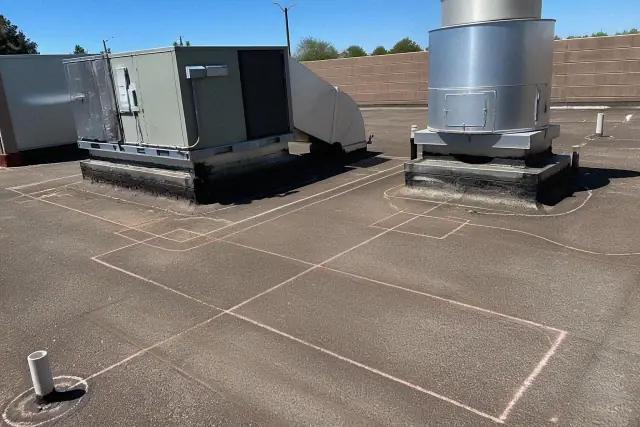
Chalk layout for membrane detailing around a rooftop ventilation unit on a gravel-ballasted roof in Phoenix, AZ.

Recover & Replacement Planning

A dry roof with one existing layer may qualify for a new membrane recover, while deck-level moisture or accumulated layers can point to tear-off and replacement. Testing and code requirements guide that decision.

  • Moisture inspection before recommendations
  • Existing roof-layer review
  • Deck and substrate condition assessment
  • Wind-uplift and fire-rating planning
  • Recover-versus-tear-off scope comparison
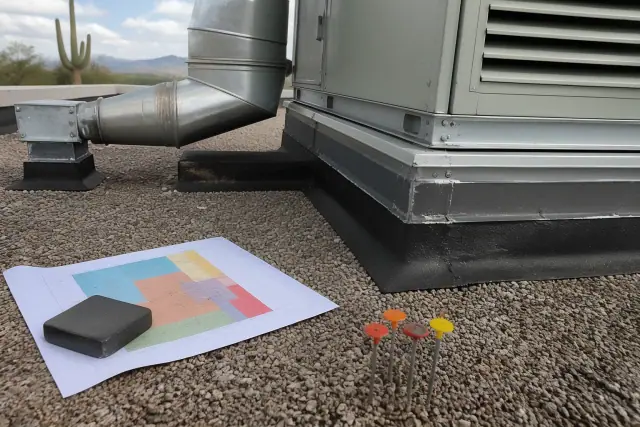
Site coordination plan weighted on a gravel roof with a ventilation unit and saguaro cactus in the distance in Phoenix, AZ.

Occupied-Building Project Coordination

Large commercial and industrial roof projects can be phased section by section so retail floors, warehouses, medical offices, and multi-tenant spaces remain operational. The plan accounts for building use before crews mobilize.

  • Section-by-section project phasing
  • Dust-containment planning
  • Noise scheduling around occupants
  • After-hours work windows when needed
  • Rooftop equipment, curb, and skylight coordination
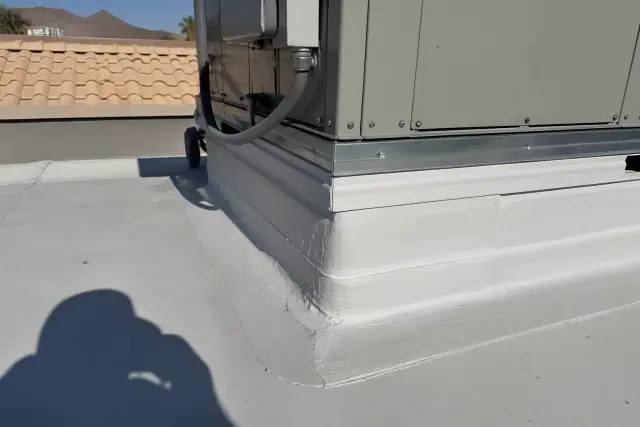
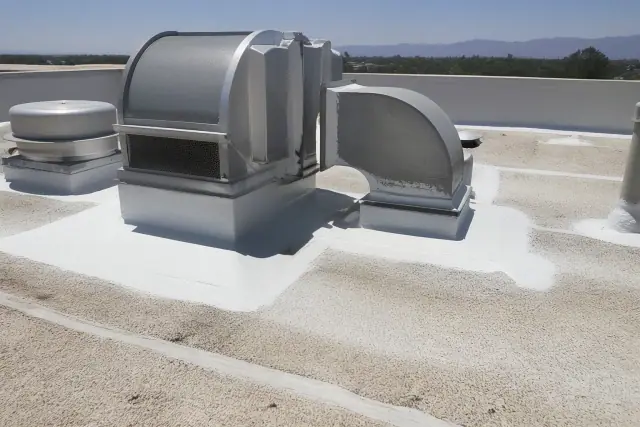
Fresh white reflective roof coating around an HVAC unit on a Phoenix, AZ rooftop.

Reflective Protection & Maintenance Records

Reflective membranes and coatings reduce absorbed solar radiation, while scheduled maintenance helps preserve seams, drainage, sealants, and coating condition. Dated documentation gives owners a clear record of roof care.

  • White and light-gray TPO surfaces
  • Silicone, acrylic, and elastomeric coatings
  • Pre-monsoon drain and scupper clearing
  • Post-monsoon wind-damage checks
  • Dated photo reports for building records
Accountable Commercial Roofing

Why Phoenix Property Teams Choose Our Roofing Company

Commercial property owners need a contractor who can connect roof condition, material requirements, code considerations, and building operations. Our approach pairs documented recommendations with trained crews and direct accountability for the core roofing work.

Arizona License & Insurance

Phoenix Commercial Roofing Company is licensed and insured and holds an active Arizona Registrar of Contractors license. Project documentation can support the insurance, financing, and code-compliance records that building owners and property managers maintain.

Manufacturer-Spec Workmanship

Crews are trained to manufacturer specifications for TPO, PVC, modified bitumen, spray polyurethane foam, and metal assemblies. Work follows NRCA-aligned workmanship standards and ASTM material specifications to protect system performance and factory warranty requirements.

In-House Roofing Crews

We do not subcontract the core trade work. Keeping that work in-house gives owners and facility managers a direct line of accountability for material handling, installation quality, project sequencing, and site coordination.

Problems That Escalate on Commercial Roofs

Common Phoenix Commercial Roofing Problems

Small defects can become deck-level leaks when Phoenix heat, UV exposure, monsoon rain, wind, dust, and rooftop foot traffic act on the same roof. An inspection separates isolated repair needs from drainage, moisture, or system-wide deterioration.

Request Roof Inspection

Monsoon Roof Leaks

Sudden monsoon downpours can expose weak seams and clogged drains within minutes. Active water may threaten inventory, equipment, tenant spaces, and the roof deck unless the entry point and drainage issue are addressed.

UV & Thermal Cycling

Intense solar exposure and wide surface-temperature swings expand and contract roofing materials. Over time, that movement can break down membranes, crack older surfaces, and stress flashing details.

Membrane Punctures

HVAC technicians, satellite installers, and maintenance traffic can puncture flat-roof membranes around busy equipment zones. Walk pads, protection mats, and clear foot-traffic routes help protect vulnerable surfaces.

Ponding Water & Clogged Drains

Dust and debris accumulate during Phoenix's dry months and can obstruct drains, scuppers, and gutters when monsoon rain arrives. Standing water then loads the roof and increases pressure on seams, sealants, and low areas.

Failed Seams & Flashing

Early TPO leaks often begin at compromised seams, while wind can affect membrane laps and parapet flashing. Inspection of welded seams, edge details, penetrations, and pitch pans helps locate the actual failure path.

Metal Roof Corrosion

Low humidity generally favors metal roofing, but monsoon moisture mixed with dust and mineral deposits can promote corrosion at fasteners and panel seams. Corrosion-resistant fasteners, factory finishes, and maintained coatings reduce that risk.

How It Works

Our Commercial Roofing Process

The process begins with roof condition and ends with a documented scope, coordinated work, and clear maintenance records. Each step accounts for the assembly, occupied spaces, Phoenix weather, material specifications, and applicable code requirements.

01.

Inspect the Roof Assembly

We examine membrane condition, flashing, drainage, rooftop equipment penetrations, and parapet walls. The inspection establishes where visible symptoms connect to the broader roof assembly.

02.

Document Damage & Moisture

Photos record displaced ballast, torn laps, and damaged flashing, while moisture scans help reveal water beneath the surface. This documentation gives owners and adjusters a clearer basis for the repair scope.

03.

Compare Repair, Recover & Replacement

Roof age, substrate condition, moisture, and existing layers determine whether targeted repair, a membrane recover, or full replacement fits the condition. We test rather than assume which path applies.

04.

Define Scope, Materials & Timeline

Before crews mobilize, the project receives a written scope, material specifications, and a project timeline. Wind, fire, occupancy, and manufacturer requirements are addressed in that plan.

05.

Coordinate Around Building Operations

Occupied-building work can be phased section by section with dust containment, noise scheduling, and after-hours windows built around tenants and operations. Equipment curbs and skylights are coordinated as part of the roof work.

06.

Complete Work & Maintain Records

Core roofing work stays with our crews and follows the material specifications in the scope. Scheduled maintenance can then produce dated photo reports for building files and manufacturer warranty documentation.

Commercial Roofing Across Phoenix and the Valley

Phoenix spans 517.9 square miles, and the metro population is near 5.19 million people. We serve commercial properties across that footprint, including the named Phoenix areas and property settings below, without relying on postal-code boundaries.

  • Phoenix
  • Downtown Phoenix
  • Central Phoenix
  • Deer Valley
  • Arcadia
  • Sky Harbor Area
  • Maricopa County
  • Salt River Valley
  • The Valley
  • Phoenix Retail Centers
  • Phoenix Industrial Warehouses
  • Phoenix Medical Offices
  • Phoenix Multi-Tenant Buildings
  • Warehouses Near Sky Harbor
  • Arcadia Retail Properties
  • Downtown Office Buildings
  • Central Phoenix Commercial Buildings
  • Phoenix Manufacturing Facilities
  • Commercial Properties Across the Valley
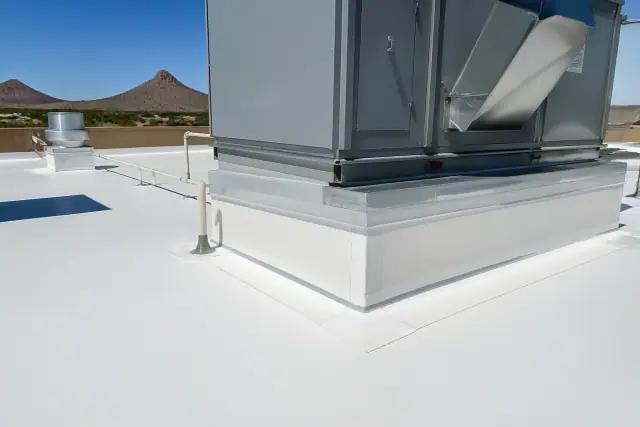
White TPO roofing membrane installation around a ventilation unit on a commercial building in Phoenix, AZ.

Honest Feedback from Phoenix Customers

Commercial Roofing Experiences
★ ★ ★ ★ ★

A monsoon leak started over our warehouse inventory, and the crew controlled the water entry before walking us through the permanent membrane repair. The photos made the damage and recommendation easy to understand.

MT
Michael T.Phoenix Warehouse Manager
★ ★ ★ ★ ★

We needed a clear comparison between repairing and recovering the roof on our Arcadia retail property. The written scope explained the moisture findings, materials, and work sequence without disrupting our tenants.

PS
Priya S.Arcadia Property Owner
★ ★ ★ ★ ★

Our Deer Valley building had ponding water and recurring trouble around rooftop equipment. The inspection traced the drainage and membrane issues, and the added walk pads gave our maintenance team a safer route.

DK
Daniel K.Deer Valley Facility Manager
★ ★ ★ ★ ★

The replacement on our central Phoenix office was phased around occupied spaces, so noise and dust were manageable. We appreciated having the material specifications, timeline, and photo records in one place.

VM
Vanessa M.Central Phoenix Building Manager
Get a Clear Roofing Scope

Schedule a Commercial
Roof
Inspection

Tell us about the leak, aging system, storm concern, maintenance need, or planned replacement at your Phoenix commercial property. We will evaluate the roof and prepare a written scope, material specifications, and project timeline before work begins.

Phoenix Commercial Roofing Help

Commercial Roofing Questions, Answered

These answers cover the roof systems, inspection factors, maintenance intervals, and project-planning issues Phoenix property owners and facility managers commonly weigh.

Call Our Roofing Team

We work on commercial flat and steep-slope assemblies, including TPO, PVC, spray polyurethane foam, modified bitumen, built-up roofing, metal, and coated roof systems. Services include repair, replacement, inspection, and maintenance based on the existing assembly and roof condition.

Roof surfaces in Phoenix regularly climb past 160 degrees Fahrenheit. The resulting thermal cycling, combined with intense UV exposure, can break down membranes, crack aging surfaces, and stress flashing and seams.

Targeted repair may fit isolated damage when the surrounding system and deck remain sound. A roof that reaches 20 to 25 years of age, has widespread deterioration, or shows deck-level moisture may make replacement more cost-effective than repeated patching.

A recover may be possible when the existing roof has one layer, remains dry, and passes moisture inspection. Accumulated layers, wet materials, substrate damage, and building-code limits can require tear-off instead.

A properly installed and maintained TPO system typically lasts 20 to 30 years. Biannual inspections are recommended to check heat-welded seam integrity, because seam failure is a common cause of early TPO leaks.

A spray polyurethane foam roof can exceed 30 years of service when its protective coating is renewed on schedule. The typical recoating interval is every 10 to 15 years, and the coating shields the seamless foam surface from UV exposure.

Silicone, acrylic, and elastomeric coatings can restore waterproofing and reflectivity when the existing TPO, modified bitumen, metal, or BUR roof still has sound substrate. A coating application can add 10 or more years to an aging roof.

Factory-finished metal panels are rated for 25 to 40 years, while well-maintained metal roof systems can exceed 50 years. Maintaining coatings, fasteners, and panel seams helps limit corrosion associated with monsoon moisture, dust, and mineral deposits.

SBS-modified bitumen systems generally deliver 15 to 20 years of service. Their polymer content lets the membrane flex during temperature changes, including Phoenix winter swings of more than 40 degrees between day and night.

A typical BUR system uses three to four plies of reinforcing fabric and bitumen beneath gravel or a mineral cap. Those layers provide redundant waterproofing, and a well-maintained built-up roof commonly lasts 20 to 30 years.

Yes. Emergency and same-day repair is available when active leaks threaten inventory, equipment, or tenants, with temporary and permanent repair materials carried for immediate response. This does not imply round-the-clock availability.

The inspection covers membrane condition, flashing, drainage, rooftop equipment penetrations, and parapet walls using an industry-consistent checklist. After storms, photos and moisture scans can document concealed moisture and visible wind or hail damage.

Maintenance visits are scheduled before monsoon season to clear drains, scuppers, and gutters of accumulated dust and debris. Post-monsoon visits check for wind-driven damage, and dated photo reports support building records and manufacturer maintenance requirements.

Large projects can be phased section by section so retail floors, warehouses, and offices remain operational. Dust containment, noise scheduling, and after-hours work windows are incorporated for occupied buildings.