Low-Slope Roof Fit
TPO is a practical default for many flat retail, office, and industrial roofs. Its heat-welded seams create a watertight bond, the membrane meets ASTM D6878, and suitable assemblies typically carry a UL 790 Class A fire rating.
Phoenix Commercial Roofing Company explains why no single system is best for every commercial building: roof slope, deck condition, structural load, building use, and exposure to desert heat and monsoon weather all change the answer. TPO often suits simple low-slope retail and office roofs, spray foam handles penetration-heavy assemblies, and standing seam metal supports long ownership horizons.
TPO is a practical default for many flat retail, office, and industrial roofs. Its heat-welded seams create a watertight bond, the membrane meets ASTM D6878, and suitable assemblies typically carry a UL 790 Class A fire rating.
With 300-plus sunny days a year and rooftop temperatures that can exceed 160 degrees in July, reflectivity matters. Materials must also handle 50-plus-degree temperature swings and monsoon wind and debris from July through September.
Confirm roof slope, structural load capacity, deck condition, building use, penetrations, HVAC unit count, drainage, insulation targets, and insurance requirements. The final assembly should also align with current City of Phoenix building code and manufacturer specifications.
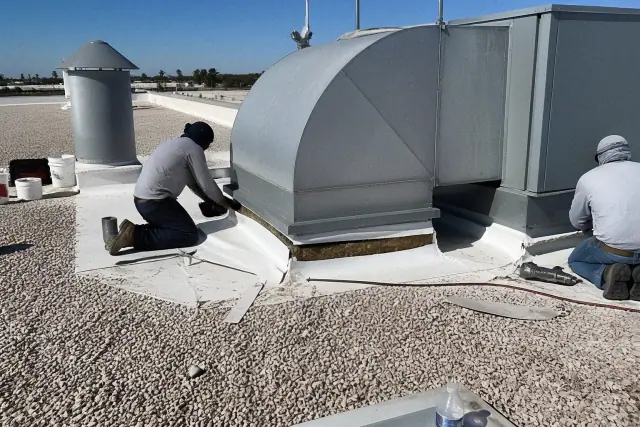
A commercial deck with a quarter-inch of fall per foot or more, plus curbs, pipes, HVAC units, drains, and scuppers. These details reveal whether a membrane or seamless foam assembly is easier to flash and drain.
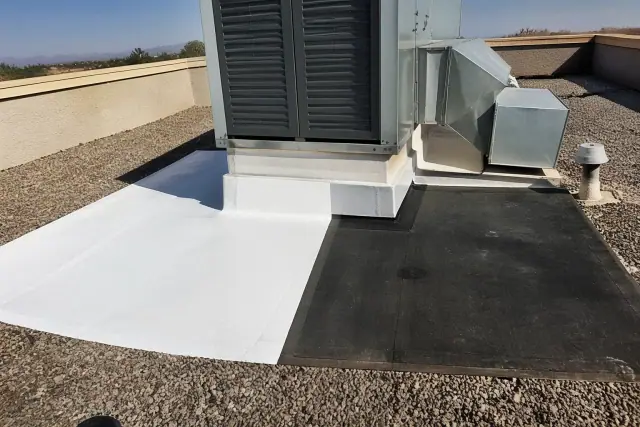
Compare a white TPO surface with a dark EPDM membrane under direct desert sun. The contrast makes heat gain and the extended Phoenix cooling season easier to understand.
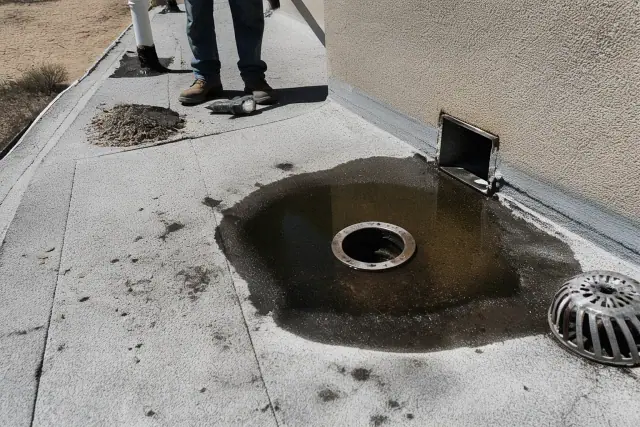
Low areas, blocked drains, and scuppers after a storm. Water that remains longer than 48 hours can speed membrane breakdown and may change the best repair or replacement choice.
TPO combines light weight, fast installation, reflective performance, and welded seams for many retail, office, and warehouse roofs with uncomplicated layouts.
Spray polyurethane foam forms a fully adhered, seamless surface that self-flashes around pipes, curbs, and equipment while adding insulation directly to the roof assembly.
Standing seam metal provides the longest typical service life in this comparison. It works best on a building that can support the system and has enough slope to shed monsoon rain quickly.
Modified bitumen resists punctures around frequently serviced equipment, while BUR uses alternating asphalt and reinforcing layers so damage to one layer does not compromise the entire assembly.
| Roof system | Strongest fit | Typical service life and key tradeoff |
|---|---|---|
| TPO | Simple low-slope retail, office, and industrial roofs | 15-20 years; a reflective membrane with heat-welded seams |
| PVC | Restaurants and roofs exposed to grease, oils, or solvents | 20-30 years; stronger chemical resistance at a higher upfront cost than TPO |
| EPDM | Ponding-prone areas where heat absorption is acceptable | 15-25 years; its black surface works against Phoenix cooling goals |
| Spray foam | Roofs with many pipes, curbs, and rooftop units | 30+ years with recoating every 10-15 years; seamless and self-flashing |
| Standing seam metal | Low-slope buildings held for the long term | 40-50+ years with routine maintenance; sheds rain and resists wind uplift when properly fastened |
| Modified bitumen | Roofs with frequent foot traffic or equipment service | 15-20 years; layered construction improves puncture resistance |
| BUR | Buildings that benefit from multi-layer redundancy | 15-20 years; heavier and generally costlier to install than single-ply roofing |
A simple big-box deck often favors reflective TPO, while a distribution warehouse with dozens of rooftop units can benefit from seamless spray foam. PVC is suited to restaurants or facilities exposed to grease, oils, and solvents; EPDM handles ponding conditions but absorbs more solar heat; and standing seam metal serves low-slope buildings held for decades. Modified bitumen offers puncture resistance, while BUR brings an asphalt-and-fabric assembly used on commercial roofs for over a century.
The roof deck, structural capacity, building use, access, drainage, penetrations, insulation R-value, expected ownership period, and tear-off scope can all change the recommendation. Reflective acrylic, silicone, or elastomeric coatings may extend a suitable existing roof and reduce rooftop heat gain, while flashing fatigue, seam separation, punctures, blisters, or persistent ponding may require repair or replacement instead. Installation quality and documented maintenance also matter: roofs without a maintenance schedule can fail 5-10 years earlier than roofs with one.
How do repair and replacement compare? Targeted repair is generally the better financial choice when damage covers less than 25 percent of the roof, while damage or wear at or above that threshold may trigger full-replacement and current-code considerations. How often should the roof be checked? Plan twice-yearly inspections, ideally before monsoon season in May and after it ends in October, plus an inspection after any major storm. Do insurance carriers care about material? They generally favor documented wind-, fire-, and impact-resistant systems such as qualifying TPO, PVC, and metal assemblies, along with complete maintenance records. Commercial roofing also differs from residential work because low-slope systems cover larger areas, use different fastening and repair methods, and must accommodate far more rooftop equipment.
Share the building use, slope, deck condition, leak history, rooftop equipment count, and ownership horizon. A commercial roof inspection can compare system fit, repair-versus-replacement scope, drainage, insulation needs, and code requirements before you approve work.