Credentials and Permits
Ask to see the current Arizona ROC license, bond, general liability, and workers' compensation documents, then confirm who will pull permits through the City of Phoenix Development Services Department.
Phoenix Commercial Roofing Company recommends asking about credentials, written scope, roof-system performance, warranties, payment, and schedule before approving a commercial roof replacement in Phoenix. The answers shape both accountability during the project and decisions that can affect the building for the next 20-30 years.
Ask to see the current Arizona ROC license, bond, general liability, and workers' compensation documents, then confirm who will pull permits through the City of Phoenix Development Services Department.
Require a written estimate that addresses tear-off, decking repair, flashing, disposal, and mid-project damage, with milestone payments instead of full payment upfront.
Ask why the material fits Phoenix conditions, what the manufacturer and workmanship warranties cover, and how crew size, equipment, and monsoon delays affect the schedule.
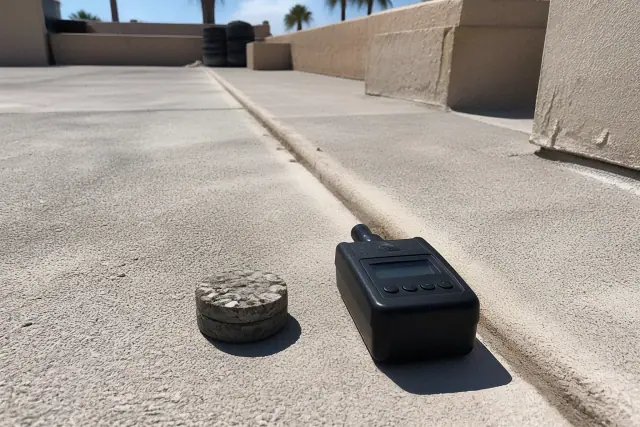
How infrared moisture scanning and a core cut reveal conditions beneath a low-slope commercial roof. These findings help compare repair with full replacement.
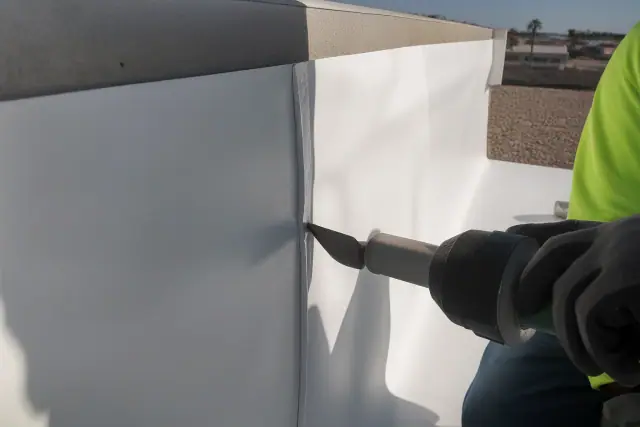
A hot-air-welded TPO seam beside finished flashing so the installation method is easy to discuss. Detail quality matters at seams, penetrations, and roof edges.
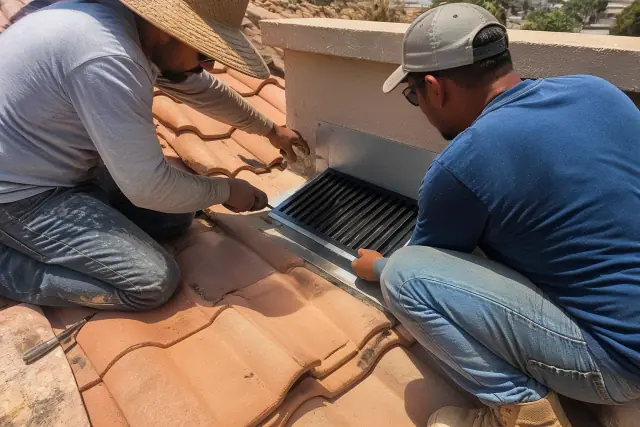
Roof edges, drainage paths, and rooftop equipment during an inspection. The view should support questions about monsoon wind loads, water movement, and access.
Verify current license, bond, and insurance documents on-site before comparing proposals or signing a contract.
Deck moisture, core-cut findings, damaged decking, access, building height, occupancy, and rooftop equipment can all change the proposed work.
Set the permit, material, warranty, payment, inspection, and weather-delay terms before contract signing and tear-off.
Do not rely on promised documents later, a vague scope, an unexplained warranty, or a request for full payment upfront.
| Ask About | A Strong Answer Covers | What to Clarify |
|---|---|---|
| Credentials and permits | Current Arizona ROC license, bond, liability and workers' compensation documents, plus responsibility for City of Phoenix permits. | Promises without current documents or a named permit plan. |
| Written scope | Tear-off, decking repair, flashing, disposal, change handling, and final inspection. | A total price without clear inclusions or a process for damaged decking. |
| Roof performance | Phoenix UV and monsoon exposure, ASCE 7 wind uplift, occupancy-appropriate UL fire rating, and solar reflectance. | A generic material recommendation that ignores building height or occupancy. |
| Warranty | Material and labor coverage, term, transferability, exclusions, and actions that void coverage. | A warranty length without written coverage details. |
| Payment and schedule | Milestone payments, final payment after inspection, crew size, equipment, and weather-delay planning. | Full payment upfront or a schedule that does not account for monsoon storms. |
| Inspection and references | Moisture readings, core cuts, appropriate installation equipment, and two or three comparable completed projects. | No method for checking the deck or no similar commercial references. |
A useful contractor interview converts broad promises into documents and building-specific choices. Whether the property has a small strip-center flat roof or a large industrial TPO system, the proposal should identify tear-off, decking repair, flashing, disposal, equipment, crew responsibility, and the contact after completion. Performance questions should connect the roof assembly to Phoenix conditions, building height and occupancy, and the required wind-uplift and fire ratings. The goal is a scope you can compare line by line before signing.
The recommendation can change with the roof area affected, deck moisture, core-cut findings, access, building height, occupancy class, and existing rooftop equipment. Many insurers and code officials apply a roughly 25% threshold, meaning damage or required repair covering about a quarter or more of the total roof area may lead to full replacement rather than patching. Rotted or damaged decking discovered mid-project can alter the scope, while unapproved rooftop equipment, foot traffic, or unpermitted patchwork can affect warranty coverage. Monsoon storms can also change the work sequence and timeline.
Ask whether the installer can show two or three completed low-slope projects of similar size and material, whether direct employees or subcontracted labor will perform the work, and who handles issues after completion. Clarify whether manufacturer warranties commonly running 15-30 years and workmanship warranties typically lasting 2-10 years apply to the proposed scope, including labor, material, transferability, and exclusions. If damaged decking is uncovered, ask how the findings, scope change, cost, and schedule will be documented before work continues.
Share the building type, roof material if known, approximate size, visible problems, and any moisture findings. A local commercial roofing team can help compare scope, permit, performance, warranty, and scheduling questions before you approve replacement work.