Topcoat Protection
Acrylic or silicone elastomeric topcoat shields the foam core from Arizona UV. Thin, worn, or missed coating can expose foam and accelerate deterioration.
Phoenix Commercial Roofing Company explains that spray polyurethane foam roofing can perform well on Phoenix flat and low-slope commercial buildings, but errors in mixing, application timing, topcoat coverage, or maintenance can create serious problems. Blisters, UV damage, hidden moisture, overspray, and under-cured foam matter because they can turn a repairable surface issue into damaged insulation or roof decking.
Acrylic or silicone elastomeric topcoat shields the foam core from Arizona UV. Thin, worn, or missed coating can expose foam and accelerate deterioration.
SPF depends on a correct 1:1 A-side to B-side ratio, calibrated equipment, and suitable application timing. Errors can leave foam tacky, soft, brittle, uneven, or delaminated.
A small coating breach can let water migrate sideways beneath closed-cell foam. Infrared moisture scanning helps locate wet zones before mold or structural decking damage spreads.
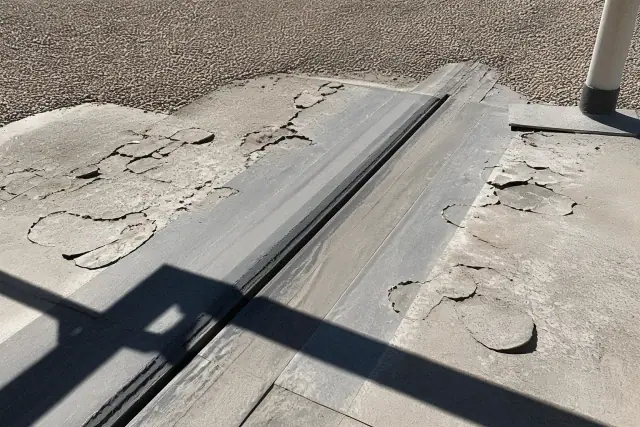
Raised blisters can split when walked on, leaving the foam core exposed through a cracked topcoat. Opened bubbles deserve attention before sunlight and water enlarge the damaged area.
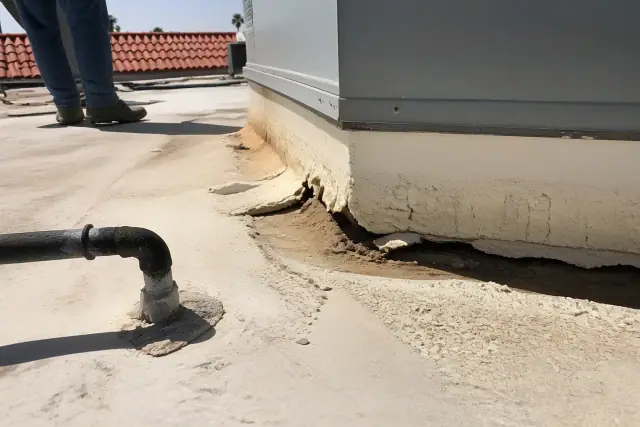
Intact elastomeric coating has a continuous protective surface, while exposed foam appears weathered where the coating has worn away. That boundary reveals why topcoat thickness and recoat timing matter in Phoenix sun.
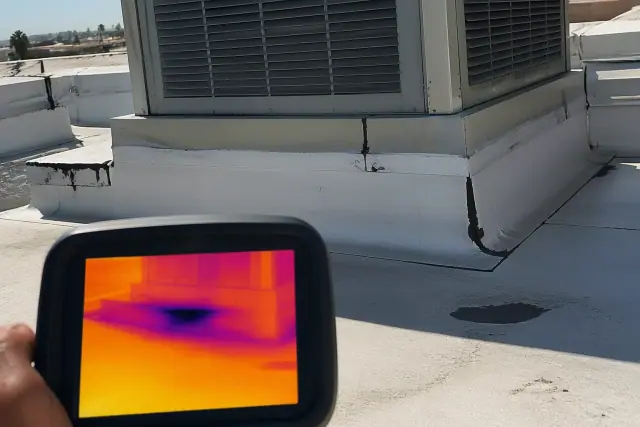
An infrared scan can mark a concealed wet zone beneath an apparently continuous roof surface. The scan helps explain why a visual check alone can miss lateral water migration.
Permanent tackiness, unusual softness, brittleness, or uneven cell structure can point to off-ratio material that did not cure correctly.
A missing recoat record or a topcoat near its 10- to 15-year renewal interval deserves closer inspection for wear and exposed foam.
Act before a visible breach allows more water to spread beneath the membrane or sunlight to break down the foam core.
Do not assume a small surface opening defines the full repair area. Closed-cell foam absorbs little water, yet moisture can still travel laterally under the membrane.
| Potential problem | What to look for | Why it matters | Practical response |
|---|---|---|---|
| Blistering | Raised bubbles or cracked coating | Foot traffic can open the blister and expose foam to UV. | Map the damaged area and check for trapped air or moisture. |
| UV degradation | Worn topcoat or exposed foam | Unprotected foam can deteriorate within months. | Confirm coating condition and the last recoat date. |
| Off-ratio foam | Tacky, brittle, soft, or uneven material | Improperly mixed foam may never cure correctly. | Identify affected material before choosing repair or removal. |
| Hidden moisture | Leaks without an obvious surface path | Water can travel laterally and damage decking. | Use an infrared moisture scan to locate wet zones. |
| Overspray | Foam droplets beyond the work area | Cars, HVAC equipment, walls, and landscaping may be affected. | Mask the site and avoid spraying in unsafe wind. |
No. Correctly mixed and cured SPF creates a seamless insulating membrane, and an elastomeric coating protects it from sunlight and weather. The system becomes risky when the 1:1 chemical ratio is wrong, the foam is applied outside suitable conditions, the coating is too thin, or routine inspection and recoating are skipped. Depending on the defect, the result may be blistering, delamination, uncured material, concealed water, mold on wood decking or insulation board, or a roof-deck repair instead of a simple foam patch.
Phoenix roof surfaces can exceed 110 degrees in summer, while monsoon downpours from July through September test every opening in the topcoat. Heat can expand trapped air or moisture into blisters, and a coating crack may then expose the foam to high UV. A 1.5- to 2-pound-density closed-cell foam can handle foot traffic and hail when protected by a granulated or aggregate-embedded coating, but coating quality and foam thickness still control durability. Application also demands site protection: wind can carry overspray onto parked cars, HVAC units, walls, and landscaping, so spraying should stop when gusts exceed the coating manufacturer's safe threshold.
How long can an SPF roof last? With correct installation and recoating, 20 to 30 years or more is common; missed maintenance or installation outside mixing tolerances can cut that to 5 to 10 years. What might repair cost? Small blister patches, penetration resealing, or limited recoating typically run in the low thousands depending on area and access, while full commercial SPF replacement generally runs $5 to $10 per square foot installed and may cost more when delaminated foam requires tear-off. Can spray foam complicate a sale or loan? It can, because lenders or appraisers may request recoat records, added documentation, a specialist inspection, or an insurance rider when the roof deck and moisture history are hard to verify. Are there health concerns after application? Fresh foam can release volatile organic compounds during its initial 24 to 72 hours of curing, so the building should remain unoccupied during application and initial cure; persistent odor or off-gassing can indicate poorly mixed or under-cured foam.
Document visible blisters, cracks, leaks, and the last known recoat date before requesting an inspection. A commercial roof evaluation with moisture scanning can help distinguish a limited surface repair from wet foam or damaged decking that needs a broader scope.