Five Common Roof Problems
Ponding water, punctured membranes, separated seams, loose flashing, and UV or heat deterioration cause most service calls. Clogged drains, roof traffic, and aging materials often create or worsen these failures.
Phoenix Commercial Roofing Company explains why ponding water, membrane punctures, separated seams, flashing failures, and heat-driven deterioration deserve prompt attention on Phoenix flat and low-slope commercial roofs. Desert heat, UV exposure, and monsoon storms can turn small defects into active leaks, so recognizing the pattern helps owners decide when to inspect, repair, or plan replacement.
Ponding water, punctured membranes, separated seams, loose flashing, and UV or heat deterioration cause most service calls. Clogged drains, roof traffic, and aging materials often create or worsen these failures.
Extreme heat cycling pulls at seams, fasteners, and flashing, while intense UV breaks down membrane polymers, cap-sheet granules, foam coatings, and sealants. Monsoon gusts, hail, and wind-driven rain then exploit the weakened details.
A spring inspection can prepare drains, seams, flashing, HVAC curbs, and coatings for monsoon season; a fall inspection can document storm damage before cooler nights add contraction stress. Older membranes, heavy rooftop equipment, or a leak history may justify quarterly checks.
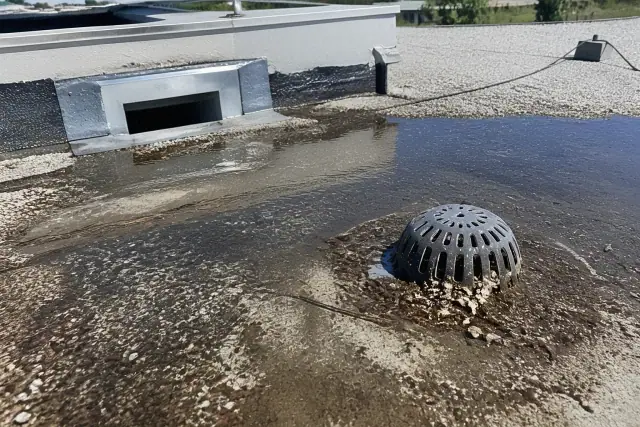
Standing water near a debris-filled drain shows how restricted drainage can leave the membrane and insulation exposed to moisture. The surrounding surface condition helps distinguish a maintenance issue from broader deterioration.
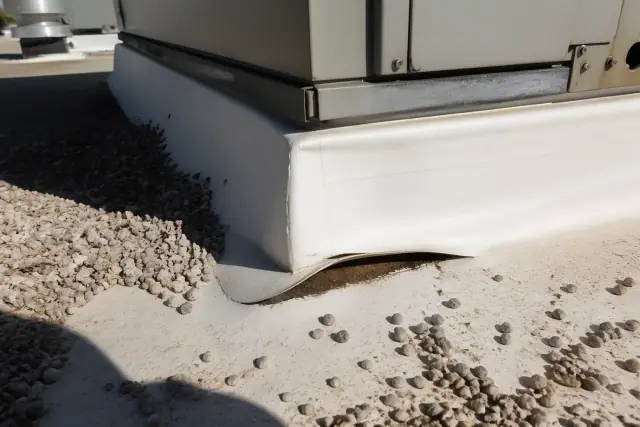
A lifted heat-welded seam beside an HVAC curb creates a direct path for wind-driven water. Comparing it with intact membrane makes damage from roof traffic, thermal cycling, and penetration details easier to recognize.
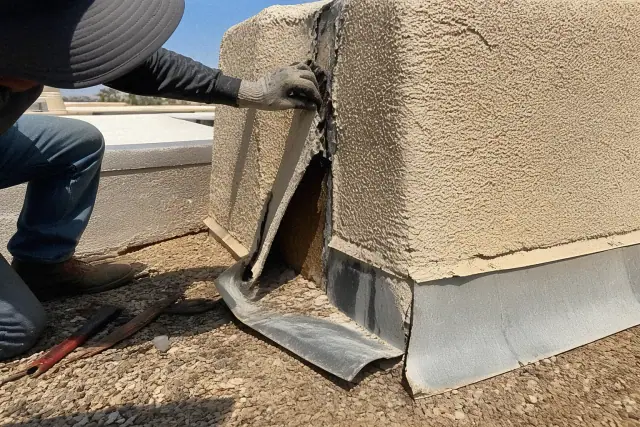
Lifted parapet flashing exposes the opening where wind-driven rain can reach the roof deck. Loose ballast or storm debris nearby can point to monsoon wind damage.
Standing water beyond 48 hours signals inadequate drainage. Check for blocked or undersized drains, insufficient slope, structural sag, and moisture below the membrane.
Surface temperatures above 150°F can expand trapped moisture into blisters and accelerate membrane shrinkage. From June through September, inspect for hail punctures, blow-offs, displaced gravel, and loose flashing after major storms.
Isolated repairs at roughly $3.50-$5.00 per square foot can cost about one-third of replacement. Frequent leaks, wet insulation, widespread brittleness or blistering, or a membrane beyond 75-80% of its rated life favor replacement planning.
Many commercial roof systems last 15-35 years, but the material changes the range: TPO commonly reaches 20-30 years, metal 30-45 years, and modified bitumen or BUR 20-40 years. Older EPDM can develop shrinkage-related perimeter leaks after 15-20 years.
| Roof Problem | What to Look For | Practical Action |
|---|---|---|
| Ponding water | Water remains more than 48 hours after a storm. | Clear drains and check slope, sagging, membrane, and insulation. |
| Membrane puncture | Cuts or holes appear along paths to rooftop equipment. | Patch promptly and add traffic pads on regularly walked routes. |
| Separated seam | TPO welds or modified bitumen seams lift or split. | Inspect nearby insulation before completing a compatible repair. |
| Loose flashing | Edges lift at parapets, HVAC curbs, or penetrations. | Secure the detail before wind-driven rain reaches the deck. |
| Blistering or shrinkage | Bubbles, cracks, or pulled terminations appear on an aging membrane. | Compare localized repair with replacement based on moisture and roof age. |
Heat-driven expansion and contraction open seams, back out metal fasteners, weaken lap sealants, and pull flashing terminations loose. UV exposure strips granules from modified bitumen and BUR surfaces, degrades unprotected spray foam, and reduces reflectivity as dirt collects on TPO. Standing water adds dead load, can create mosquito-breeding conditions, and lets moisture travel sideways beneath the membrane; even in the arid climate, algae or moss can appear near HVAC condensate outlets and shaded north-facing parapets.
Commercial roof repairs generally run $600 to $4,500 or more, while Phoenix replacement commonly runs $4.00-$12.00 per square foot and most projects fall between $5.50 and $8.00. Single-ply work can reach $11-$14 per square foot when tear-off, insulation, or drainage upgrades expand the scope. Neglected small problems can become roughly 100-140% more expensive when they escalate to full tear-off or structural repair, so compare the roof system, deck condition, moisture findings, access, and code-required work before choosing a scope.
Which materials fit Arizona heat? TPO provides reflectivity, metal offers a long service range, and spray foam can perform well when its protective coating is renewed on schedule. How often should a roof be checked? At least twice yearly and after major hail or wind, with quarterly checks worth considering for older membranes, heavy rooftop equipment, or recurring leaks. When can code change the scope? The 25 percent rule may require an affected roof section to meet current insulation, drainage, and fastening requirements instead of being patched piecemeal, so applicability should be confirmed for the property.
If a Phoenix commercial roof has standing water after 48 hours, recurring leaks, loose flashing, separated seams, punctures, or blisters, document where the condition appears and request an inspection. The findings can show whether drain clearing, a compatible patch, coating work, or replacement planning fits the roof's condition.