No-Drain Within 48 Hours
A TPO roof that clears within a day after a Phoenix monsoon is behaving correctly. Water that remains for more than 48 hours is classified as ponding rather than acceptable runoff delay.
No. Phoenix Commercial Roofing Company explains that a TPO roof in the Phoenix metro should shed monsoon water rather than hold it; water remaining longer than 48 hours is ponding and points to a drainage deficiency. That matters because prolonged pooling adds weight and stresses seams and flashing where leaks commonly begin.
A TPO roof that clears within a day after a Phoenix monsoon is behaving correctly. Water that remains for more than 48 hours is classified as ponding rather than acceptable runoff delay.
Recurring standing water usually points to low spots, clogged scuppers, or inadequate roof pitch rather than a defect in the TPO membrane itself. Phoenix dust-storm debris can obstruct drainage points quickly.
Measure pitch and trace where runoff should travel before choosing a repair. Tapered insulation can redirect water to existing outlets, while added drains, scuppers, or built-up spray polyurethane foam can address broader low areas.
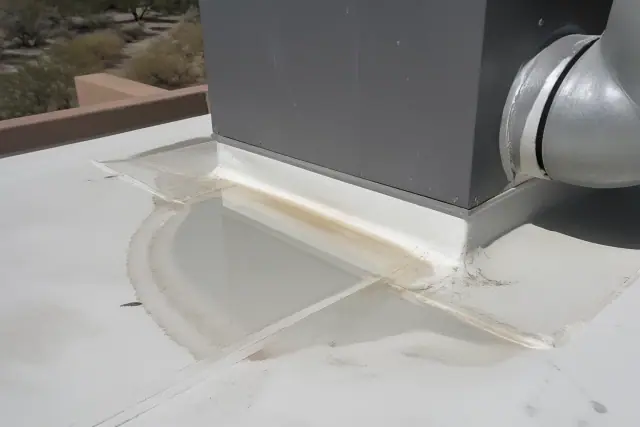
Shallow water that remains in a low area of a white TPO roof for more than 48 hours after a Phoenix monsoon meets the ponding threshold. Dirt rings can reveal the boundary of a recurring pool after the water evaporates.
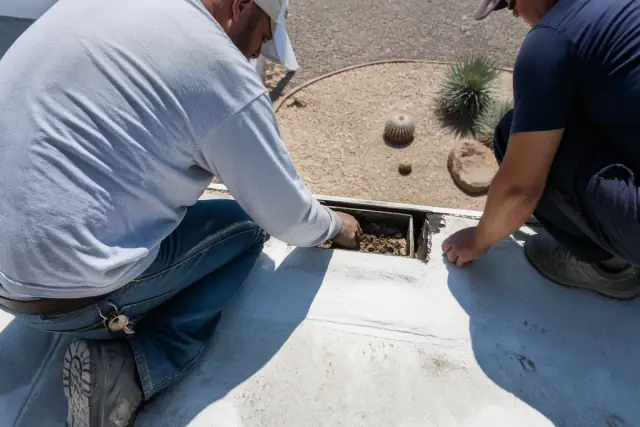
Phoenix dust, leaves, and roof debris can obstruct a scupper and cause water to back up across the membrane. Clearing the opening restores the intended flow path when blockage, rather than roof slope, is the cause.
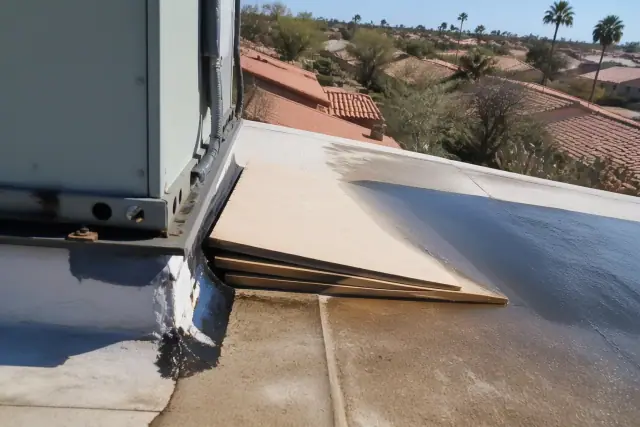
Tapered insulation beneath TPO creates a gradual path from a former low spot toward a roof drain. This approach establishes positive slope without requiring the entire roof deck to be rebuilt.
Runoff that clears within a day is normal. Water still present beyond 48 hours meets the ponding threshold used by the National Roofing Contractors Association and many membrane warranties.
One inch of standing water adds roughly 5.2 pounds per square foot. That extra dead load deserves attention when multiple low spots overlap with existing rooftop equipment, especially on older structures in downtown Phoenix and the Camelback corridor.
A single low spot on an otherwise sound five-year-old roof may need a localized repair or tapered insulation. A roof past 15 years with brittleness, seam separation, and ponding across several sections calls for a broader replacement discussion.
Patching or coating a low area without correcting slope only delays the drainage problem. Silicone coating tolerates intermittent ponding better than acrylic, but it does not replace a working runoff path.
| Observed TPO Roof Condition | What It Means | Likely Drainage Factor | Practical Action |
|---|---|---|---|
| Water clears within 48 hours | The roof is meeting the normal drainage window. | Slope, drains, and scuppers are moving runoff. | Keep drainage points clear and continue routine checks. |
| Water remains beyond 48 hours in one low spot | The standing water is ponding, not normal drainage. | A localized low area or blocked outlet may be interrupting flow. | Clear debris, document the area, and measure the drainage path. |
| Pooling returns across multiple roof sections | The drainage problem is widespread or recurring. | Multiple low spots, insufficient outlets, or inadequate slope may be involved. | Evaluate tapered insulation, added drains or scuppers, or a spray foam overlay. |
| Ponding appears with brittle TPO or separated seams | Membrane condition now affects the repair decision. | Age, UV exposure, and prolonged pooling may be compounding the issue. | Compare targeted repair, coating, and replacement after inspection. |
TPO seams are heat-welded with a typical weld zone of one and a half to two inches, but they are made for normal runoff rather than indefinite submersion. Standing water holds dirt, pollen, and debris against the membrane, encourages algae, and increases pressure at pipe boots, wall flashing, and seam edges. Some studies associate reflective white TPO with cooling-cost reductions of 20 to 30 percent compared with darker membranes, so grime and retained water can also erode part of its reflectivity benefit.
Phoenix's monsoon season runs roughly July through September, and an intense burst can concentrate more rain in 20 minutes than a drain can move when the roof field lacks proper slope. ANSI/SPRI RD-1 calls for positive drainage within 48 hours, while the International Building Code references a minimum slope of one-quarter inch per foot; Arizona jurisdictions including the City of Phoenix Development Services Department use that framework. TPO generally resists standing water better than built-up roofing but less well than EPDM. Under the Salt River Valley's intense UV exposure, membrane thickness and weld quality also matter, which is why 60-mil TPO is generally favored over 45-mil material for commercial applications.
Can TPO be pressure washed? High-pressure cleaning is generally not recommended because it can force water beneath seams and flashing; use a low-pressure rinse or soft wash with mild detergent instead. How often does it need attention? Clear drains, scuppers, and gutters before each monsoon season, arrange a professional inspection at least annually, and wash the membrane every 18 to 24 months. Other common warning signs include failed welds, shrinkage at parapet flashing, foot-traffic punctures, and leaks around HVAC curbs, pipe penetrations, and roof edges.
Phoenix Commercial Roofing Company reviews ponding-water concerns across the Phoenix metro every week and checks drainage performance during commercial roof inspections throughout Maricopa County. The team documents standing water with photos and measurements, evaluates pitch, seams, and flashing, and applies manufacturer-specific welding and installation standards before recommending repair, coating, or replacement. The company holds the licensing required by the Arizona Registrar of Contractors for commercial roofing work in Maricopa County.