Proudly serving Phoenix, Mesa, Scottsdale, Tempe, Chandler, Glendale & surrounding areasCall or Text 24/7: 480-319-7533
Guides

How Do You Select a Qualified Commercial Roofer in Phoenix?

Phoenix Commercial Roofing Company recommends choosing a commercial roofer by verifying commercial credentials, low-slope experience, roof-system fit, and every item in the written scope. Those checks help protect a major capital asset through monsoon downpours and summer roof-surface temperatures that can reach 115 degrees.

Quick Summary

  • Confirm an active Arizona Registrar of Contractors license in the correct commercial classification, a bond on file, and no unresolved complaint history.
  • Ask for proof of general liability insurance and workers' compensation, then verify commercial low-slope project experience.
  • Require an itemized quote for material, tear-off, flashing, drainage correction, and warranty terms; commercial roofing runs $4.00 to $12.00 per square foot, with most Phoenix projects between $5.50 and $8.00 per square foot.
  • Match the system to the building and desert climate, and check manufacturer certification plus at least one verifiable local reference on a similar property type.

Three Tests for a Commercial Roofer

Verify Commercial Credentials

Check the official Arizona ROC registry for the correct commercial classification, bond status, and unresolved complaints. Request current proof of general liability insurance and workers' compensation rather than relying on a certificate number alone.

Match the System to the Building

A qualified commercial roofer should explain how the existing substrate, parapet walls, drainage slope, rooftop equipment, and seam-welding method affect the recommended low-slope system.

Compare the Written Scope

Compare itemized material, tear-off, flashing, drainage correction, and warranty terms-not just the total. The contractor should also provide a verifiable local reference for a similar building type.

What to Photograph Before Hiring

Low-Slope Roof, Drainage, and Equipment Layout

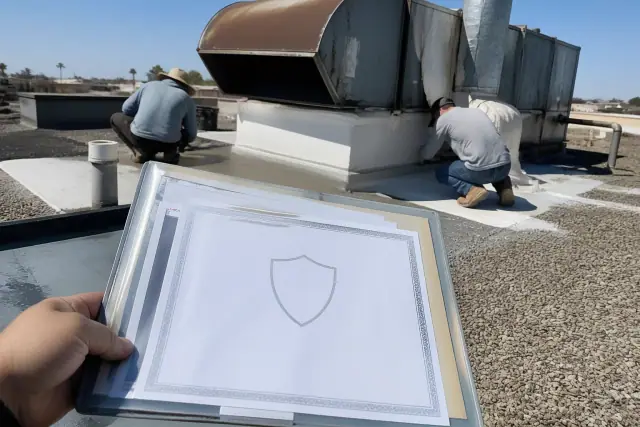
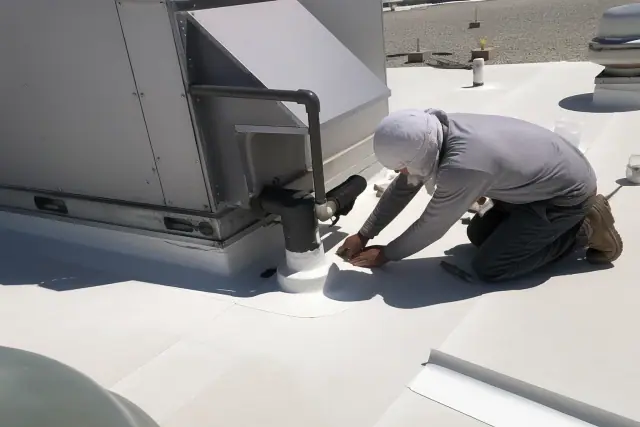
Technicians performing TPO membrane detailing on a roof near a ventilation unit in Phoenix, AZ.

A wide roof view should show drains, parapet walls, penetrations, and mechanical equipment. These conditions help explain access, drainage, and system-fit questions.

TPO Seam Welding and Flashing Details

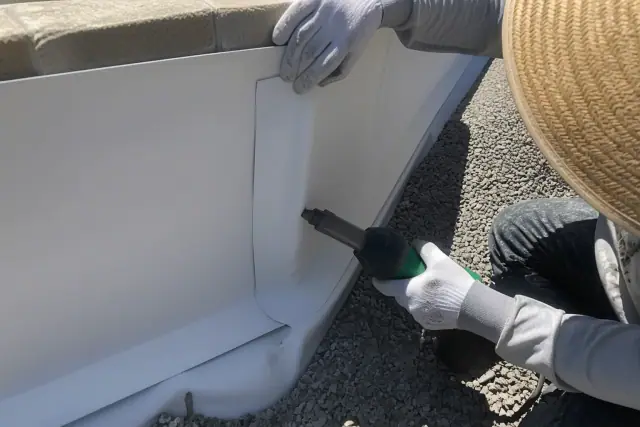
Crew members performing TPO seam welding and parapet flashing on a gravel roof in Phoenix, AZ.

Close views of membrane seams and flashing show the details a contractor should be able to discuss clearly. They also make competing repair or replacement scopes easier to compare.

Written Scope, Insurance, and License Documents

Roofing project documentation and membrane detailing on a gravel rooftop in Phoenix, AZ.

The itemized scope beside proof of insurance and the official license record. The comparison should make missing terms or unsupported credentials easy to spot.

Commercial Roofer Snapshot

Credentials to Verify

Verify the commercial ROC classification, bond, complaint history, general liability insurance, workers' compensation, and any claimed manufacturer certification.

Building Conditions to Match

Square footage, substrate, parapet condition, and rooftop equipment load all matter. A 20,000-square-foot warehouse near Sky Harbor has different wind-uplift and heat-load needs than a strip retail center in Ahwatukee.

Replacement Budget Range

Full commercial roof replacements typically run $50,000 to $500,000 depending on square footage, system, and roof complexity. A clear scope is essential for comparing totals across that range.

Red Flags to Avoid

Be cautious when a residential-focused crew cannot explain drainage slope or seam welding for your roof type, offers a vague scope, or cannot provide a relevant local reference.

Commercial Roofer Planning Matrix

Decision pointStrong evidenceWarning sign
CredentialsActive Arizona ROC commercial classification, bond, and proof of liability and workers' compensation coverageA certificate number without supporting proof
Commercial experienceRecent low-slope work on a similar Phoenix building typeA residential crew that only occasionally bids commercial roofs
Roof-system fitA clear explanation of membrane, drainage slope, seams, substrate, and rooftop equipmentA system recommendation made without discussing roof conditions
Written scopeItemized material, tear-off, flashing, drainage correction, and warranty termsA broad total with unclear inclusions
Local verificationMaricopa County address, Phoenix permit history, and a verifiable similar-building referenceNo local records or relevant reference to check

Why Commercial Specialization Matters

Commercial roofing is a different trade from residential shingle work. Low-slope membrane systems require tapered insulation for drainage and coordination around rooftop mechanical equipment, so relevant crew and foreman experience matters.

Factors That Shape the Right Fit

Phoenix heat, monsoon exposure, roof condition, and building design influence the appropriate system. TPO and coatings offer reflectivity, spray foam allows future recoating, and modified bitumen or BUR can suit older roofs with numerous mechanical penetrations.

Common Follow-Up Questions

How local should your search be, and what should you ask each roofer? Favor contractors with a physical Maricopa County address and City of Phoenix permit records, then ask how many low-slope commercial roofs the foreman and crew completed in the Phoenix metro in the past year, how warranty service is handled, and whether they can provide at least one verifiable reference for a similar building type.
Plan Your Action

Need Help Comparing Commercial Roofing Options?

Share the building type, approximate roof area, existing system, and any drainage or leak concerns. Ask for a written, itemized scope before approving commercial roofing work.